English
 русский
 Español
Industry News
Home / News / Industry News / Role of Plate Rolling Machines in Modern Manufacturing: A Complete Guide
Roll a 4.5 m diameter tower can from 60 mm S355 plate and that shell must close cleanly at the longitudinal seam, hold its roundness, and repeat the same result forty to eighty times per turbine. A plate rolling machine decides whether that is routine production or a daily argument with fit-up.
This article covers the role of plate rolling machines in modern manufacturing: what the machine does to the plate, how three-roll and four-roll designs differ on the production floor, which heavy segments drive demand, and the specifications that actually limit what a fabrication shop can quote.
A plate rolling machine converts flat plate into a curved shell through a sequence of controlled passes, and that sequence, not the machine's nominal size, decides the roundness, the diameter range and the amount of flat area left at the longitudinal seam.
The machine holds the plate between rollers while applying a bending moment across its full width. Three-roll designs use one top roll and two bottom rolls, with the top roll lowered to press the plate into a curved path. Four-roll designs add two side rolls that bend the plate edges while the plate is still clamped between the top and bottom rolls. Heavy machines in both families are hydraulically driven, and CNC control positions the rolls to the radius the drawing calls for.
The final 100 to 200 mm at each end of the plate is bent to finished curvature before the body is rolled. Skip this step and the flat end shows up as a gap when the shell closes for welding.
The plate is fed back and forth while roll position is reduced in increments until the measured diameter matches target. Thick plate needs more passes because each pass can only impose limited strain before the material work-hardens.
Steel returns part of its deflection when the load is released. The operator over-bends by an amount set by yield strength and the radius-to-thickness ratio, then verifies the shell diameter against a tape or template.
Internal diameter and roundness are checked before welding. API 650 permits a maximum out-of-roundness of 13 mm for tanks between 12 m and 45 m in diameter, so rolling tolerance has to sit well inside that band.
A four-roll machine pre-bends both plate edges in one clamped pass, which removes a separate edge-setting operation and reduces flat area at the seam. A three-roll machine does the same job with fewer hydraulic components and a lower purchase price, at the cost of extra handling on thick plate.
Edges are pre-bent in a separate pass or on a press, and flat area at the seam must be trimmed or accepted.
The plate may need repositioning between passes on symmetrical designs, which slows long and heavy shells.
Simpler structure, fewer hydraulic circuits and lower capital cost, with easier field maintenance.
Best fit: thin to medium plate, tanks, general fabrication and short mixed runs.
Both edges are pre-bent in the same clamped setup, so the seam closes cleanly without a second operation.
Fewer repositioning steps, which matters once plate width passes 3,000 mm and handling equipment becomes the bottleneck.
Higher capital cost and more hydraulic components, offset by shorter cycle times on repeat shells.
Best fit: thick plate, high-volume shells, wind tower sections, line pipe and pressure vessels.
Three-roll machines are not a single design either:
Four heavy segments consume most rolled plate: storage tanks, wind tower sections, pressure vessels and welded line pipe. Each sets a different combination of thickness, diameter and seam tolerance.
| Segment | Typical wall thickness | Forming constraint | Governing document |
| Storage tank shell | 6 to 30 mm | Roundness along long shell runs | API 650, 13 mm out-of-roundness for 12 to 45 m tanks |
| Wind tower section | 20 to 80 mm | Consistent radius across cans of 30 m and longer | EN 1993-1-6 shell design, EN 1090-2 execution class |
| Pressure vessel shell | 10 to 60 mm | Fiber elongation and post-forming heat treatment | ASME BPVC Section VIII Division 1, UCS-79 |
| LSAW line pipe | 6 to 40 mm | Edge crimp and roundness for seam welding | API 5L, PSL2 property class |
 China plate rolling machine & metal forming machine manufacturerExplore Our Featured ProductsView Product →
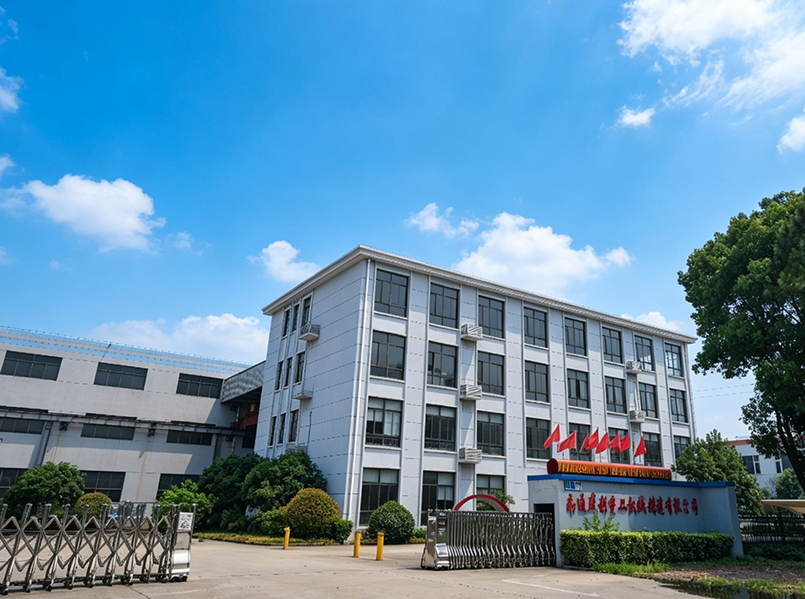
Maximum forming thickness and maximum plate width define the heaviest shell a shop can roll. Nantong Shengli Heavy Industry Machinery Manufacturing Co., Ltd., which builds under the Hengdeli brand in Nantong, Jiangsu, covers more than 100 plate rolling machine specifications with a maximum forming thickness of 180 mm and a maximum plate width of 4,000 mm.
Model codes carry the two numbers that matter. In a designation such as HDLW12-70x3200 CNC, the first figure is rated plate thickness in millimetres and the second is working width, so the machine rolls 70 mm plate at 3,200 mm wide. CNC four-roll units in that family, including the HDLW12-40x3200 CNC and HDLW12-70x3200 CNC, target thick-plate shell work.
Ratings always assume a minimum diameter and a defined material yield strength. A machine rated at 70 mm by 3,200 mm will not roll that thickness down to a 1,200 mm inside diameter, because the radius-to-thickness ratio changes both the strain and the force required. Confirm the diameter and steel grade behind any thickness figure before committing to a project.
China plate rolling machine & metal forming machine manufacturerExplore Our Featured ProductsView Product →
Rolling is cold forming, so every shell carries measurable plastic strain. ASME BPVC Section VIII Division 1, UCS-79 requires post-forming heat treatment once extreme fiber elongation exceeds 5 percent.
The estimate is worth running at quotation stage. A 180 mm plate rolled to a 2,000 mm radius gives about 4.5 percent, which sits under the 5 percent threshold but close enough that the forming sequence should be recalculated before deciding against heat treatment.
Records matter as much as the number. Shell diameter, roundness, plate heat number and roll positions should travel with each part, because forming strain cannot be re-inspected after welding. Nantong Shengli publishes its own account of how it ensures product quality, from incoming material checks through to final testing.
A rolled shell is rarely the only formed part on a job. Plate is usually levelled before rolling and flanged, dished or welded afterwards, so the rolling machine sits inside a longer equipment chain.
Plate arrives carrying residual stress from rolling, cutting or thermal processing, and a shell formed from stressed plate can distort after welding. Levelling machines with 7, 9 or 13 rolls flatten and stress-relieve plate before forming, and the higher roll counts deliver better flatness on thin material.
Downstream of the roll, the supporting equipment set includes:
For welded line pipe, rolling is embedded in a longer sequence. The JCOE route for LSAW pipe runs edge milling, pre-bending, JCO forming, tack welding, internal welding, external welding, mechanical expanding, chamfering and round straightening as one production line, while the RBE route uses a 6,000 mm rolling machine as its core forming unit.
China plate rolling machine & metal forming machine manufacturerExplore Our Featured ProductsView Product →
A quote is only accurate when the enquiry states plate thickness, width, minimum finished diameter, material yield strength and annual volume. A thickness figure on its own will produce a machine that is either oversized or unable to roll the smallest shell in the product mix.
Overseas buyers should also confirm documentation, spare parts and commissioning support before placing an order. Nantong Shengli maintains an export client reference page and offers English, Russian and Spanish language support, which shortens the technical discussion for plants purchasing outside China.
Thickness capacity is always quoted at a specific width and minimum diameter. The Hengdeli range reaches 180 mm thickness at 4,000 mm width, and a model such as the HDLW12-70x3200 CNC is rated for 70 mm plate at 3,200 mm wide. Verify the diameter and yield strength behind the rating, because both change the achievable thickness.
Without pre-bending, the first and last 100 to 200 mm of the plate stay flat, and that flat area becomes a gap or an over-thick seam when the shell closes. Four-roll machines pre-bend both edges in the same clamped pass, while three-roll machines handle it in a separate step or on a press.
ASME BPVC Section VIII Division 1, UCS-79 sets the trigger at 5 percent extreme fiber elongation. Estimate it as 50 times thickness divided by radius: 60 mm plate at a 2,250 mm radius gives about 1.3 percent, while 180 mm plate at a 2,000 mm radius gives about 4.5 percent and warrants a full calculation.
Only within a narrow band. Tank shells need long rolling width at moderate thickness, tower sections need high thickness at large diameter, and line pipe needs edge crimp control at smaller diameters. Most plants specify two machines, or one machine plus a dedicated forming line such as a JCOE LSAW pipe mill.
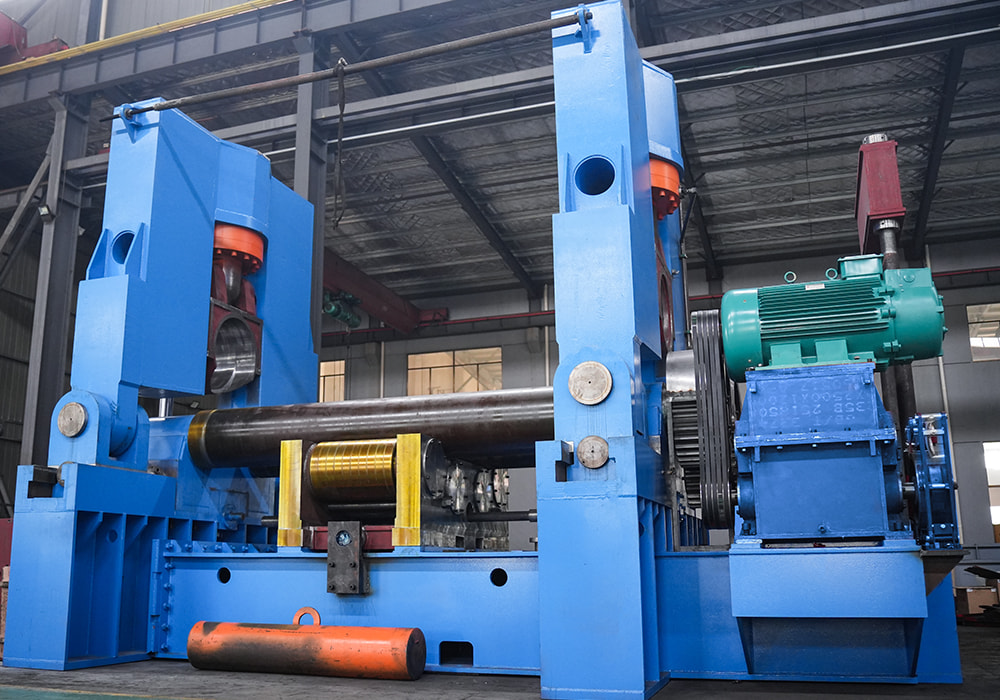 HDLW11S-120×3500 Upper Roller Universal 3-roller Plate Rolling Machine
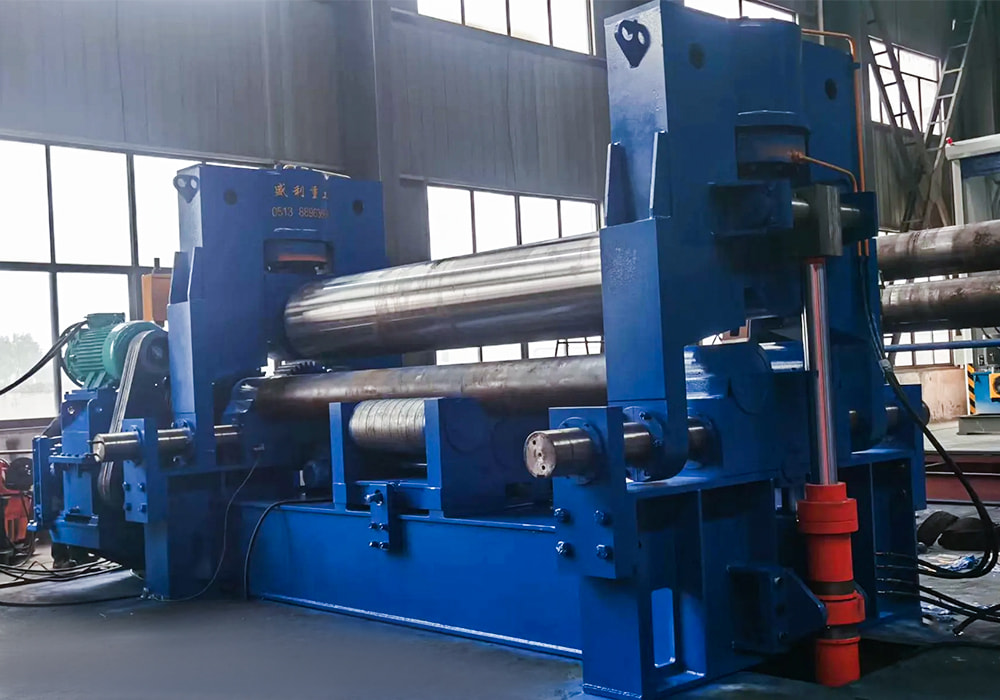 HDLW11S-50X3000 Upper Roller Universal 3-roller Plate Rolling Machine
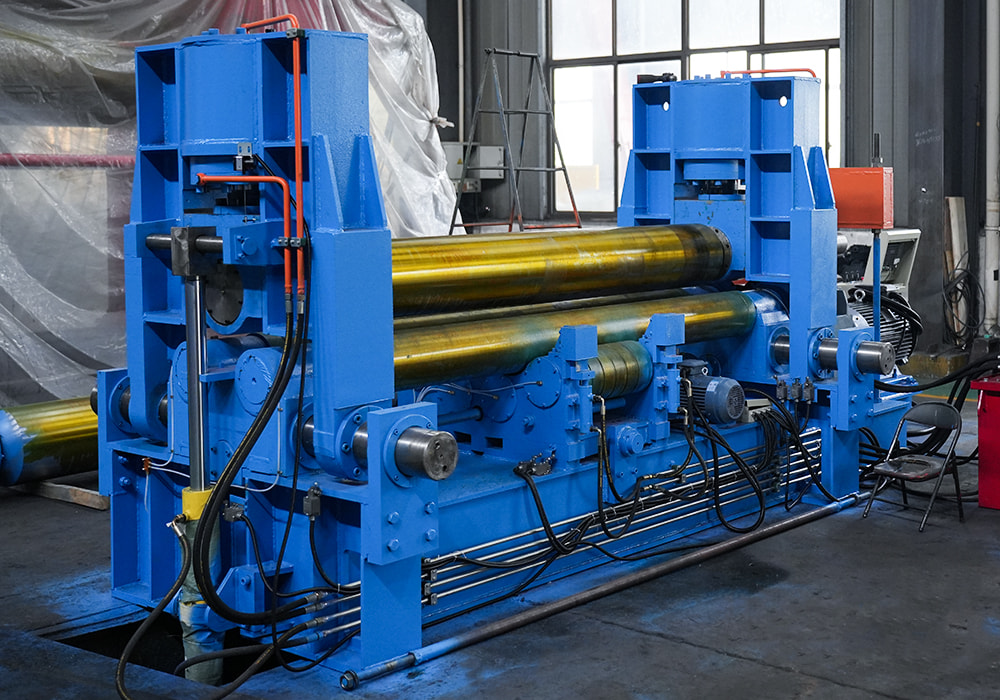 HDLW11S-30×3000 Upper Roller Universal 3-roller Plate Rolling Machine
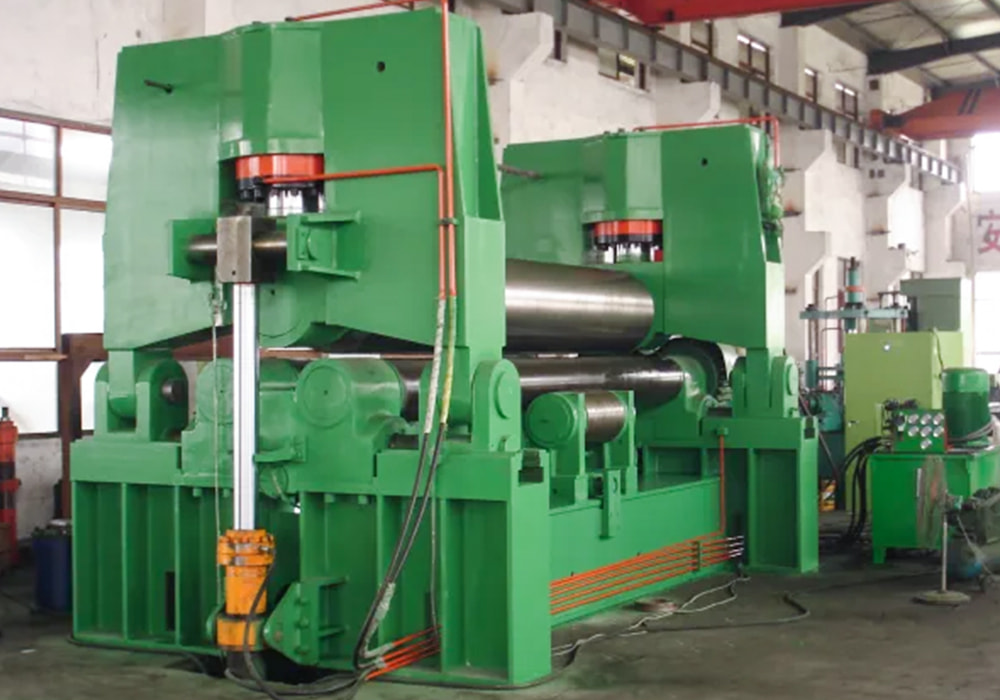 HDLW11X-100×3100 oblique 3-roller plate rolling machine
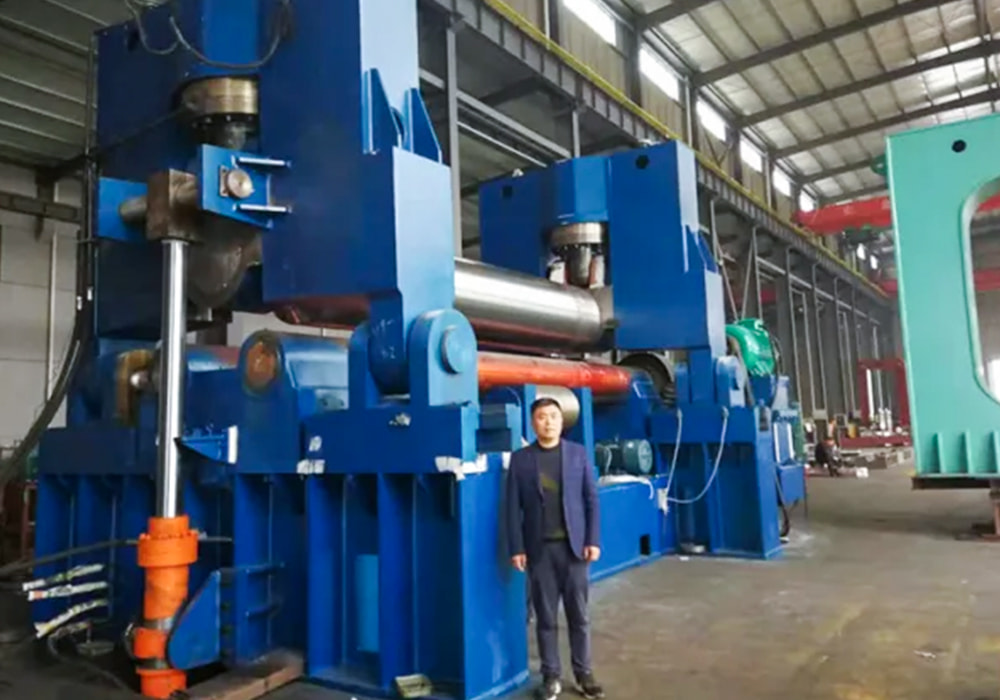 HDLW11-150X3200 hydraulic symmetrical 3-roll plate rolling machine
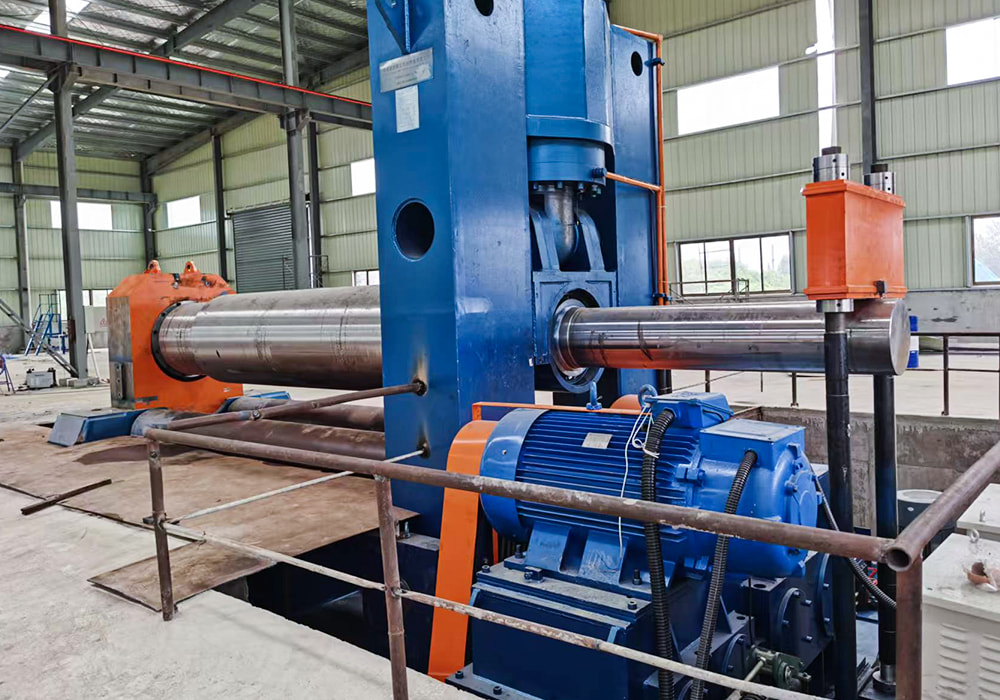 HDLW11-120X3500 Symmetrical 3 Roller Plate Rolling Machine
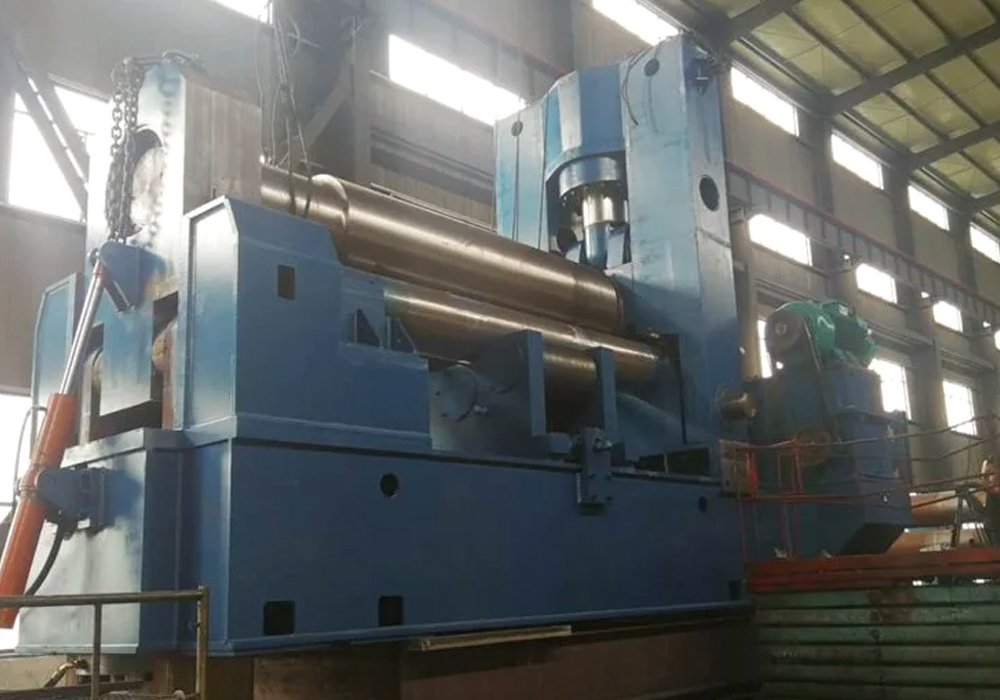 HDLW11-100X4200 pull-down 3 roller plate rolling machine
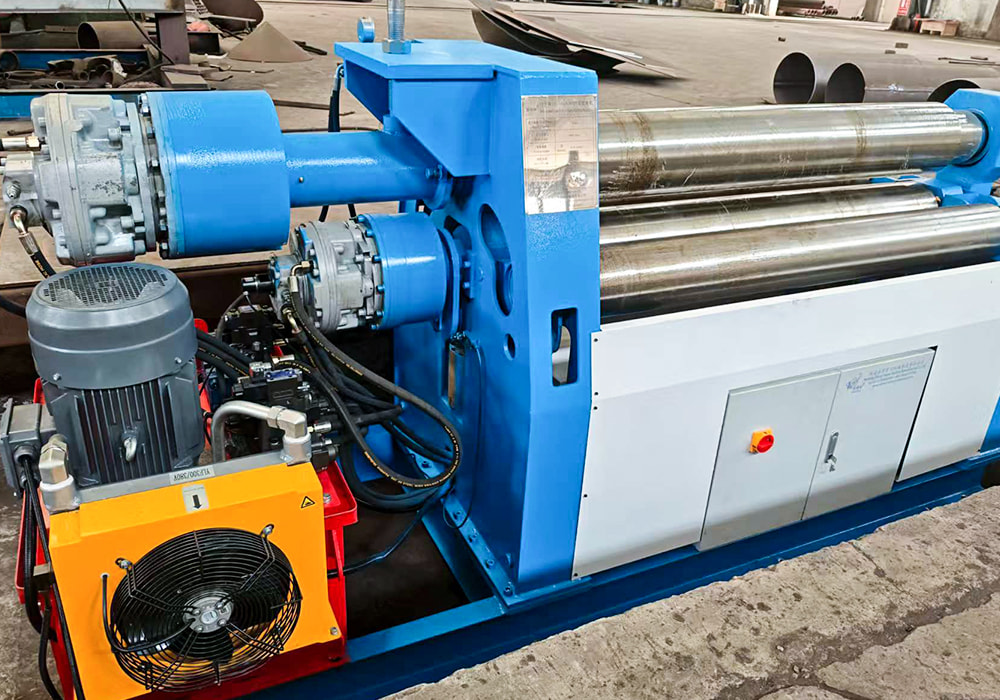 HDLW12-16x1600 CNC 4 Rolls Metal Sheet Bending Machine
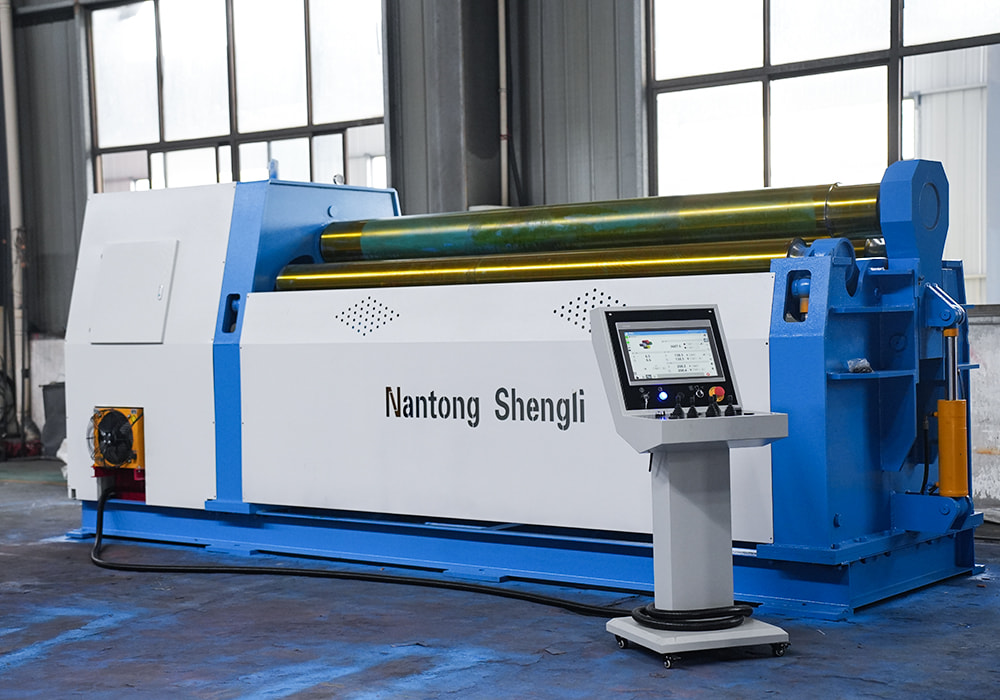 HDLW12-12×3000 4 Rolls Plate Bending Machine
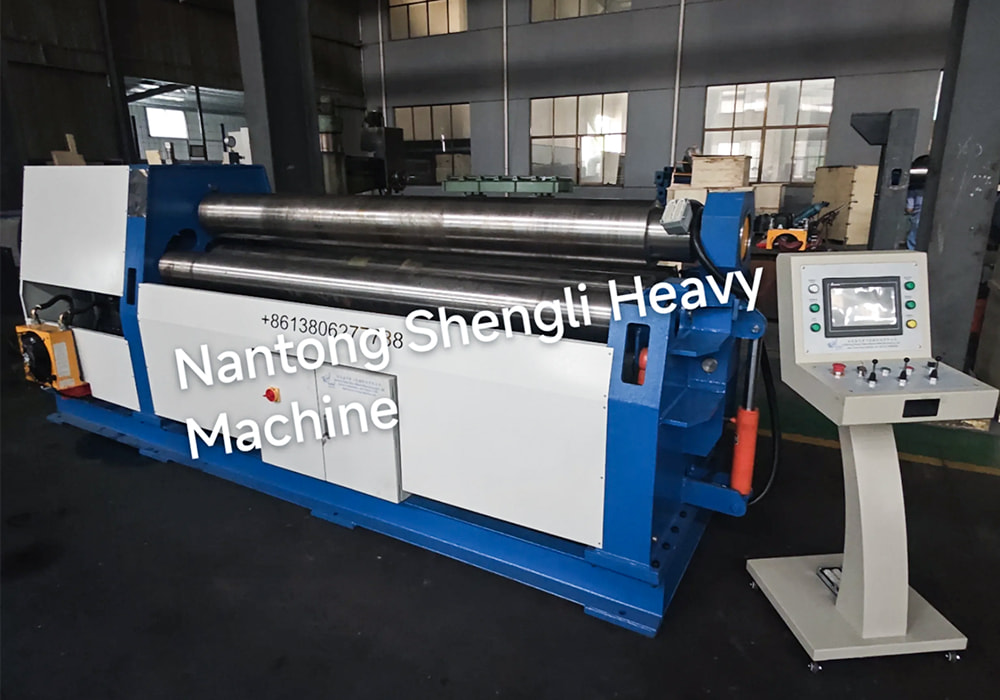 HDLW12-25×2500 Pipe Bending Rolling Machine
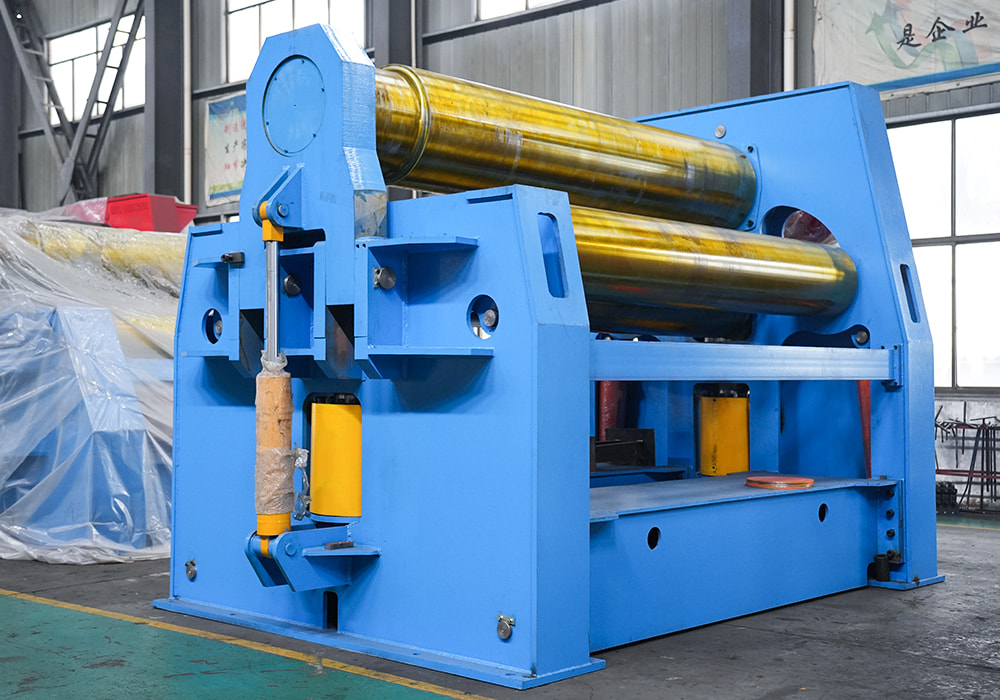 HDLW12-70×3200 CNC 4 Roll Metal Roll Bender
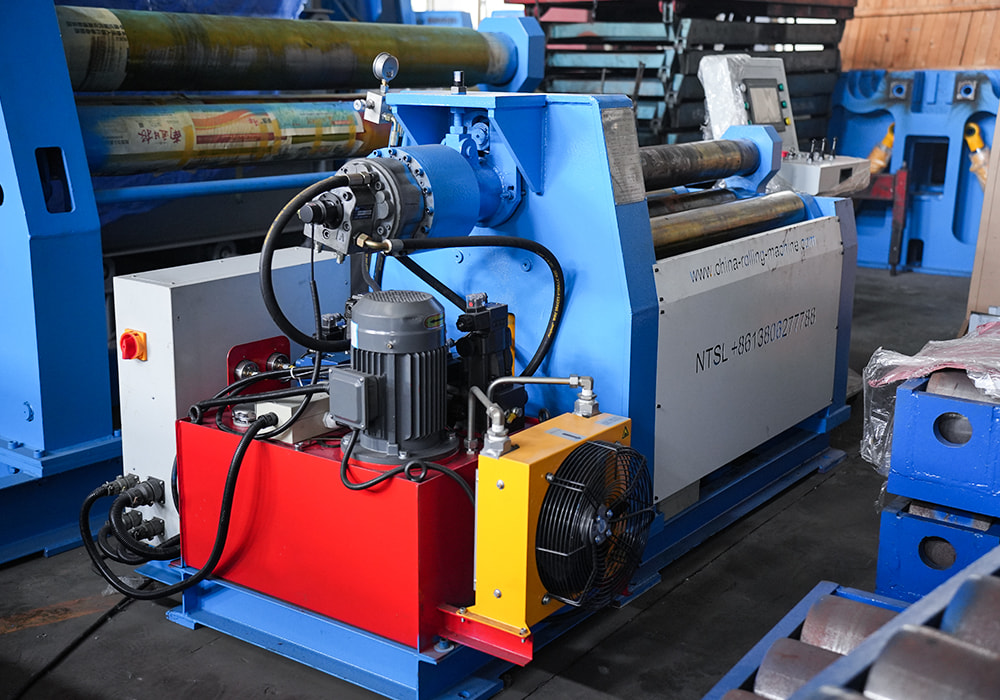 HDLW12-8×1000 4 Roll CNC Sheet Bending Machine

The company boasts strong technical capabilities, holds numerous national patents, and produces high-quality products that are widely recognized by customers both at home and abroad.

 Previous