English
 русский
 Español
Industry News
Home / News / Industry News / Plate Rolling Machine Pre-Bending: Key Requirements for Cylindrical Plate Forming
Watch a four-roll machine make its first pass and the whole problem appears in miniature. The plate enters flat, the side rolls rise to a pre-set position, and only the two ends bend. Skip that pass and the same plate rolls into a cylinder with two flat zones that fight every later pass, leaving a longitudinal seam that has to be dragged closed with dogs and wedges.
Pre-bending is the first forming pass on a plate rolling machine, and it decides whether a cylinder closes on a straight seam or on a pair of kinks. It also fixes the machine configuration, the plate length allowance, the number of passes and the inspection method for the entire job. Get it wrong and the cost lands twice: once when the shell is rejected, and again when the plate is trimmed back and rolled a second time.
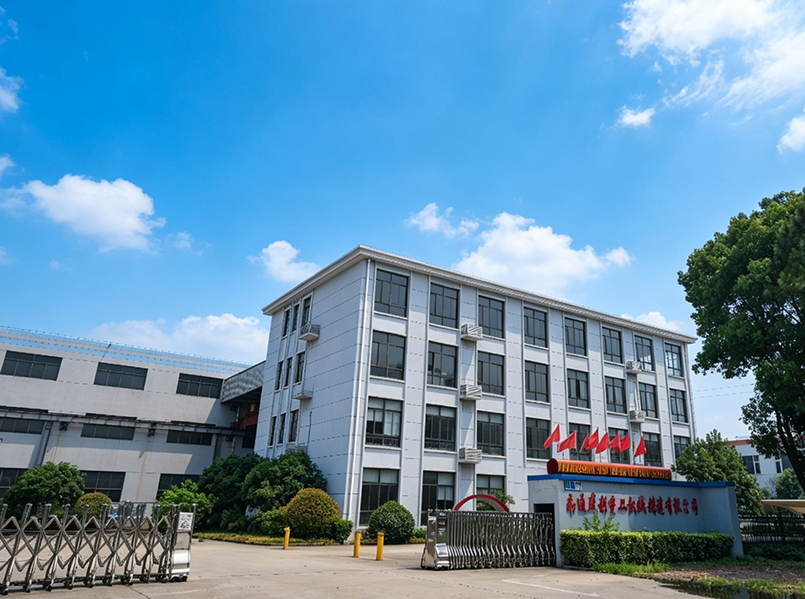
Nantong Shengli Heavy Industry Machinery Manufacturing Co., Ltd., which builds plate rolling machines under the Hengdeli brand, publishes a roll range covering more than 100 machine specifications, with a maximum forming thickness of 180 mm and a maximum plate width of 4,000 mm.
Pre-bending must bring both end zones of a plate to the finished cylinder radius in one controlled pass, because once the plate is fully engaged in the rolls, the ends never re-enter the bending zone cleanly. The two ends sit outside the three-point span formed by the top roll and the side rolls, so they travel through flat while the middle of the plate curves.
The consequence is arithmetic. A 2,000 mm diameter shell has a circumference of 6,283 mm. A flat zone of 100 mm at each end leaves 200 mm of seam that will not meet its mating edge, roughly 3% of the joint length, and that mismatch survives rolling, welding and post-weld calibration.
Over-bending is safer than under-bending. A pre-bend radius set slightly tighter than the target can be relaxed in the following passes. A pre-bend radius that is too open stays open, because the end zone receives a lower bending moment than the centre of the plate in every later pass.
Both plate ends must be pre-bent to the finished radius over a length of at least 1.5t to 2.5t per end, where t is the wall thickness, and the tighter end of that range belongs to machines that clamp the plate during the pre-bend pass.
Three variables drive the planning. The finished diameter sets the radius, the D/t ratio sets the strain, and the plate length decides whether the pre-bent ends can be sacrificed after welding. A D/t ratio above 60 means thin wall and heavy springback. A ratio below 20 means heavy wall, high tonnage, and a real risk of edge cracking when the plate edge was sheared rather than machined.
Forming strain can be checked before the plate is loaded. ASME BPVC Section VIII Division 1, UCS-79 uses the extreme fibre elongation of the formed shell to decide whether post-forming heat treatment is mandatory.
A symmetric three-roll machine cannot pre-bend plate ends at all. A double-pinch four-roll machine pre-bends both ends to within roughly 1.2t to 1.5t of the finished arc in a single pass, without removing the plate from the rolls.
The difference sits in how the plate is held. On a symmetric three-roll machine the plate rests on two bottom rolls and is bent by a descending top roll, so the ends remain flat until they are trimmed off or pre-bent on separate equipment.
Three-roll designs
Four-roll double-pinch
Un-bent flat end left at each plate end, as a multiple of plate thickness
Configuration also sets the length allowance. A shop rolling 12 mm plate to a 1,500 mm radius on a double-pinch machine adds 30 mm to 40 mm to each end of the blank and cuts the pre-bent ends off after welding. On a symmetric three-roll machine the same job needs a longer allowance, because the flat zone cannot be recovered by rolling alone.
The model designation states the limit directly. In the Hengdeli HDLW12 four-roll range, a machine coded 40 x 3200 CNC is rated for 40 mm plate at 3,200 mm width, and pre-bending, rolling and calibration run as separate programmed stages.
 China plate rolling machine & metal forming machine manufacturerExplore Our Featured ProductsView Product →
Springback has to be compensated inside the pre-bend pass, not after it. On 355 MPa structural steel at a D/t ratio near 40, a pre-bend radius set 3% to 7% tighter than the finished radius is a common starting point, corrected from a first-article check rather than from a table.
Yield strength raises both springback and force. Machine tonnage ratings are quoted for 235 MPa mild steel, so S355 to EN 10025-2, with a minimum yield of 355 MPa up to 16 mm thickness, demands roughly 50% more force than the same section in S235. A 30 mm S355 plate can therefore require a frame rated for 45 mm in mild steel.
Edge condition matters as much as grade. Pre-bending puts the highest strain of the whole operation exactly at the plate edge, which is also where sheared material carries micro-cracks, so plates above 25 mm are normally edge-milled before forming.
In JCOE line pipe production, pre-bending is a dedicated machine station rather than a pass on the rolling machine. It crimps the outer 100 mm to 200 mm of each plate edge to the final pipe radius before the J-forming press closes the plate into a C shape and then an O shape.
The reason is reach. A J-forming press bends the middle of the plate between a punch and a die, and that geometry cannot form the last section of each edge. Edge pre-bending closes the gap, so the O-ing stage produces a uniform longitudinal seam with a controlled gap for tack welding and submerged arc welding.
The payoff is dimensional. API 5L sets the diameter tolerance for pipe with an outside diameter of 610 mm or more at plus or minus 0.75% of D for the pipe body and plus or minus 0.5% of D at the pipe ends. Those figures are only reachable when every plate edge enters the forming press already curved.
China plate rolling machine & metal forming machine manufacturerExplore Our Featured ProductsView Product →
Acceptance is measured on the formed cylinder, not on the machine setting. For pressure vessel shells, ASME BPVC Section VIII Division 1 UG-80 limits out-of-roundness to 1% of the nominal inside diameter, taken as the difference between the largest and smallest inside diameter at any cross section.
The check is absolute rather than relative. A shell with a 2,400 mm nominal inside diameter may vary by 24 mm between its maximum and minimum diameter. Pre-bend errors appear as local flat spots inside that allowance, and a chord template shows them long before a diameter tape reads a problem.
| Parameter | Acceptance limit | Reference |
| Out-of-roundness, pressure vessel shell | Maximum minus minimum inside diameter within 1% of nominal inside diameter | ASME BPVC VIII-1 UG-80 |
| Pipe body diameter, D of 610 mm or more | Plus or minus 0.75% of D | API 5L |
| Pipe end diameter, D of 610 mm or more | Plus or minus 0.5% of D | API 5L |
| Longitudinal seam gap before tack welding | 0 mm to 2 mm | Typical submerged arc joint preparation |
| Pre-bent end zone length | At least 1.5t per end, verified with a radius template | Shop practice |
Verifying the pre-bend needs two tools: a radius template cut to the finished radius and applied to each end, and a straight edge used to confirm that the pre-bent zone transitions smoothly into the flat centre of the plate. Documented checks of this kind are the practical basis of the quality assurance steps for plate rolling machines that buyers ask about before ordering.
The pre-bend requirement scales with the shell, not with the machine. An 8 mm by 8,000 mm tank course and a 60 mm by 4,000 mm wind tower shell fail in opposite ways, and they need different pre-bend strategies.
Long, thin courses are dominated by ovality and seam mismatch rather than by force. A course 8 mm thick and 8,000 mm wide deflects under its own weight, so the pre-bent ends must be supported during handling and the seam gap checked with the shell resting on a curved cradle, not on the shop floor.
Tower sections typically run 4,000 mm to 6,000 mm in diameter with wall thicknesses from 20 mm to 60 mm, and the failure mode is a hard spot at the longitudinal seam that feeds directly into flange fit-up. Hydraulic four-roll machines hold this tolerance because the pre-bend pass is clamped rather than estimated.
China plate rolling machine & metal forming machine manufacturerExplore Our Featured ProductsView Product →
Vessel work is driven by code. UCS-79 sets the heat treatment trigger, UG-80 sets the roundness limit, and a pre-bend that leaves an under-curved end will push the shell outside both. This is also the reason buyers look at long-run machine stability rather than a single acceptance test, a pattern visible in the repeat purchases from existing customers that equipment builders track over a machine's service life.
Plan for 1.5t to 2.5t of extra length per end, where t is the plate thickness. A 20 mm plate on a double-pinch four-roll machine needs about 30 mm per end, and those ends are normally trimmed off after the longitudinal seam is welded and the shell is calibrated.
A symmetric three-roll machine cannot, because the plate ends never enter the bending span. Oblique three-roll and upper-roller universal three-roll designs can pre-bend by tilting the plate or offsetting the upper roll, but they leave a longer un-bent zone than a double-pinch four-roll machine, typically 1.8t to 2.0t against 1.2t to 1.5t.
By over-bending and then correcting from a measured first article. On 355 MPa steel at a D/t ratio near 40, engineers start with a pre-bend radius 3% to 7% tighter than the finished radius, measure the opened radius after springback, and adjust the roll position before the production run begins.
On pressure vessel shells, out-of-roundness of 1% of nominal inside diameter as required by ASME BPVC Section VIII Division 1 UG-80. On line pipe from a JCOE mill, plus or minus 0.75% of outside diameter for the body and plus or minus 0.5% at the pipe ends as set by API 5L for diameters of 610 mm and above.
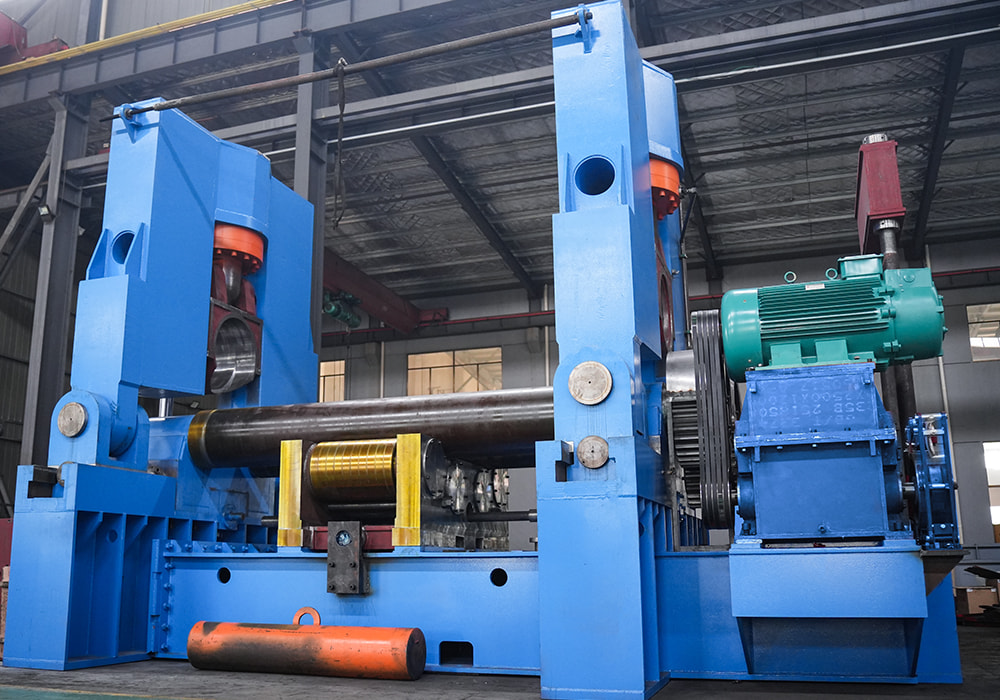 HDLW11S-120×3500 Upper Roller Universal 3-roller Plate Rolling Machine
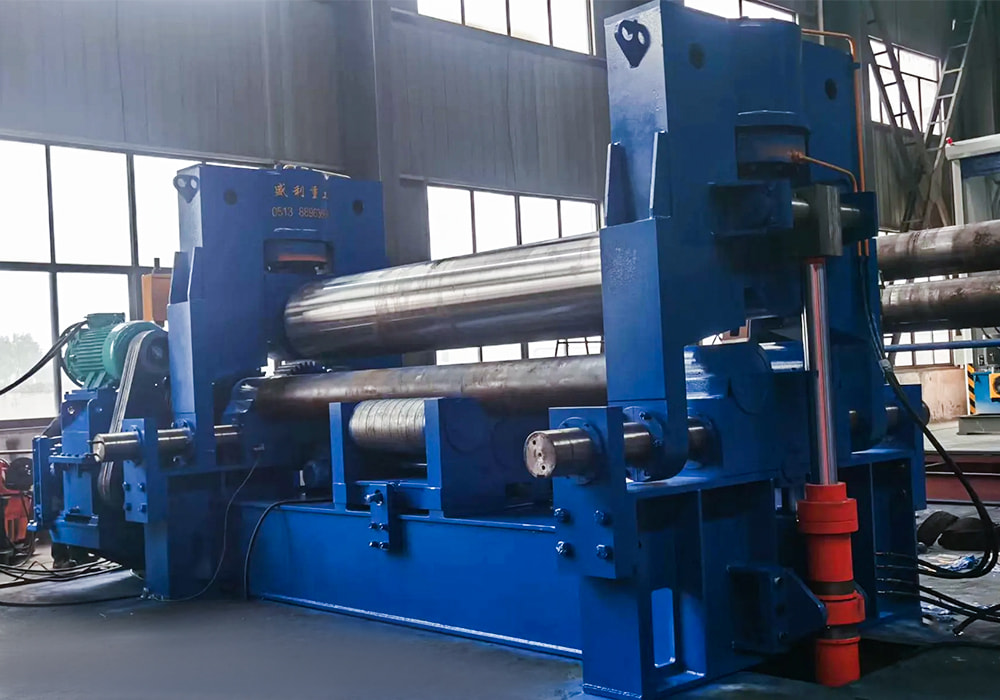 HDLW11S-50X3000 Upper Roller Universal 3-roller Plate Rolling Machine
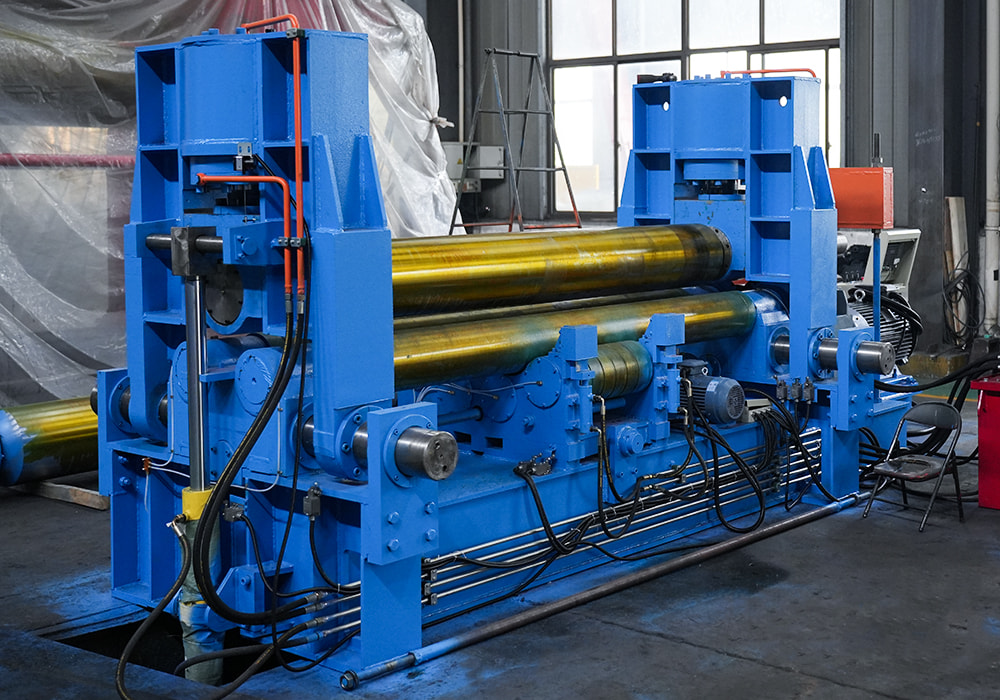 HDLW11S-30×3000 Upper Roller Universal 3-roller Plate Rolling Machine
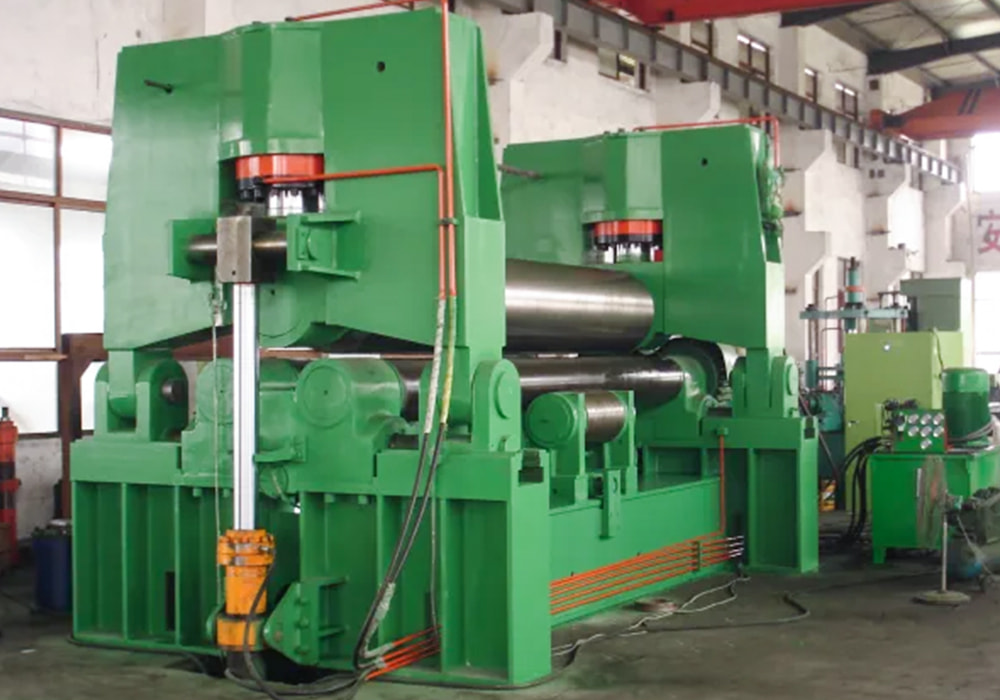 HDLW11X-100×3100 oblique 3-roller plate rolling machine
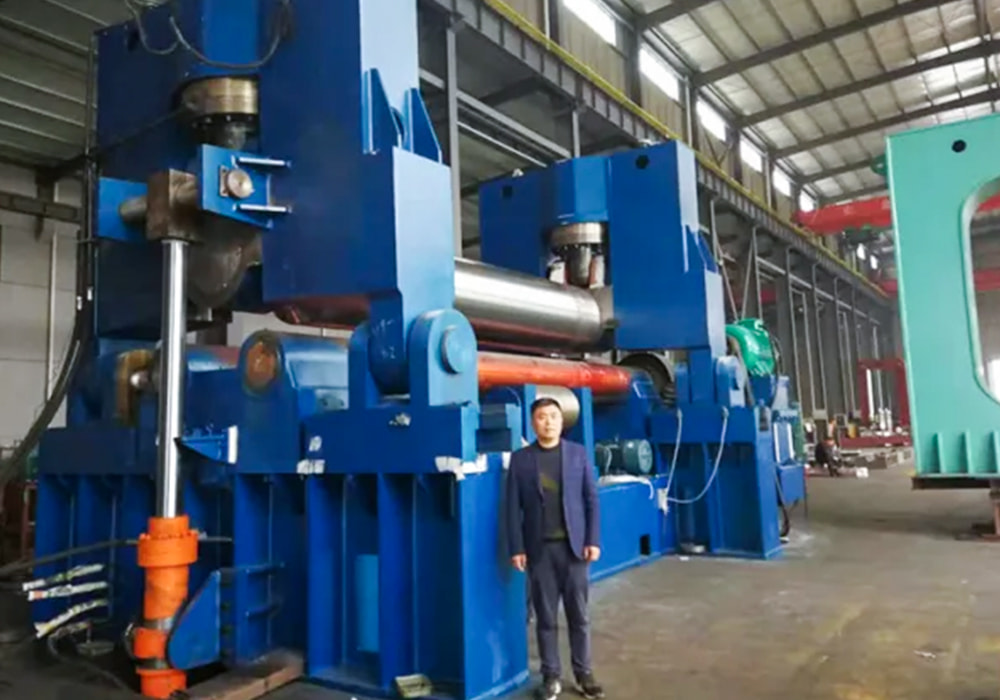 HDLW11-150X3200 hydraulic symmetrical 3-roll plate rolling machine
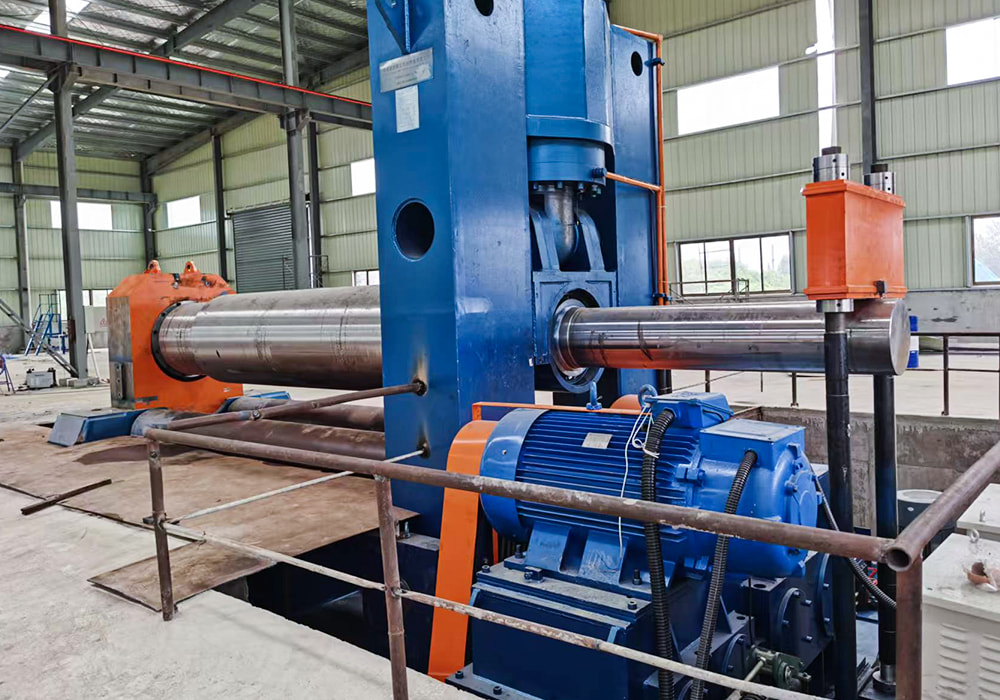 HDLW11-120X3500 Symmetrical 3 Roller Plate Rolling Machine
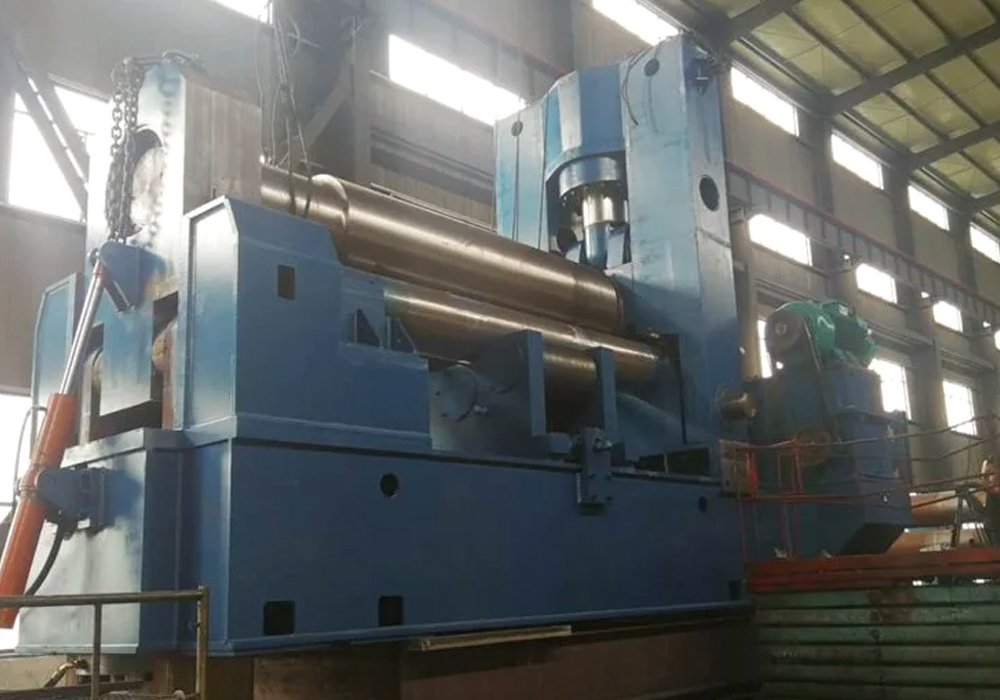 HDLW11-100X4200 pull-down 3 roller plate rolling machine
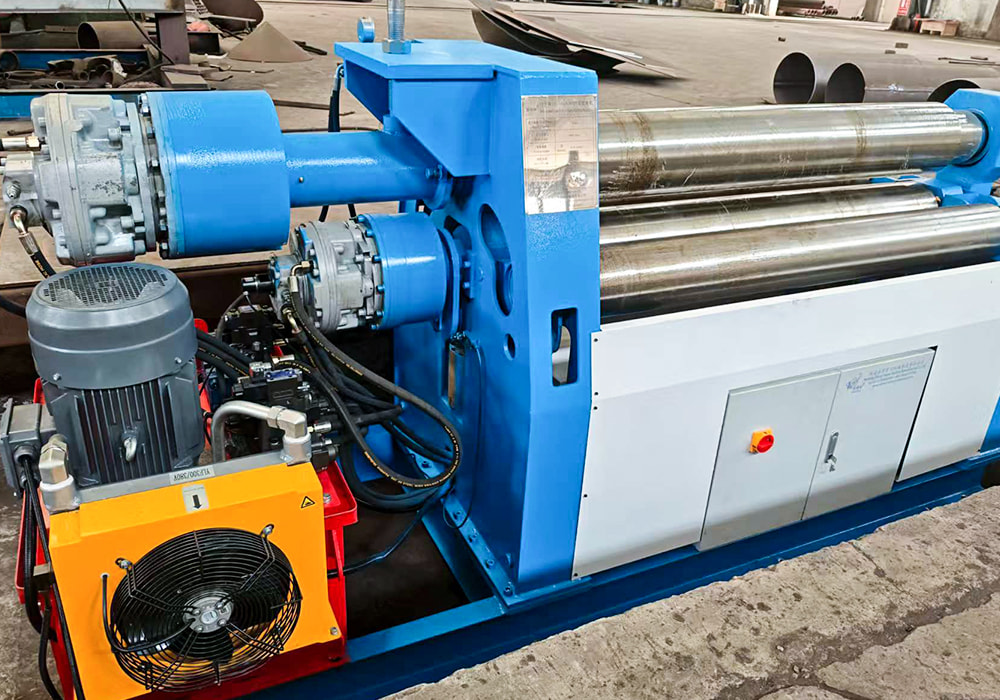 HDLW12-16x1600 CNC 4 Rolls Metal Sheet Bending Machine
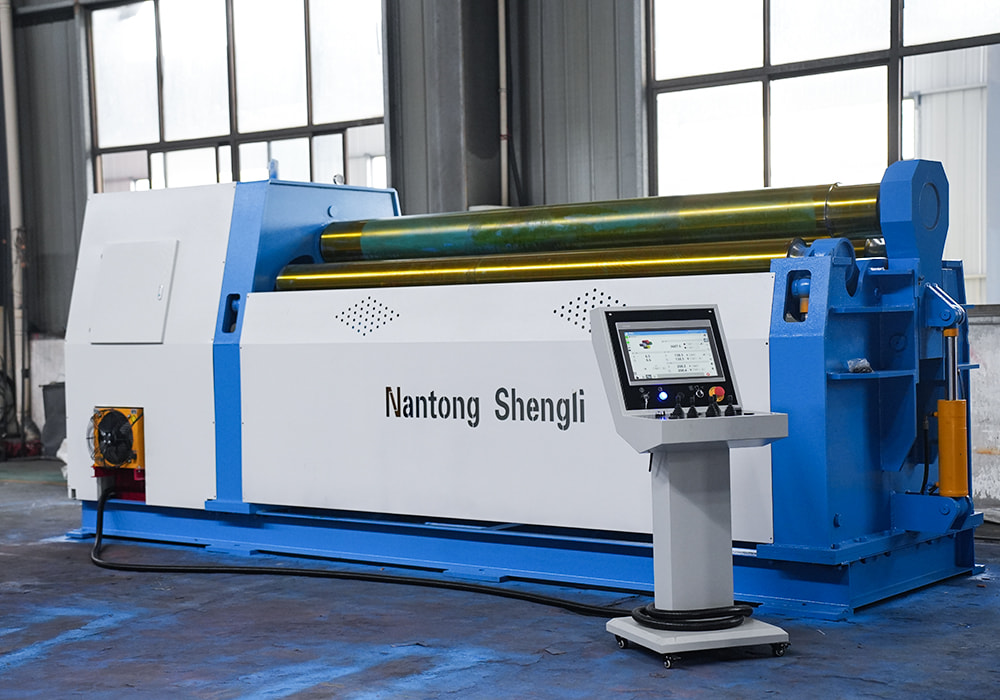 HDLW12-12×3000 4 Rolls Plate Bending Machine
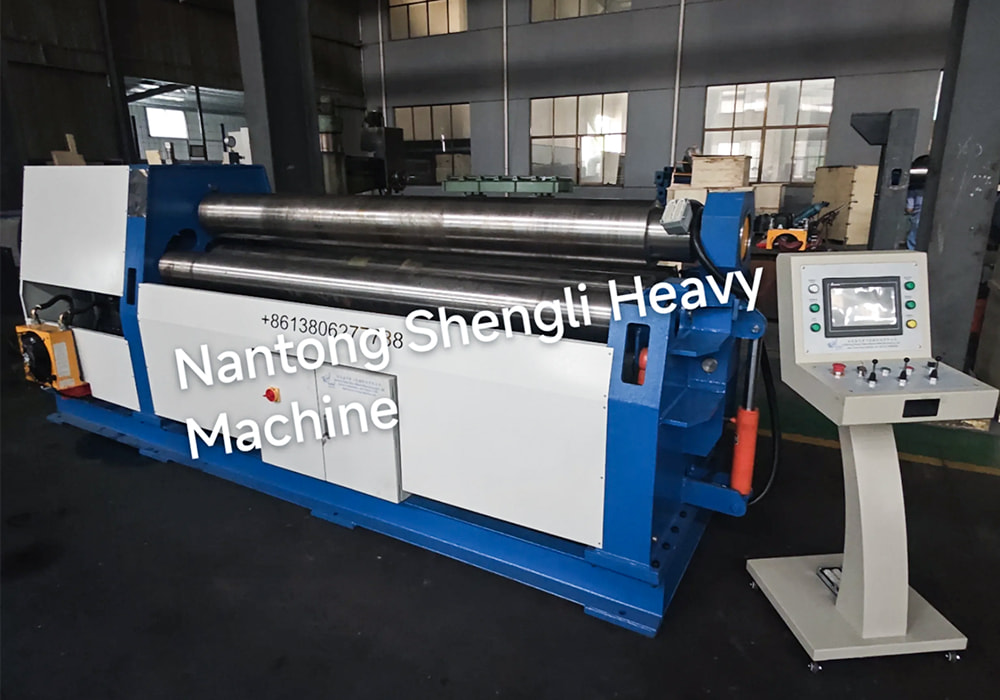 HDLW12-25×2500 Pipe Bending Rolling Machine
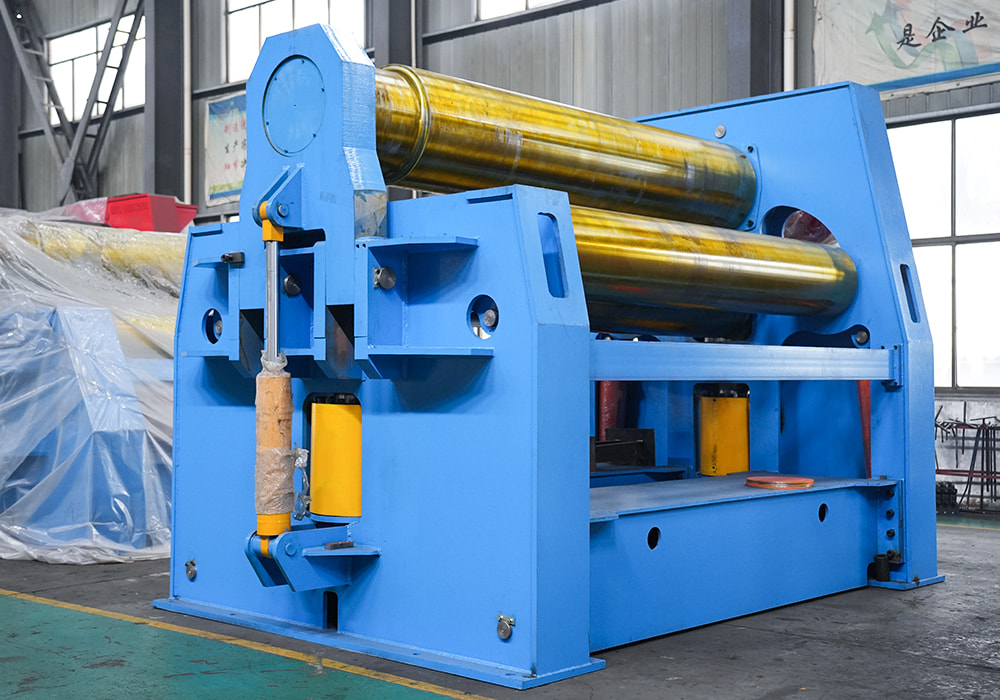 HDLW12-70×3200 CNC 4 Roll Metal Roll Bender
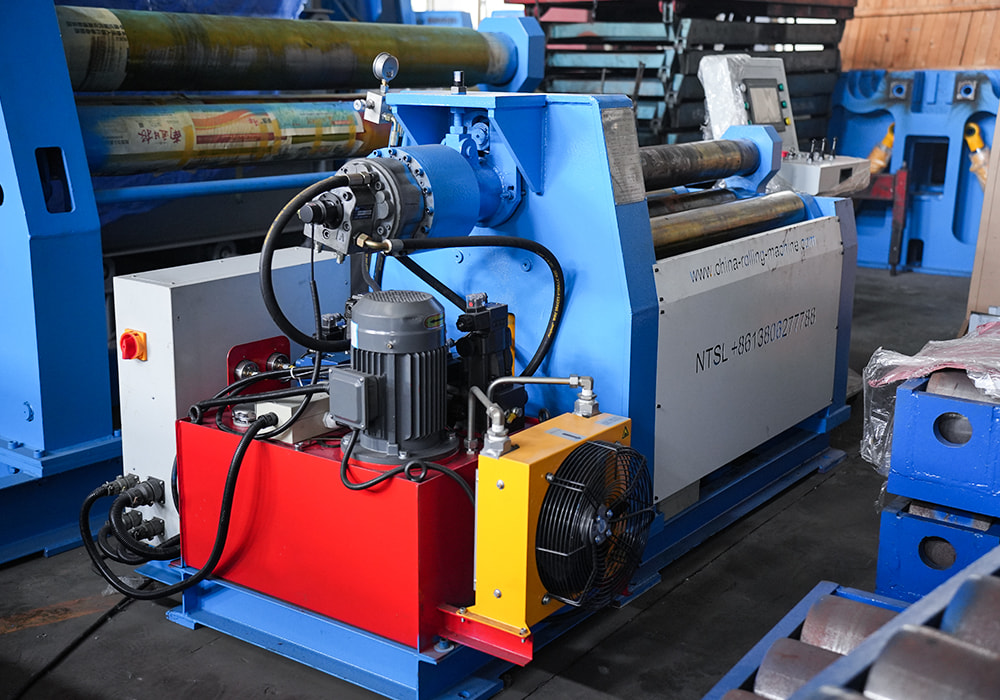 HDLW12-8×1000 4 Roll CNC Sheet Bending Machine

The company boasts strong technical capabilities, holds numerous national patents, and produces high-quality products that are widely recognized by customers both at home and abroad.

 Previous