English
 русский
 Español
Industry News
Home / News / Industry News / Custom 4-Roller Plate Rolling Machine Solutions for Industrial Applications
A fabricator in the oil and gas sector was rejecting 40 percent of shell sections because their three-roll machine could not edge-bend a 25 mm plate. The flat leading and trailing edges had to be processed separately, which doubled handling time and stretched delivery by two weeks. That is the typical point where engineering managers start evaluating custom 4-roller plate rolling machine solutions instead of trying to fix the limitations of a three-roll design.
A custom 4-roller plate rolling machine is a metal forming machine with two upper rolls and two lower rolls that clamp the plate between them and bend it through a single bottom roll, allowing full edge pre-bending in one pass.
Unlike three-roll machines, which require the operator to flatten the leading edge separately, a four-roll design grips the plate at all times. This gives industrial fabricators three decisive advantages: no flat tails, no pre-bending offset, and one continuous rolling cycle.
The "custom" part means the base design is adapted to your material, geometry, and control requirements. Plate thickness, plate width, roll length, roll diameter, CNC degree, and the ability to roll conical shapes are all reconfigured at the factory, not at the installation site.
Four-roll plate rolling machines deliver faster, more accurate cylinders for heavy-plate applications because they combine edge pre-bending with a single clamping point and a controlled bending force.
In a comparative job, a 16 mm plate rolled on a three-roll machine needed 18 operations to produce a 3 m diameter shell. The same job on a four-roll machine took 11 operations, saving 39 percent of handling time.
Here is a direct comparison of the two designs for typical industrial workloads:
| Attribute | Three-Roll | Four-Roll |
| Edge pre-bending | Manual, separate | Integrated, one pass |
| Plate clamping | No continuous grip | Continuous grip |
| Cone rolling | Possible, but limited | Supported by CNC |
| Lowest plate thickness | Typically 6 mm and up | From 8 mm |
| Operator skill required | High | Moderate |
Any reliable 4-roller solution will start with your plate specifications, not a fixed catalogue.
Hengdeli designs each machine around the following parameters:
When you specify a machine, the first step is to map your real part profiles. A custom machine can then be tuned to those exact curves, rather than forcing a standard model to adapt.
For consistent quality, Hengdeli integrates hydraulic power with CNC position feedback so that the bottom roll force is applied predictably. Our quality assurance process covers both the hydraulic system and the CNC controls.
Custom four-roll machines are most commonly deployed in three heavy-plate industries: storage tanks, wind tower sections, and LSAW pipe plants.
For oil storage tanks, an ultra-long 4-roll machine is used to roll shell plates up to 8,000 mm long. The plate is pre-bent, rolled, and ejected without any re-positioning. For wind towers, the same machine is used with a hydraulic drive to keep the wall thickness tolerance within 1.5 mm on a 4.2 m diameter section.
Here is a visual representation of the maximum plate thickness covered by several Hengdeli four-roll models:
For LSAW pipe production lines, the four-roll machine works as the forming unit in both JCOE and RBE processes. Hengdeli supplies RBE lines with a specific 6-metre professional plate rolling machine that pre-bends the plate edge before the forming press finishes the diameter.
If you need a stock model, these three four-roll machines cover the majority of industrial jobs:
 China plate rolling machine & metal forming machine manufacturerExplore Our Featured ProductsView Product →
China plate rolling machine & metal forming machine manufacturerExplore Our Featured ProductsView Product →
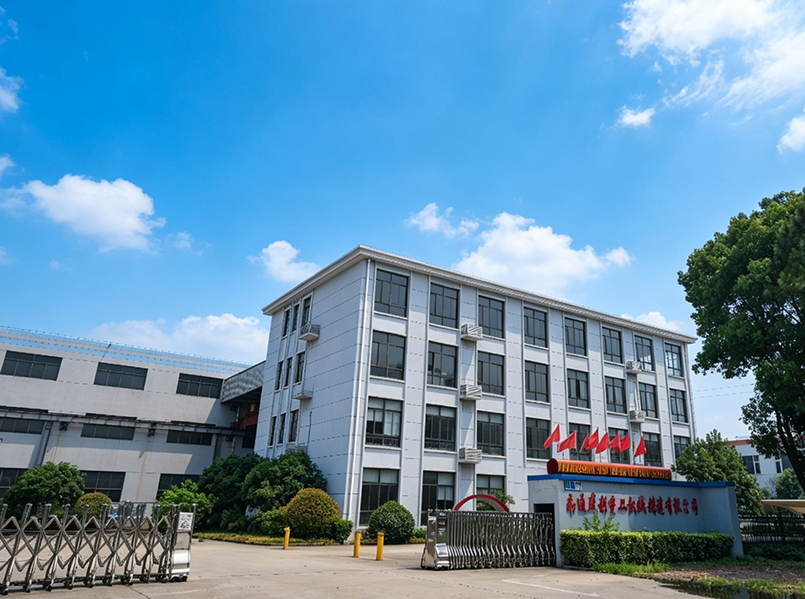
Hengdeli (Nantong Shengli Heavy Industry Machinery Manufacturing Co., Ltd.) has been manufacturing plate forming equipment since 2003, and its four-roll series spans more than 100 standard configurations.
The company builds the core product in-house: the rolls, the hydraulic cylinders, the frame, and the control system are all designed under one roof. This is a decisive factor when you need a truly custom solution, because no third-party component has to be adapted to your job.
Every machine leaves the factory with documented test certificates. The company also publishes case studies from existing customers who have placed repeat orders, which shows the equipment is used and trusted beyond the first installation. Our export customers in more than 20 countries rely on Hengdeli machines for tank, tower, and pipe production.
A three-roll machine bends the plate between two side rolls and a top roll, but the plate tail often remains flat. A four-roll machine clamps the plate and pre-bends both edges before rolling, which produces a complete arc without any flat section.
Yes. With an adjustable lower roll angle and conical rolling software, a four-roll machine can produce conical segments for dished heads, reducers, and hoppers. The CNC must be configured for this operation.
Hengdeli custom four-roll machines cover roughly 8 mm to 180 mm thickness, depending on the model and the available hydraulic force. The maximum width is usually 4,000 mm, but longer rolls can be specified.
Delivery time is based on the engineering cycle. A standard four-roll machine can be shipped in 8–10 weeks, while a fully customized line may take 5–6 months including factory test runs.
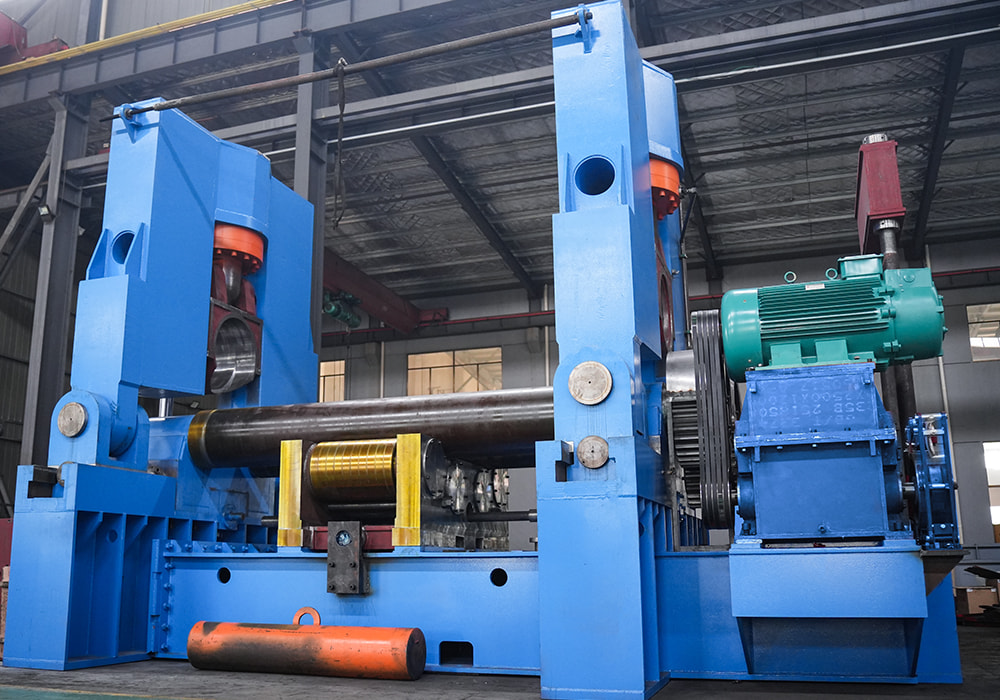 HDLW11S-120×3500 Upper Roller Universal 3-roller Plate Rolling Machine
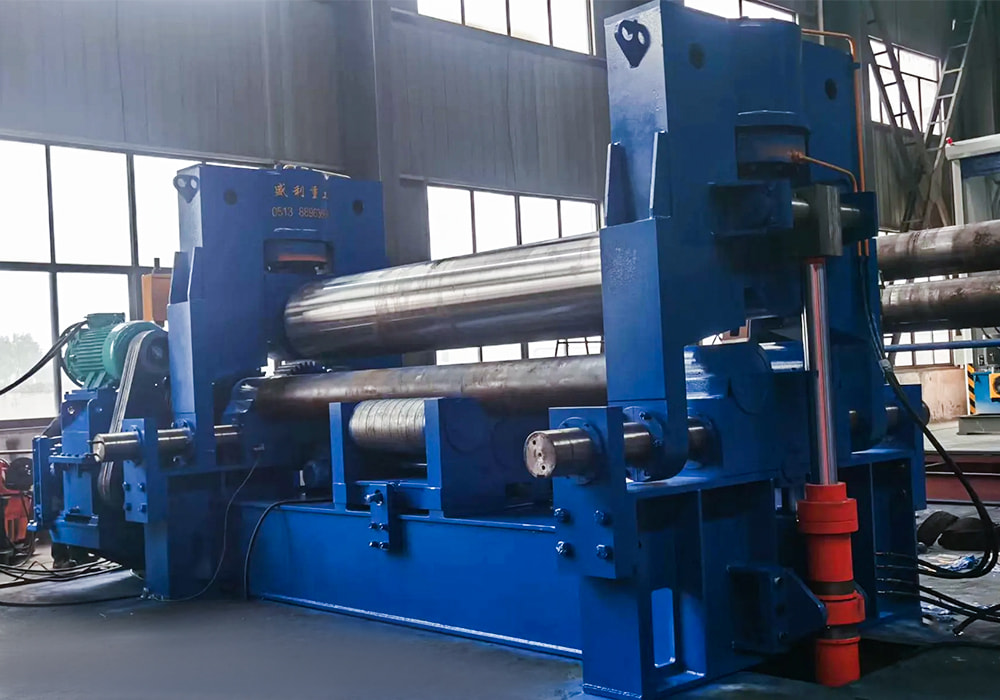 HDLW11S-50X3000 Upper Roller Universal 3-roller Plate Rolling Machine
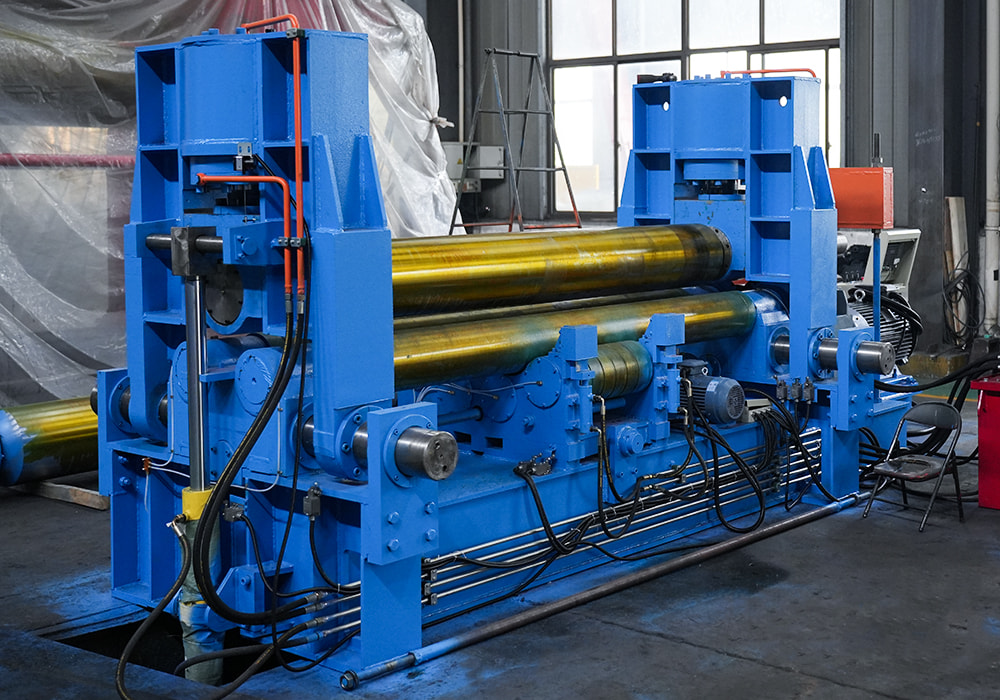 HDLW11S-30×3000 Upper Roller Universal 3-roller Plate Rolling Machine
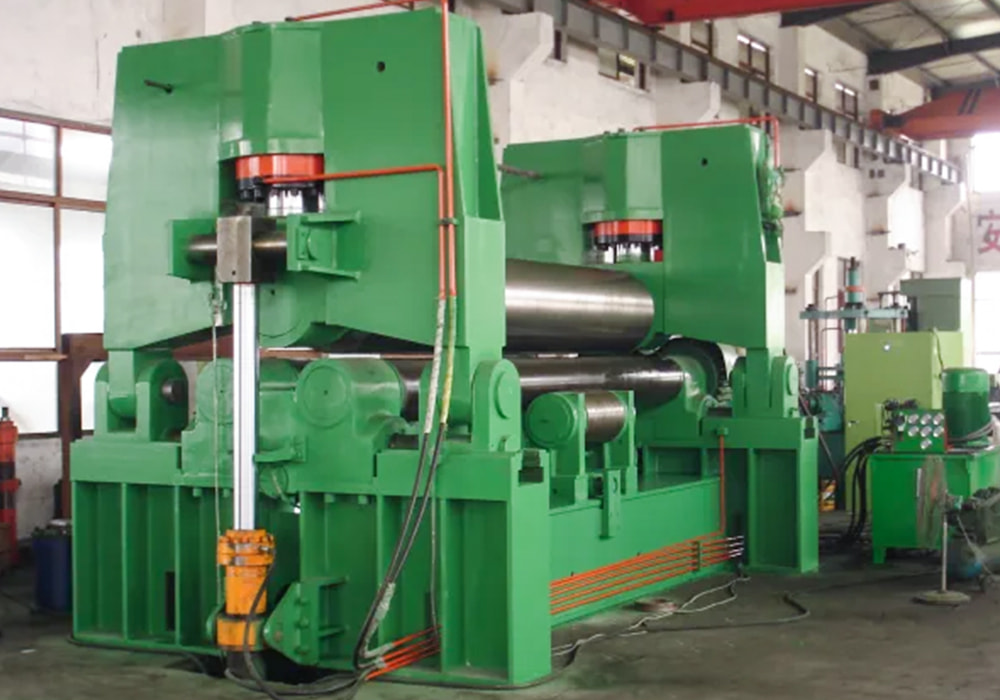 HDLW11X-100×3100 oblique 3-roller plate rolling machine
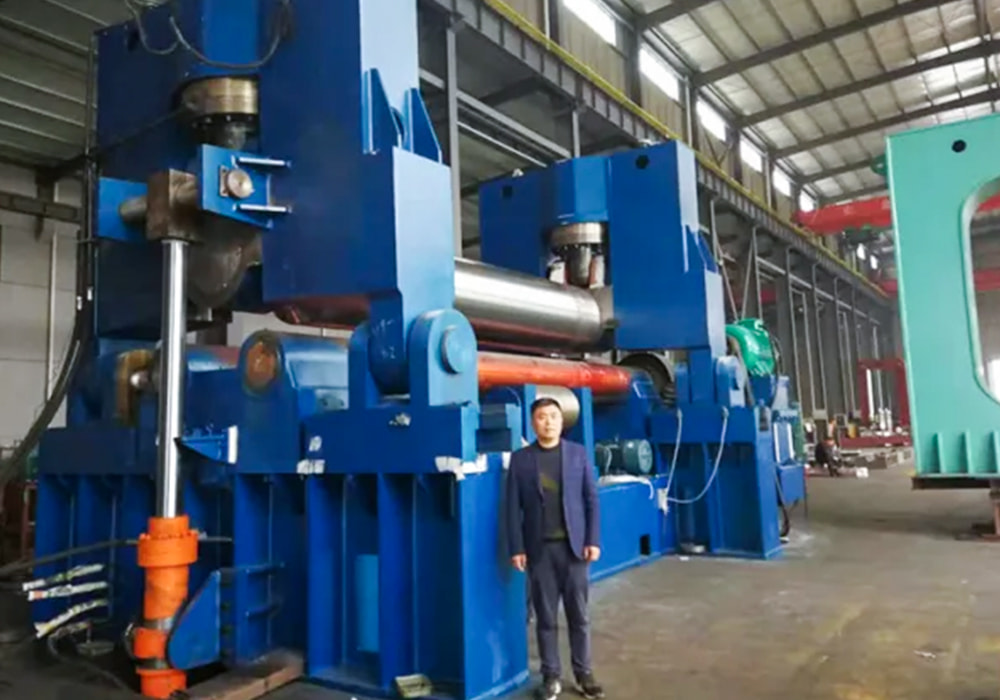 HDLW11-150X3200 hydraulic symmetrical 3-roll plate rolling machine
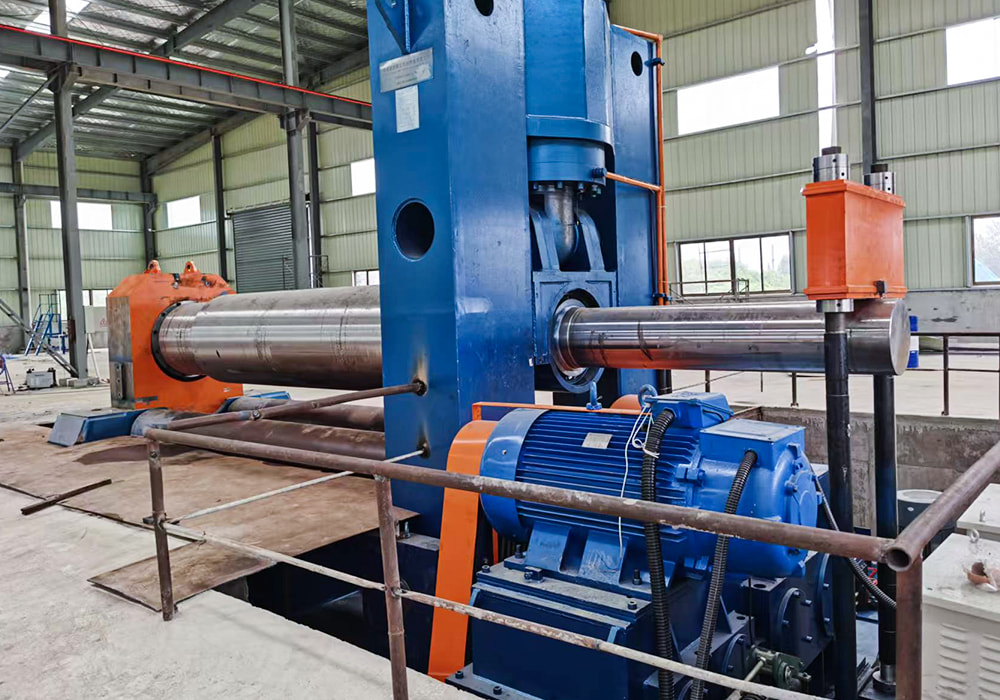 HDLW11-120X3500 Symmetrical 3 Roller Plate Rolling Machine
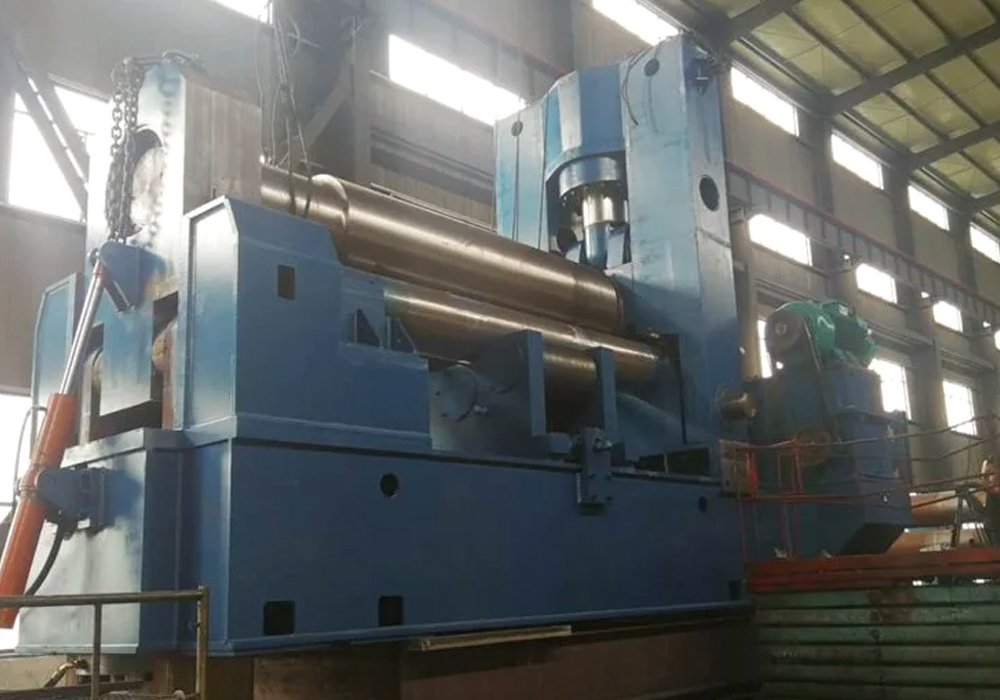 HDLW11-100X4200 pull-down 3 roller plate rolling machine
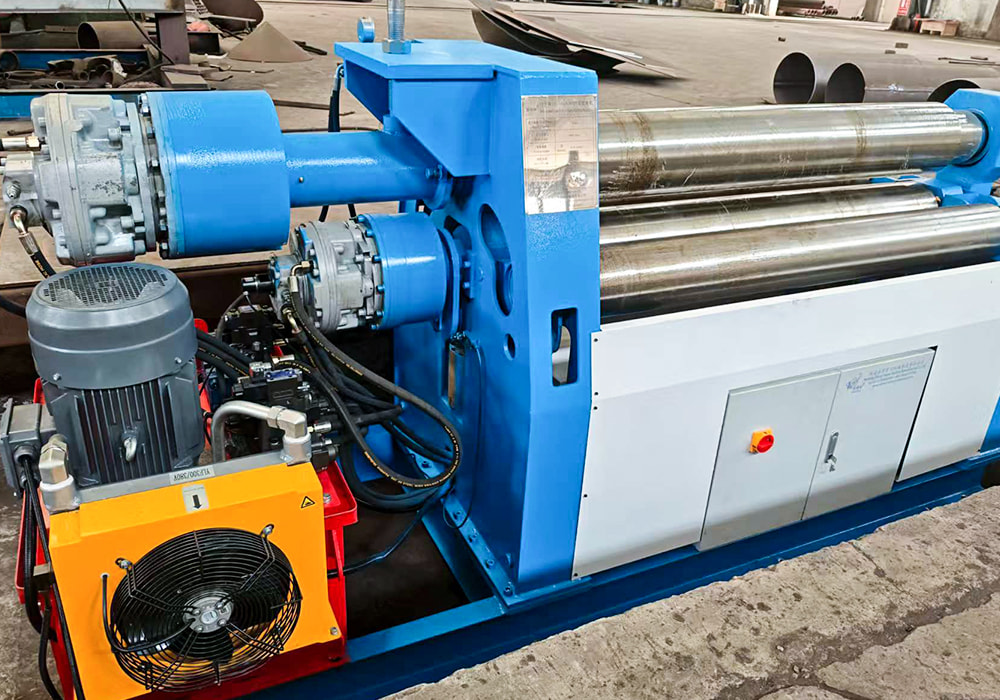 HDLW12-16x1600 CNC 4 Rolls Metal Sheet Bending Machine
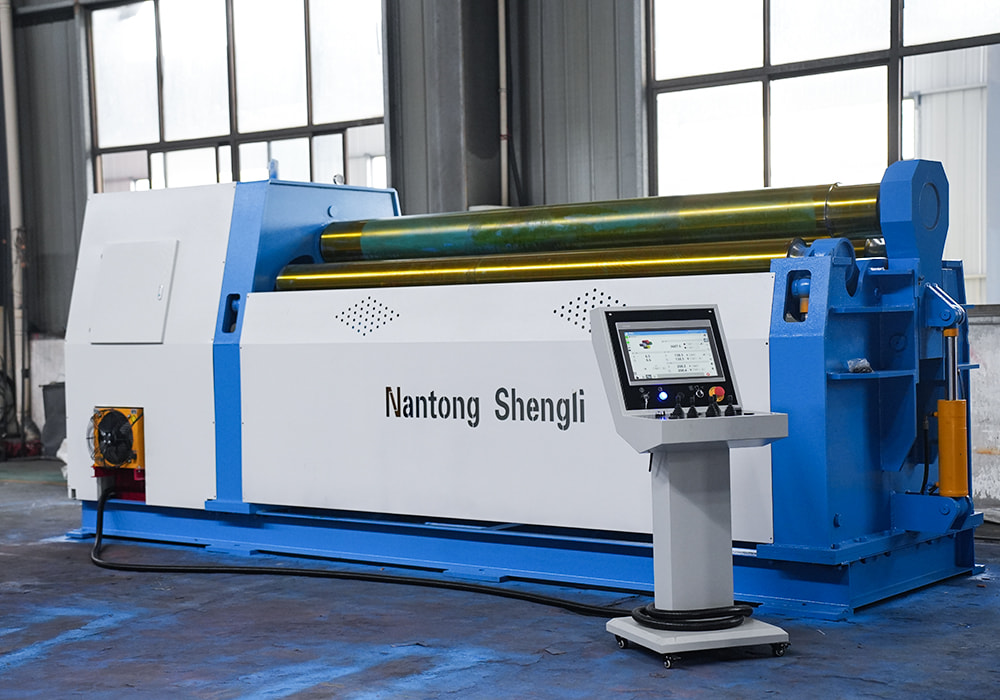 HDLW12-12×3000 4 Rolls Plate Bending Machine
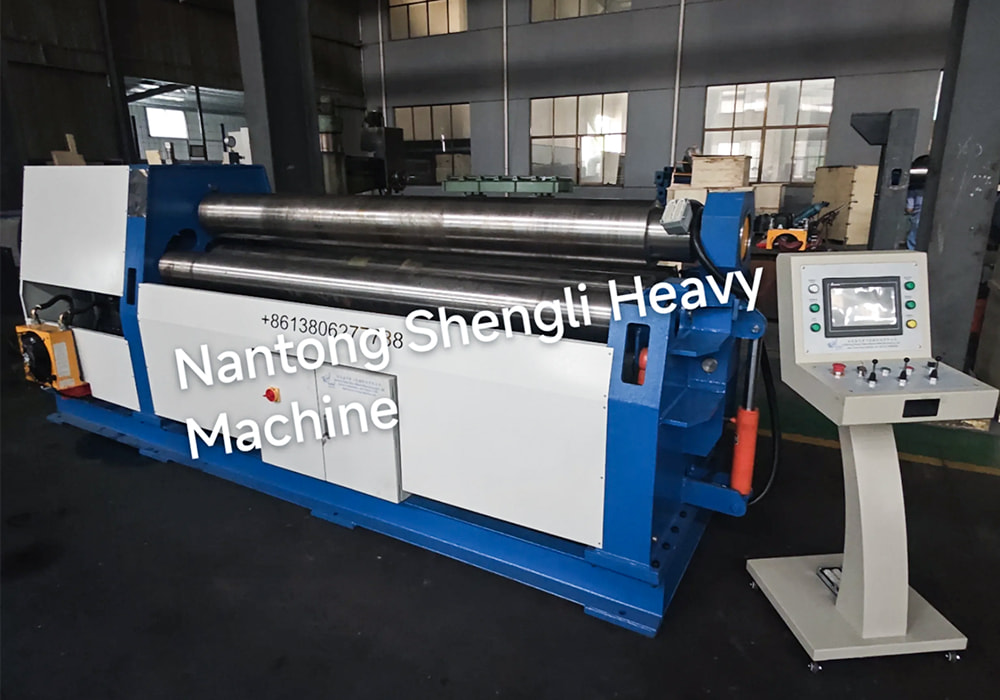 HDLW12-25×2500 Pipe Bending Rolling Machine
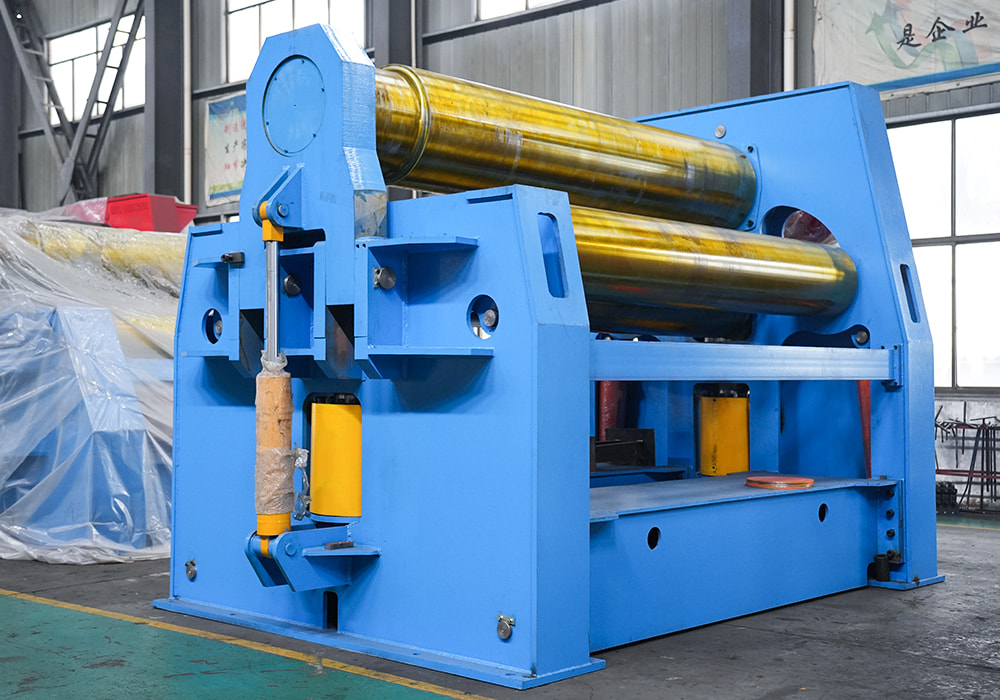 HDLW12-70×3200 CNC 4 Roll Metal Roll Bender
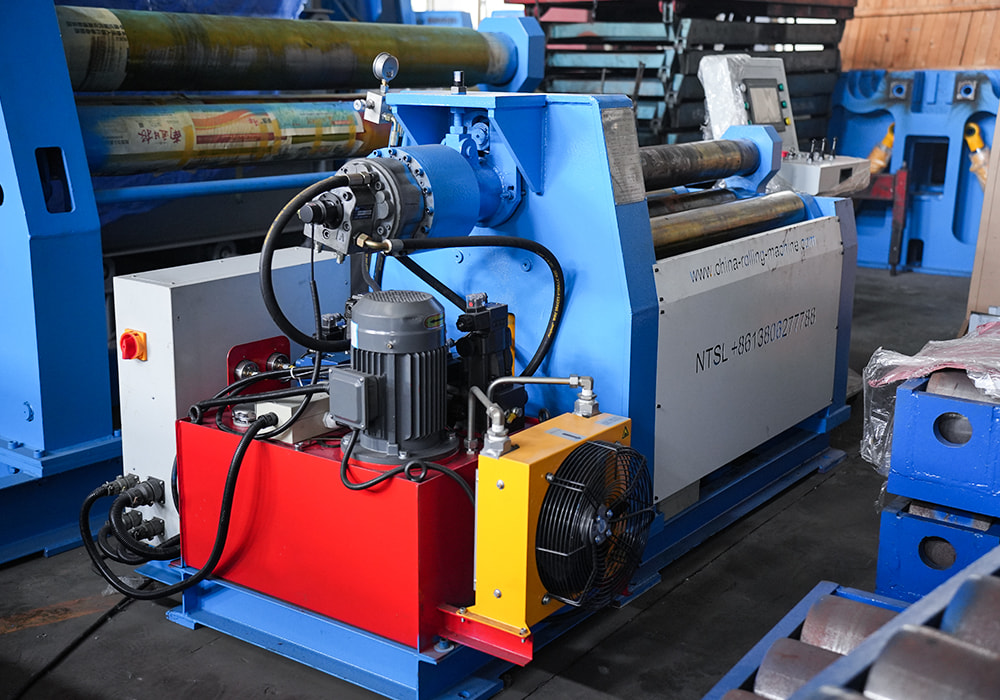 HDLW12-8×1000 4 Roll CNC Sheet Bending Machine

The company boasts strong technical capabilities, holds numerous national patents, and produces high-quality products that are widely recognized by customers both at home and abroad.

 Previous