English
 русский
 Español
Industry News
Home / News / Industry News / Large Diameter LSAW Pipe Mill: Key Forming and: Practical Applications, Selection
Plate width, not press tonnage, sets the ceiling on a large diameter LSAW pipe mill. Divide usable plate width by pi and the arithmetic is immediate: 4,000 mm of millable plate supports an outside diameter near 1,270 mm, while a 1,219 mm (48 in) line pipe consumes roughly 3,830 mm of circumference before edge trim allowance is added. Every forming and welding decision downstream is bound by that geometry, which is why mill specification starts with a plate envelope and finishes with a qualified weld procedure.
A large diameter LSAW pipe mill is a fixed-geometry production line in which edge milling, JCO forming, submerged arc welding and cold expansion are matched to one diameter range, one wall thickness range and one steel grade family.
LSAW pipe is built from discrete plate rather than coil. Each plate is milled on both long edges, crimped at the edges, formed into an open section by controlled press strokes or rolling, tack welded, then welded from the inside and the outside. The finished shell is expanded, hydrostatically tested and end-faced. Each stage hands a tolerance to the next, so a mill that is weak at forming cannot be rescued at the welding station.
That definition fixes the equipment list. A JCOE line carries separate machines for edge milling, pre-bending, forming, tack welding, internal welding, external welding, cold expansion and end chamfering. An RBE line forms the shell on a long plate rolling machine and reuses the same welding and finishing chain. Nantong Shengli Heavy Machinery Manufacturing Co., Ltd., which manufactures under the Hengdeli brand, builds both configurations, so the forming question and the welding question have to be answered together.
Three forming requirements decide whether a large diameter LSAW mill holds diameter and out-of-roundness tolerances: edge condition after milling, edge curvature after pre-bending, and springback control during the closing stroke.
The milled edge does two jobs: it removes the rolled, work-hardened skin of the plate, and it cuts the bevel that the submerged arc weld will fill. A double-V preparation with a defined root face is the standard arrangement on thick wall pipe because it balances weld volume between inner and outer passes. Bevel angle, root face and land width belong in the welding procedure specification, not in the operator's judgement. A worn insert leaves a ragged land, the arc wanders along the seam, and penetration varies down the pipe length.
Pre-bending, often called crimping, curves the outer band of each plate edge to the finished pipe radius before the main forming strokes begin. Skip it and the edges stay flat, the seam closes as a peak instead of an arc, and the tack weld has to bridge a gap that changes along the shell.
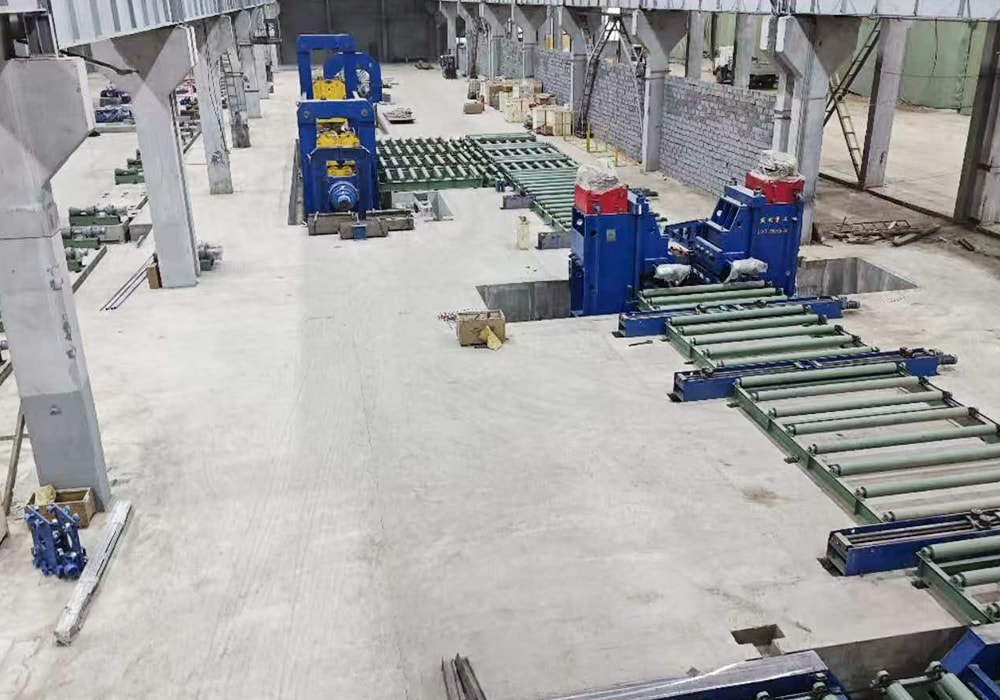 Pre-Bending Machine for JCOE LSAW Pipe LinesHydraulic multi-point edge pre-bending unit forms plate edges before JCO forming, helping match the thickest wall and avoid seam gaps and oval pipe ends.View Product →
Specify the pre-bending machine against the thickest wall in the product mix, not the mid-range wall. A crimper sized for 20 mm plate will not deliver a clean edge radius on a 32 mm wall, and the shortfall reappears later as an oval pipe end that fails the dimensional check.
Steel does not stay where it is bent. Springback after the closing stroke depends on yield strength, wall thickness and the ratio of diameter to thickness, so a fixed ram stop produces a different circumference for every plate grade. A CNC forming machine keeps a stroke recipe for each diameter and wall thickness and corrects it from the measured circumference of the first shell.
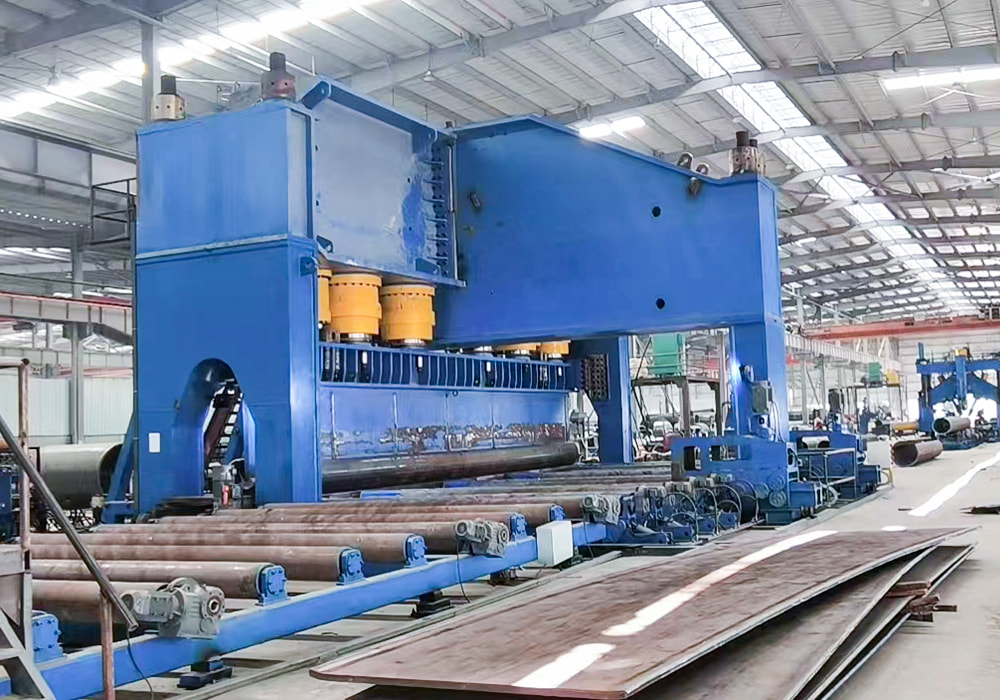 CNC Molding Machine for JCOE LSAW Pipe ProductionSegmented JCO hydraulic forming machine stores stroke recipes by diameter and wall thickness, supporting repeatable round pipe blanks across grade changes.View Product →
Ask for the circumference tolerance the forming station holds across a full grade change, and ask how many trial shells are needed to reach it. That figure, not the tonnage on the datasheet, predicts the scrap rate in the first week of a new contract.
Weld quality on a large diameter LSAW mill is governed by three variables: the seam gap locked in by tack welding, the order of the internal and external passes, and the heat input recorded for every pass.
The tack weld holds the closed shell at the specified gap and alignment. Two measurements matter: gap width and seam misalignment, the step between the two plate edges. Misalignment beyond the limit written into the purchase specification concentrates stress at the weld toe and cannot be corrected after the external pass has been deposited.
Submerged arc welding on the inside of the pipe is completed first so that the external pass sits on a sound root. A three-wire or four-wire internal head deposits root, fill and cap in a single pass on medium wall thickness, which is why these machines are specified by wire count, travel speed and the current mix across the wires.
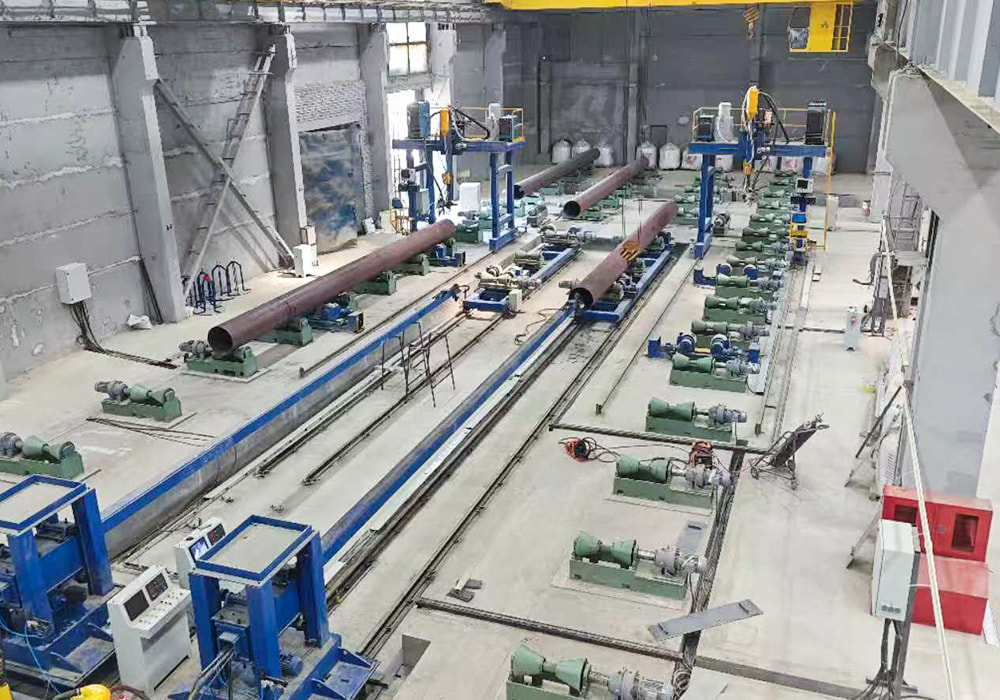 Internal Submerged Arc Welding Machine for LSAW PipesTelescopic multi-wire internal welding unit performs full-length longitudinal seam welds with seam tracking, supporting a sound root before the external pass.View Product →
Seam tracking matters as much as the torch. The pipe rotates under the welding head, and any drift between seam centre and arc position shows up as an off-seam cap. Mechanical or laser tracking keeps that offset inside the cap width for the full mill length.
Heat input in kilojoules per millimetre equals arc voltage multiplied by current, multiplied by 60, divided by travel speed in millimetres per minute and then by 1,000. A pass run at 30 V, 900 A and 800 mm per minute works out at 2.03 kJ/mm.
High heat input raises deposition but lowers heat-affected zone toughness in thermomechanically rolled line pipe steel; low heat input risks lack of sidewall fusion. Both limits come from the qualified welding procedure, and the mill should log voltage, current and travel speed per pipe so each seam can be checked against it. Flux handling belongs to the same discipline, because flux that has absorbed moisture introduces hydrogen into a thick, high-restraint seam.
Cold expansion converts a welded shell into a dimensionally stable pipe. A mechanical expander pushes the pipe past yield, and expansion ratios in the 0.8 percent to 1.2 percent band appear in line pipe specifications; the actual value must be confirmed against the purchase order rather than left to a machine default.
Expansion reduces ovality, straightens the axis and equalises residual stress around the seam. Non-destructive testing follows expansion, because expansion can open a defect that a pre-expansion scan would have passed. The verification route from incoming plate to dispatch is summarised in the company's account of how product quality is ensured, which is worth reading before a factory acceptance visit.
Sequence matters: expand, then test. A hydrostatic test performed before expansion validates a geometry the pipe will no longer have.
| Stage | Requirement to hold | Failure when it drifts |
| Edge milling | Square face, bevel angle and land per welding procedure | Arc wander, uneven penetration |
| Pre-bending | Edge radius matched to finished diameter | Peaked seam, open root gap |
| Closing stroke | Ram position corrected for measured springback | Ovality, wrong circumference |
| Tack welding | Uniform gap and controlled misalignment | Burn-through or lack of fusion |
| Internal SAW | Heat input window from procedure qualification | Heat-affected zone toughness loss |
| Cold expansion | Expansion ratio per purchase specification | Residual stress, out-of-round ends |
| Hydrostatic test | Hold pressure and time per contract | Defects escaping to site |
The two LSAW configurations differ in how the plate is curved, and that difference decides which order book each one serves.
Choose JCOE when the contract mixes diameters and wall thicknesses inside one year. Choose RBE when one diameter dominates the schedule and changeover time costs more than tooling flexibility. In both cases the welding and expansion stations should be sized for the widest and thickest case, otherwise the seam becomes the bottleneck that the forming machine was bought to remove.
Mill sizing is arithmetic before it is negotiation, and four figures decide whether a line can produce a given contract.
The 1,270 mm figure is a worked example, not a catalogue limit: 4,000 mm divided by pi gives 1,273 mm of circumference, from which edge trim and seam gap must still be deducted.
Buyers who have already commissioned one line tend to test exactly these items on the second, which is a pattern visible in the site's record of repeat purchases from existing customers.
Pi multiplied by 1,219 mm gives approximately 3,830 mm of circumference, and edge trim plus seam gap typically add 60 mm to 120 mm. A 3,900 mm to 4,000 mm width envelope covers that size without a two-piece plate.
Heat input in kJ/mm equals voltage times current times 60, divided by travel speed in mm per minute times 1,000. At 30 V, 900 A and 800 mm per minute the result is 2.03 kJ/mm, which is then compared with the window recorded in the qualified welding procedure.
No. Expansion corrects geometry and residual stress; the hydrostatic test verifies pressure integrity at the specified hold pressure and time. They are separate acceptance steps and both belong in the inspection and test plan.
Not on one forming frame. The forming station differs between the two routes, while edge milling, welding, expansion and finishing equipment can share a layout. Specify the welding and expansion stations for the widest and thickest case so the seam never becomes the constraint.
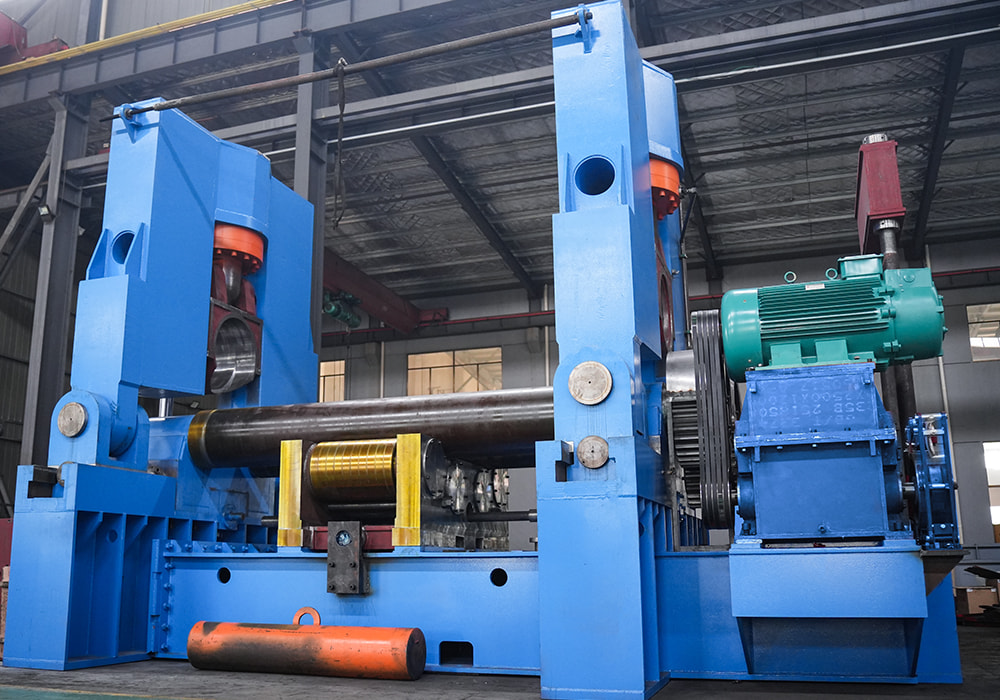 HDLW11S-120×3500 Upper Roller Universal 3-roller Plate Rolling Machine
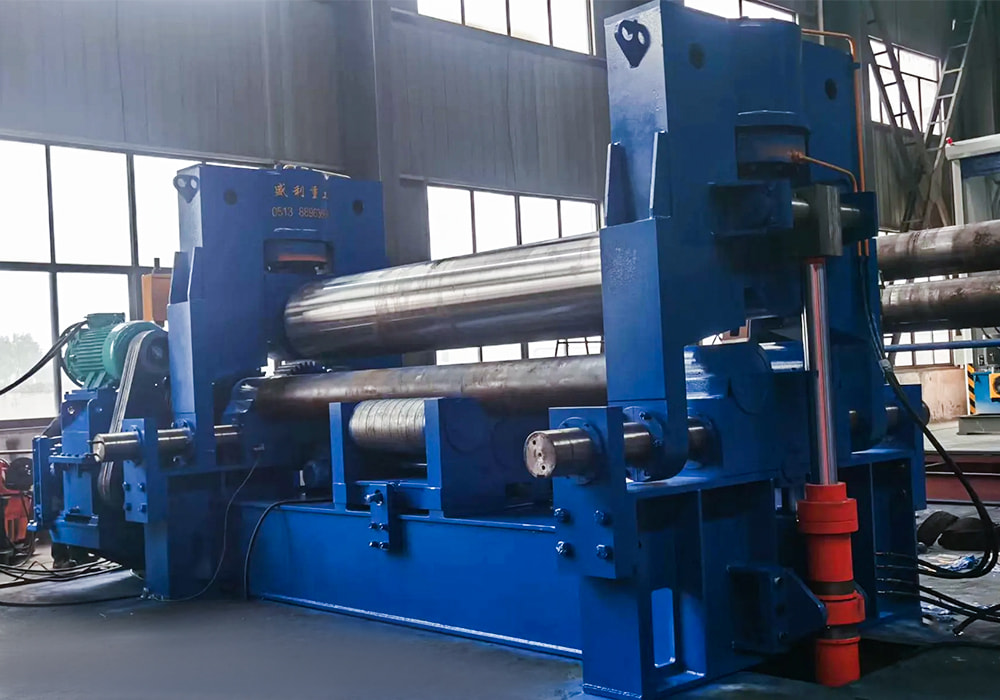 HDLW11S-50X3000 Upper Roller Universal 3-roller Plate Rolling Machine
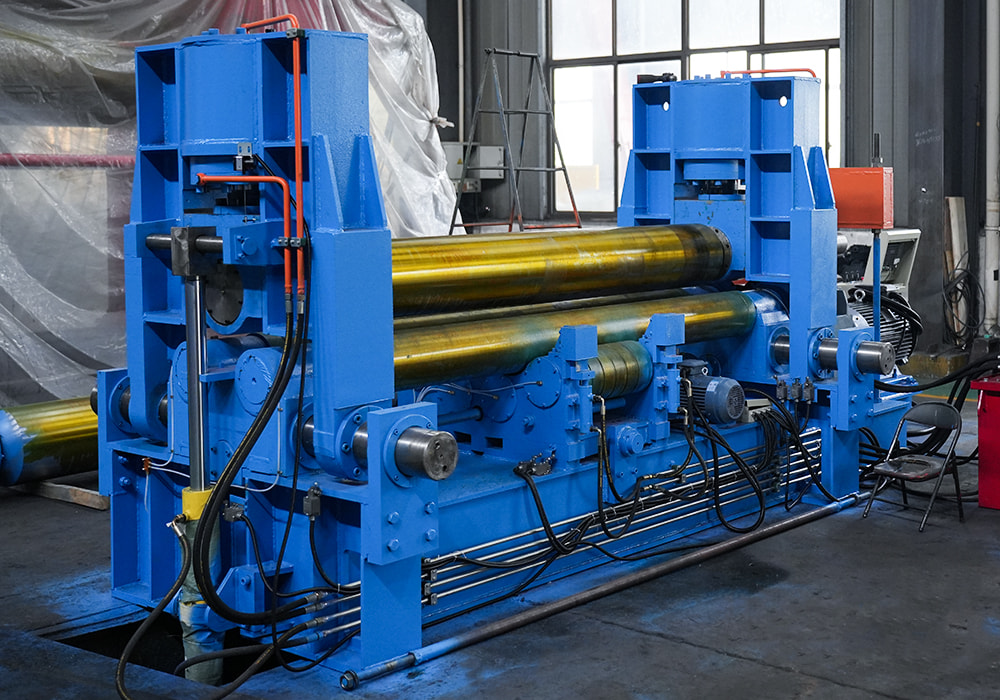 HDLW11S-30×3000 Upper Roller Universal 3-roller Plate Rolling Machine
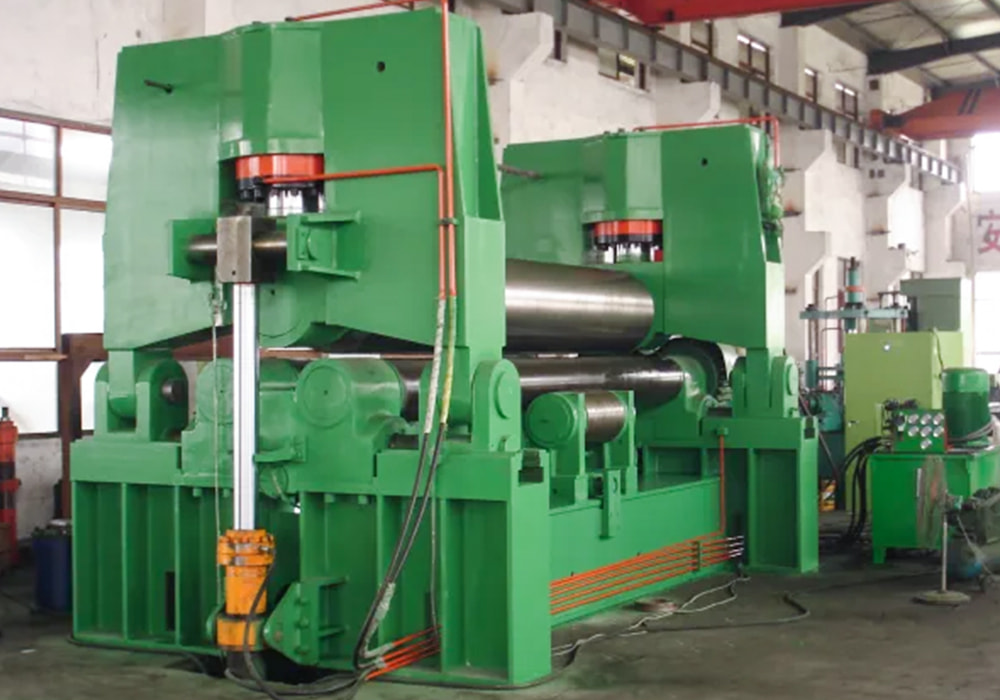 HDLW11X-100×3100 oblique 3-roller plate rolling machine
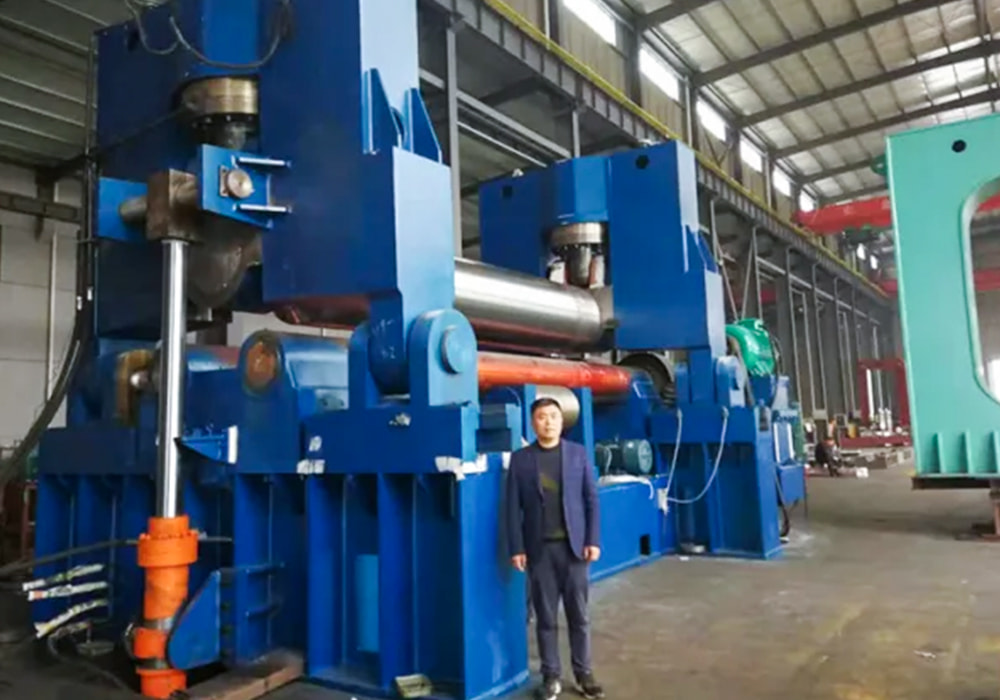 HDLW11-150X3200 hydraulic symmetrical 3-roll plate rolling machine
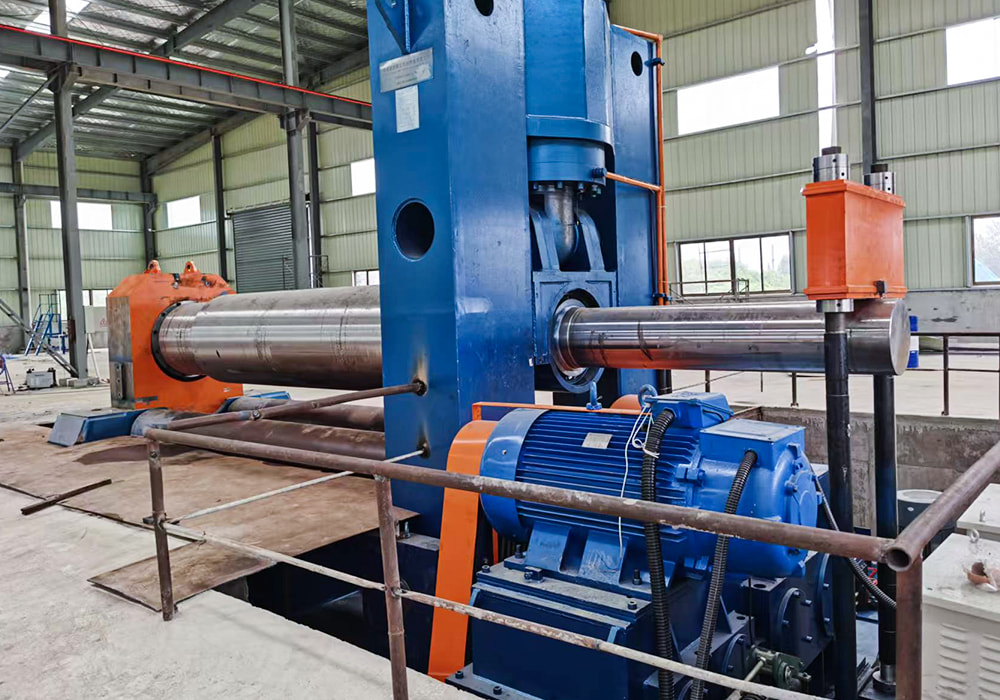 HDLW11-120X3500 Symmetrical 3 Roller Plate Rolling Machine
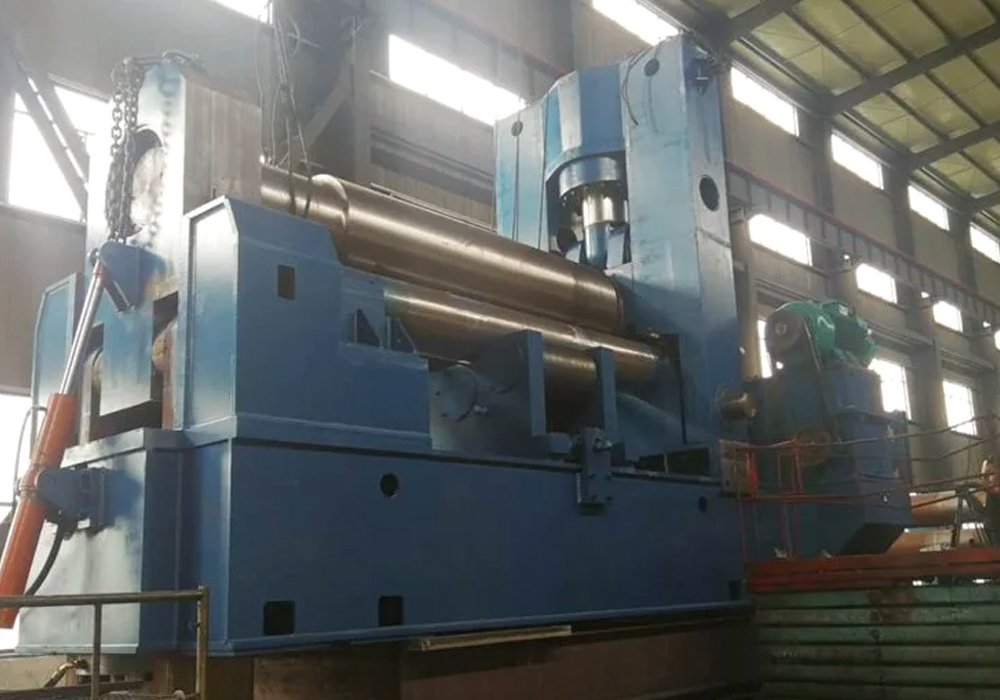 HDLW11-100X4200 pull-down 3 roller plate rolling machine
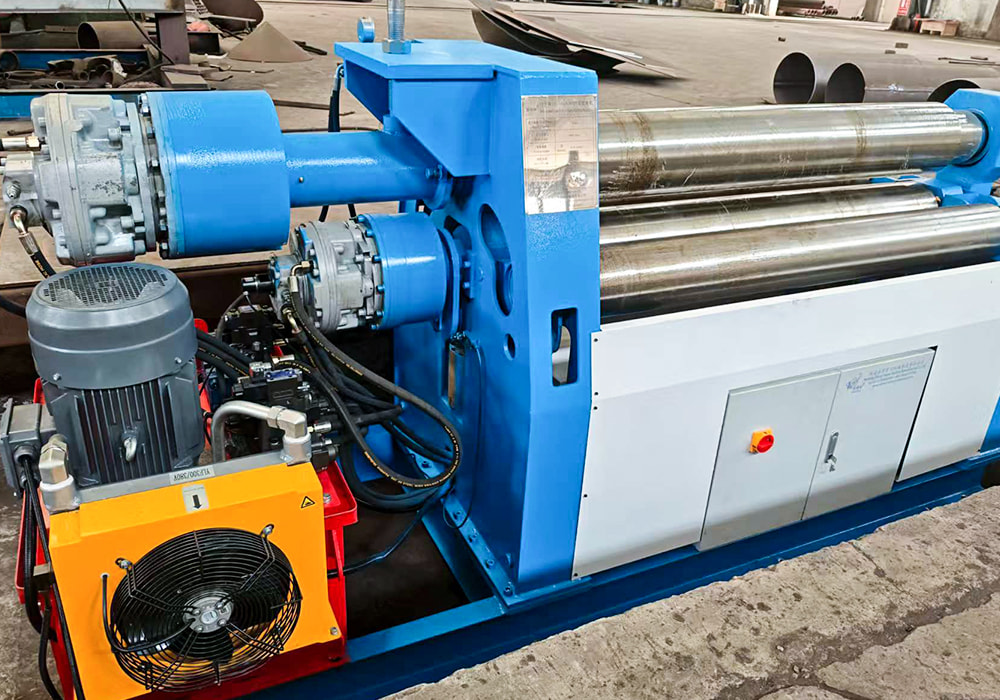 HDLW12-16x1600 CNC 4 Rolls Metal Sheet Bending Machine
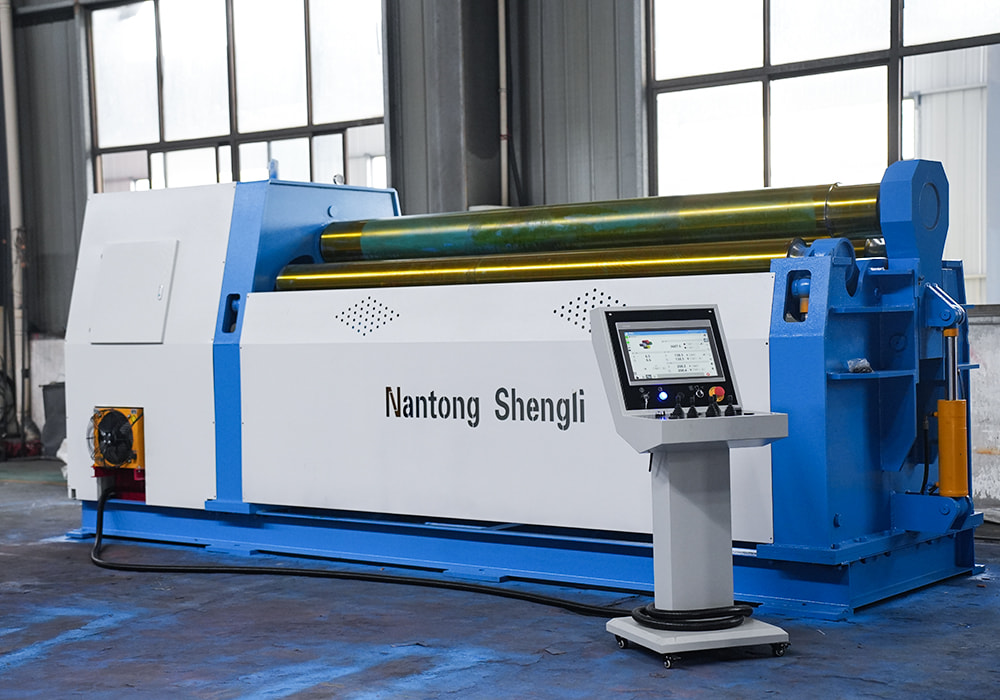 HDLW12-12×3000 4 Rolls Plate Bending Machine
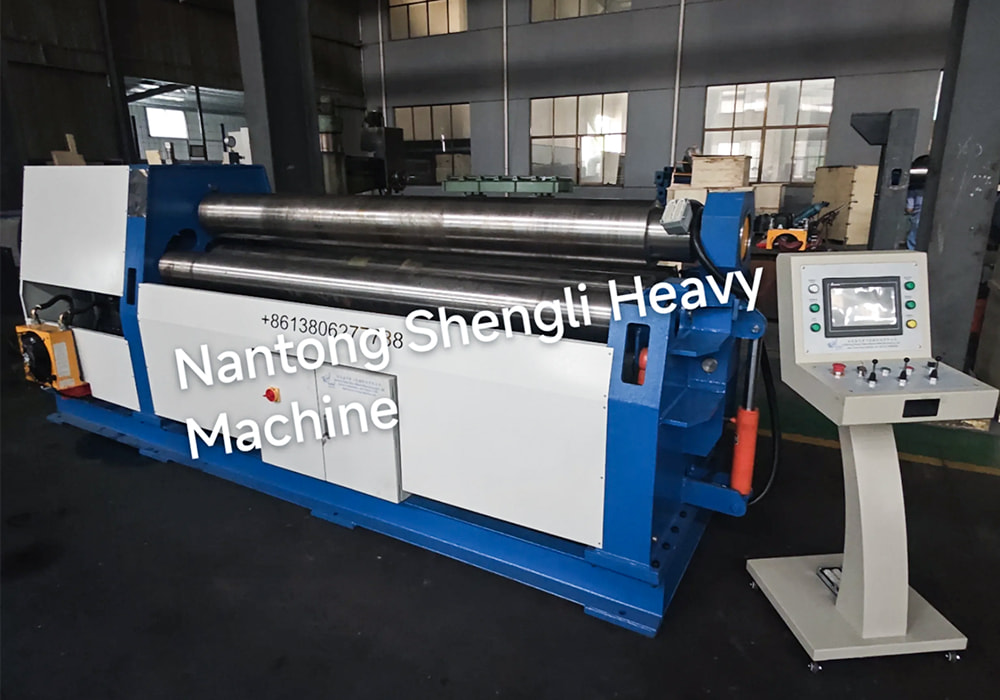 HDLW12-25×2500 Pipe Bending Rolling Machine
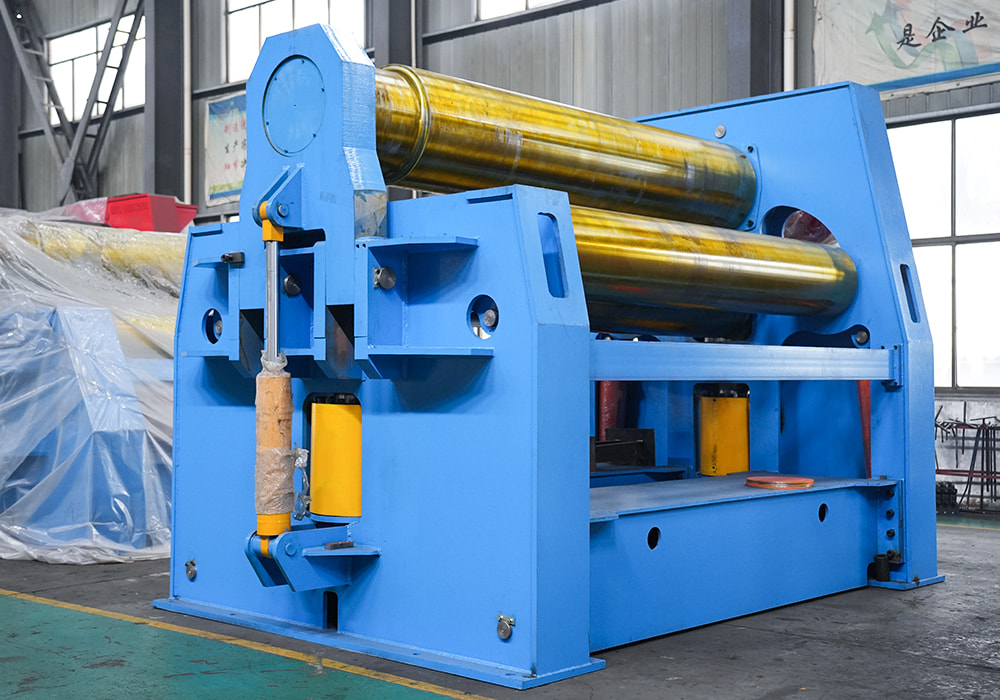 HDLW12-70×3200 CNC 4 Roll Metal Roll Bender
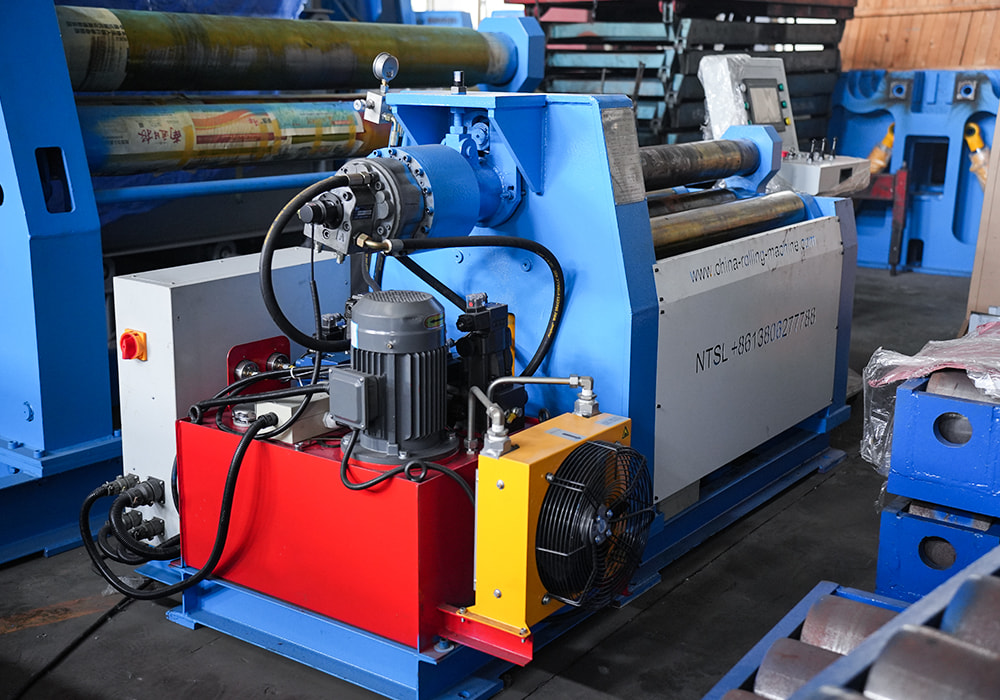 HDLW12-8×1000 4 Roll CNC Sheet Bending Machine

The company boasts strong technical capabilities, holds numerous national patents, and produces high-quality products that are widely recognized by customers both at home and abroad.

 Previous