English
 русский
 Español
Industry News
Home / News / Industry News / Symmetrical vs Asymmetrical Plate Rolling Machines Explained for Steel Fabricators
Roll a 3,000 mm x 12 mm S355 plate on a plain symmetrical three-roll machine and the first pass still leaves a flat, unbent strip at each end of the plate. On a typical 12 x 3000 machine that flat zone runs roughly 150 mm to 250 mm per end, and every one of those millimetres has to be trimmed off, re-rolled after a 180-degree turnover, or welded shut with extra filler and extra grinding.
That single geometric fact drives most of the buying decision between symmetrical and asymmetrical plate rolling machines. The two designs are not a quality ladder. They are two different answers to the same question: how do you bring the plate edge to the tangent point where the top roll actually bends metal?
This guide compares the two roll layouts in workshop terms: geometry, pre-bending behaviour, handling cycles, capacity rating practice, and the production profiles where each one wins. It also covers the third option that many buyers skip, the four-roll double-pinch machine, which removes the flat end on most work in a single clamping setup.
The words describe where the top roll sits relative to the two lower rolls. They say nothing about frame strength, control system or build quality.
Definition: in a symmetrical plate rolling machine the top roll is centred vertically above two lower rolls, forming an isosceles triangle usually called a pyramid. In an asymmetrical machine the top roll is offset to one side and the two lower rolls sit at different heights, so the plate end can be pinched and pre-bent at the tangent point without turning the plate over.
On a pyramid layout the two lower rolls are fixed in the frame and the top roll travels down to clamp the plate and apply bending force. Because the lower rolls sit apart, the last section of plate passing between them never reaches the tangent point, so it stays flat. The centre distance between the lower rolls sets how much flat remains, which is why a wide machine leaves a longer flat end than a narrow one of the same thickness rating.
On an asymmetrical layout the rolls are no longer arranged in a neat triangle. The top roll shifts towards one lower roll and the second lower roll is adjustable in height. That offset lets the plate enter the nip at the tangent point itself, so the leading edge starts bending as soon as the rolls turn. The same happens at the trailing edge, which means both ends of one plate can be pre-bent in a single setup without ever releasing the plate.
Roll position determines pre-bending capability, handling cycles and purchase price. Everything else about these machines is secondary to that.
| Configuration | Roll arrangement | End pre-bending | Handling cycles per cylinder | Typical fit |
| Symmetrical 3-roll | Top roll centred, two fixed lower rolls | Not built in | 4 | Cost-driven general fabrication |
| Asymmetrical 3-roll | Top roll offset, lower roll adjustable | Built in, both ends | 2 | Thin to medium plate, small diameters |
| Upper-roll universal 3-roll | Top roll traverses horizontally | Built in, one end at a time | 2 to 3 | Mixed work on medium plate |
| 4-roll double pinch | Top roll clamps, side rolls tilt | Built in, both ends | 1 | Thick plate, tight roundness, volume work |
Handling cycles are not a bookkeeping detail. A 3,000 mm x 4,000 mm x 20 mm steel plate weighs about 1.9 tonnes. Every cycle means a crane lift, a turnover, realignment against the rolls and a fresh clamp, and the plate surface gets handled twice more in the process.
A plain symmetrical three-roll machine cannot form the plate ends at all on the first pass, while an asymmetrical machine pre-bends both ends in the same setup. That difference, measured in handling cycles rather than in machine specifications, is where most of the cost gap sits.
Handling cycles needed to finish one cylinder with both ends pre-bent, by machine layout.
On a machine running eight shells per shift, the gap between four cycles and two cycles is not a comfort feature. It is crane occupancy, floor space and the difference between one operator managing the rolls and two people managing the plate.
A symmetrical three-roll machine is the lowest-cost way to roll cylinders accurately, provided the flat ends are acceptable or are dealt with separately, and the upper-roll universal variant removes most of the pre-bending penalty.
The pyramid frame is mechanically simple: fewer moving rolls, fewer hydraulic circuits, lower maintenance load and a shorter spare parts list. That simplicity is why the layout still dominates general fabrication, and why the same rated thickness costs less here than on any other configuration.
The upper-roll universal variant changes the picture. The top roll traverses horizontally instead of only moving vertically, which recreates the offset nip of an asymmetrical machine and allows end pre-bending without a spacer. Nantong Shengli Heavy Industry Machinery Manufacturing Co., Ltd., which builds under the Hengdeli brand, produces this family in more than 100 specifications with a maximum rated thickness of 180 mm and a maximum plate width of 4000 mm across the range.
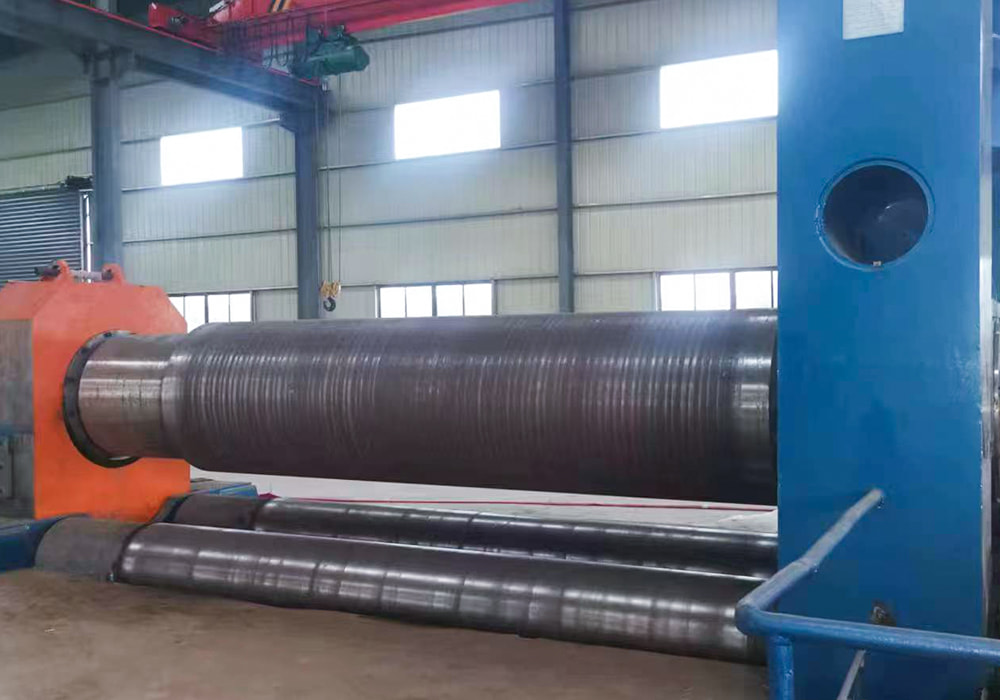 HDLW11 Symmetrical Three-Roll Plate Rolling MachineSymmetrical three-roll design with hydraulic rolling force and short flat ends, suitable for cylindrical, curved, and conical forming in pressure vessel and boiler work.View Product →
Where the symmetrical layout still loses is thick plate in high volume. Every pre-bend that needs a spacer or a second setup consumes crane time, and on 30 mm and heavier work that time compounds quickly across a shift.
An asymmetrical machine pre-bends both ends in one setup, which typically removes two complete plate-handling cycles per cylinder and shortens the flat zone to a small fraction of the pyramid figure.
The mechanism is straightforward. Because the top roll is offset, the plate edge can be pinched directly at the tangent point, and the adjustable lower roll controls how far the plate wraps. Operators usually describe the machine as more forgiving on thin plate, because small-diameter cylinders stay stable between the rolls without a support device.
The trade-off is structural. The offset nip concentrates higher local loads on the rolls and frame, so at equal rated thickness an asymmetrical machine generally carries a higher price and a heavier frame than a pyramid machine of the same width. Above roughly 25 mm of plate, four-roll designs usually become the better economic answer.
One common variant in this family is the oblique three-roll layout, which places the lower roll at an incline so the plate end reaches the tangent point while the frame keeps a compact footprint.
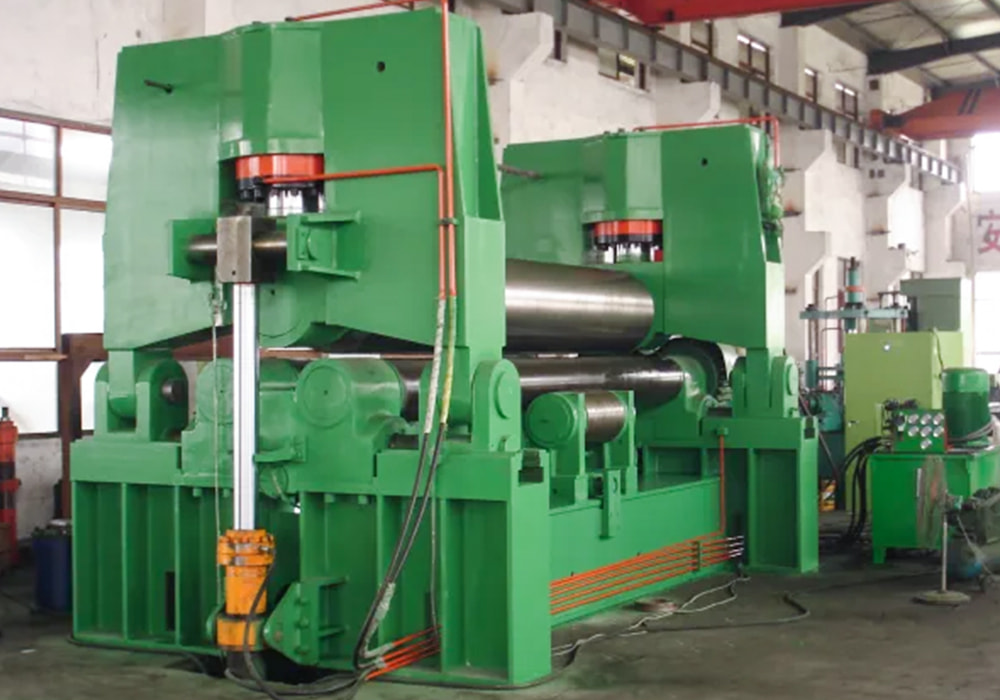 HDLW11X Oblique Three-Roll Plate Rolling MachineAsymmetric oblique layout enables one-side prebending without turning the plate, supporting carbon steel, alloy steel, and stainless steel in cylindrical, conical, and arc-shaped forming.View Product →
Asymmetrical machines are also easier to justify when diameters are small. Rolling a 500 mm diameter shell on a pyramid machine often needs an extra support or a smaller top roll, while an offset layout handles the same job with the standard roll set.
A four-roll double-pinch machine pre-bends both ends and completes the cylinder in a single clamping setup, because the plate never leaves the grip of the top and bottom rolls until the shell is finished.
The layout uses a fixed bottom roll, a top roll that clamps the plate, and two side rolls that rise and tilt to pre-bend each end. CNC control sequences the side roll positions through multiple passes, so the operator sets a program rather than chasing a radius by feel. This is the configuration that holds roundness on thick plate and long shells, and it is the standard choice for pressure vessel shells, wind tower sections and large-diameter line pipe.
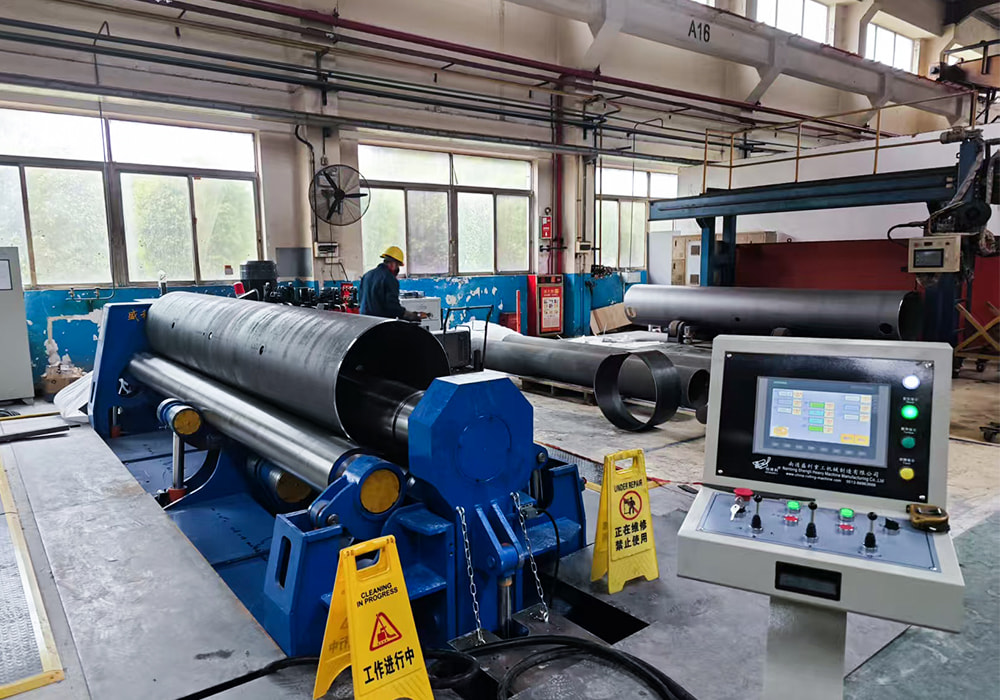 HDLW12 CNC Four-Roll Plate Rolling MachineCNC four-roll plate rolls use programmable side-roll adjustment and pre-bending to remove flat ends on cylindrical, conical, and long shell work.View Product →
The cost argument is not about purchase price alone. Four-roll machines cost more than either three-roll design at the same rated thickness, but they remove handling cycles, reduce end trim scrap and cut the rework that comes from a misaligned second setup. On thick plate running more than a few shells per shift, that arithmetic usually closes the gap.
Match the layout to your smallest cylinder diameter and your heaviest plate in the three-year plan, not to the average job in front of you this month.
Sizing the machine to the heaviest plate in the plan is the pattern behind most repeat purchases from existing customers, and it is cheaper than correcting an undersized specification later.
Capacity ratings are written for mild steel, so 180 mm of rated thickness is not 180 mm of S355, and the rating basis belongs in the purchase contract.
Quality documentation for this kind of equipment is normally handled through a defined inspection workflow, and buyers are entitled to see it before the machine leaves the works; the process behind how rolling capacity and build quality are verified is a fair question at quotation stage, not at commissioning.
Only partially. The standard workshop method inserts a spacer bar between the plate and the lower rolls so the leading edge can reach the tangent point. It reduces the flat zone but adds one handling cycle per end, and results depend on operator skill. On identical work, a symmetrical machine used this way runs slower than an asymmetrical one.
The four-roll double-pinch design, because the plate stays clamped between the top and bottom rolls through every pass and the side rolls are positioned by CNC rather than by hand. On thin plate of 3 mm to 6 mm, asymmetrical three-roll machines are often preferred for their ability to reach small diameters near 1.3 times the top roll diameter.
They can, but the economics shift above roughly 25 mm. The offset nip raises local roll loads, so a thick-plate asymmetrical machine needs a heavier frame and a higher price, at which point a four-roll machine completes the same cylinder with fewer passes and lower rework.
Budget four cycles for a plain symmetrical three-roll machine, two for an asymmetrical three-roll, and one for a four-roll double pinch. On a 1.9-tonne plate, one cycle means a crane lift, a turnover, realignment and a re-clamp, so the gap between four cycles and one is measured in hours per shell.
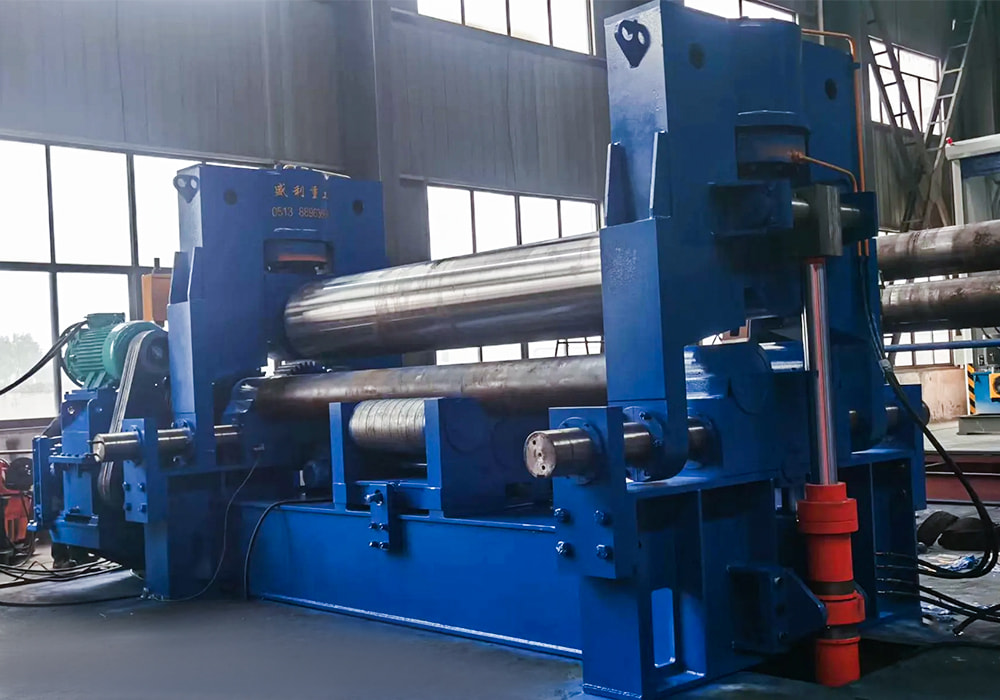
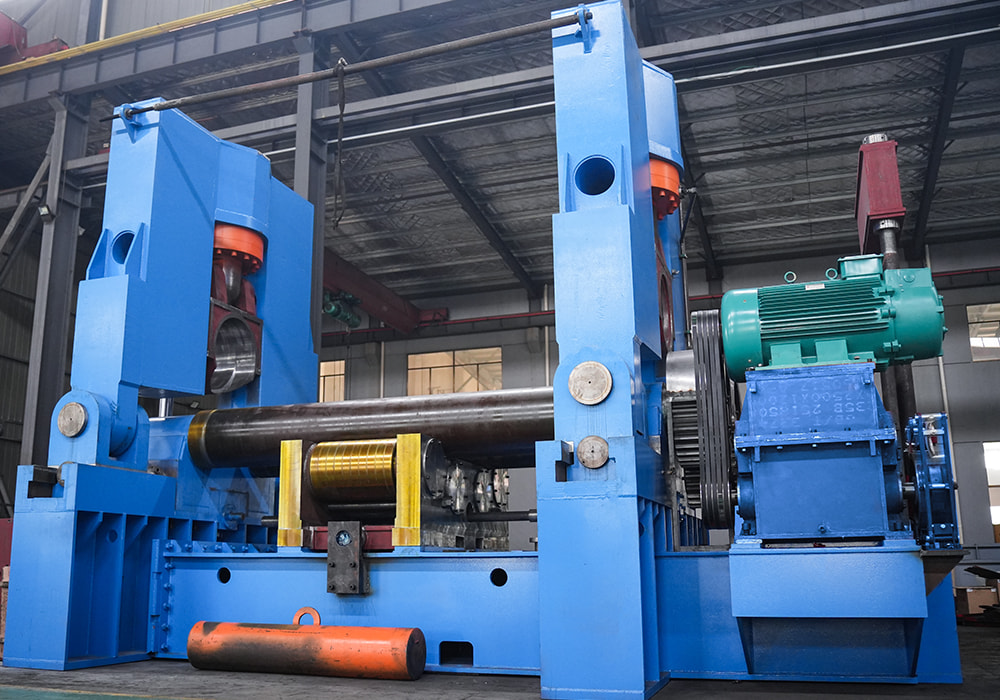 HDLW11S-120×3500 Upper Roller Universal 3-roller Plate Rolling Machine
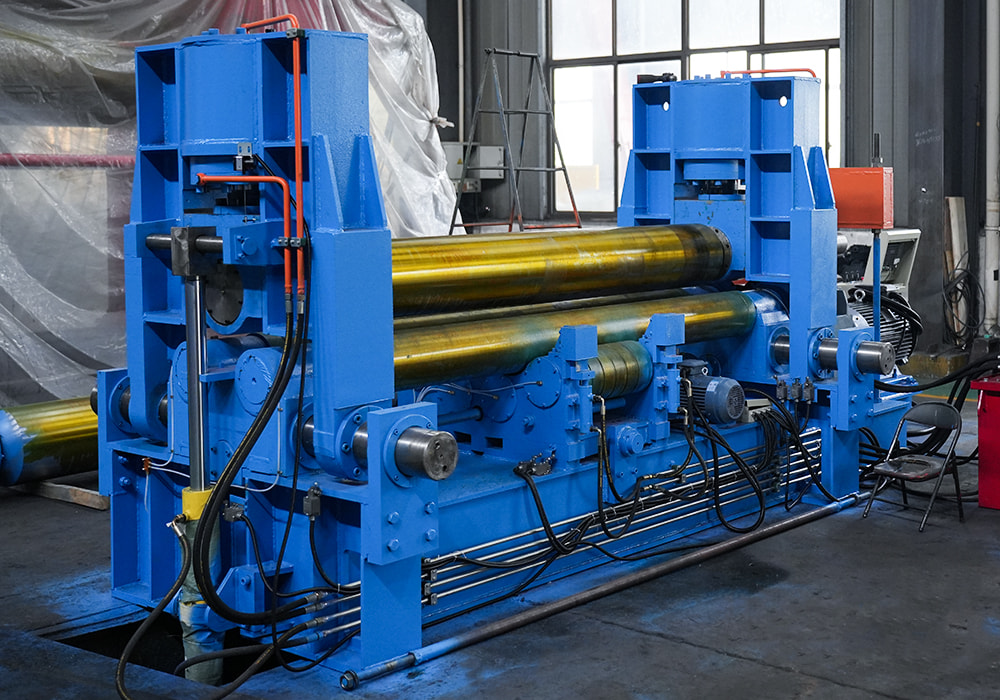
 HDLW11S-50X3000 Upper Roller Universal 3-roller Plate Rolling Machine
 HDLW11S-30×3000 Upper Roller Universal 3-roller Plate Rolling Machine
 HDLW11X-100×3100 oblique 3-roller plate rolling machine
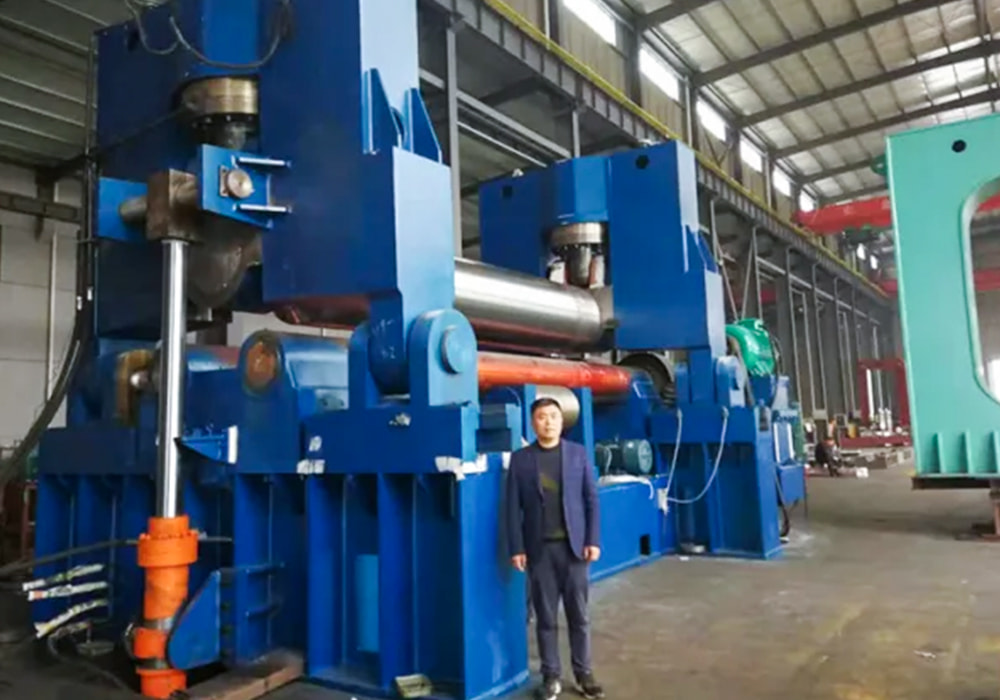 HDLW11-150X3200 hydraulic symmetrical 3-roll plate rolling machine
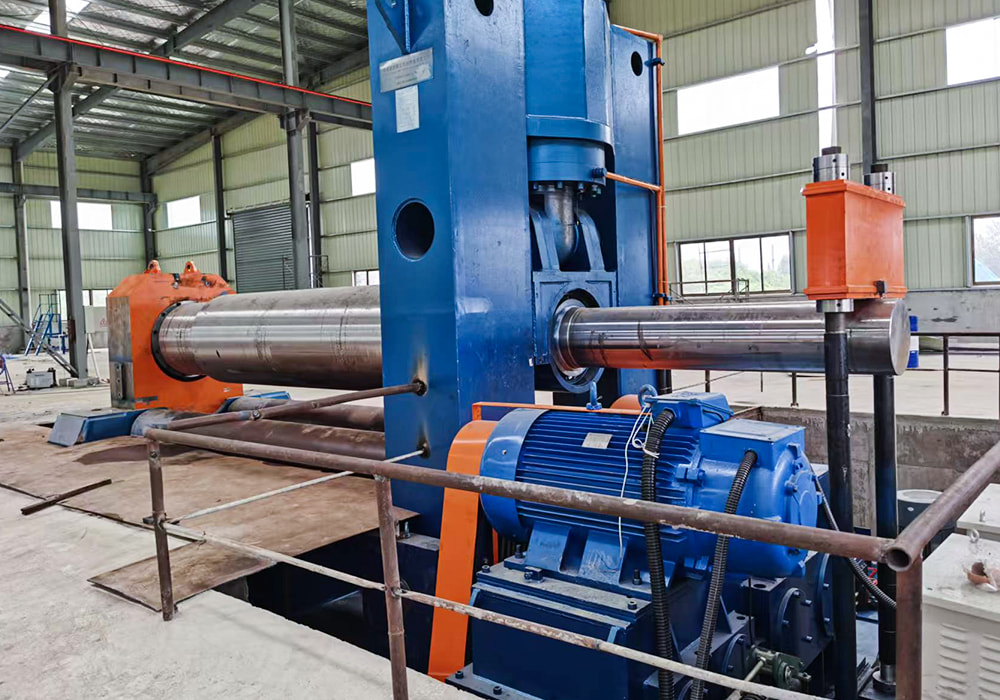 HDLW11-120X3500 Symmetrical 3 Roller Plate Rolling Machine
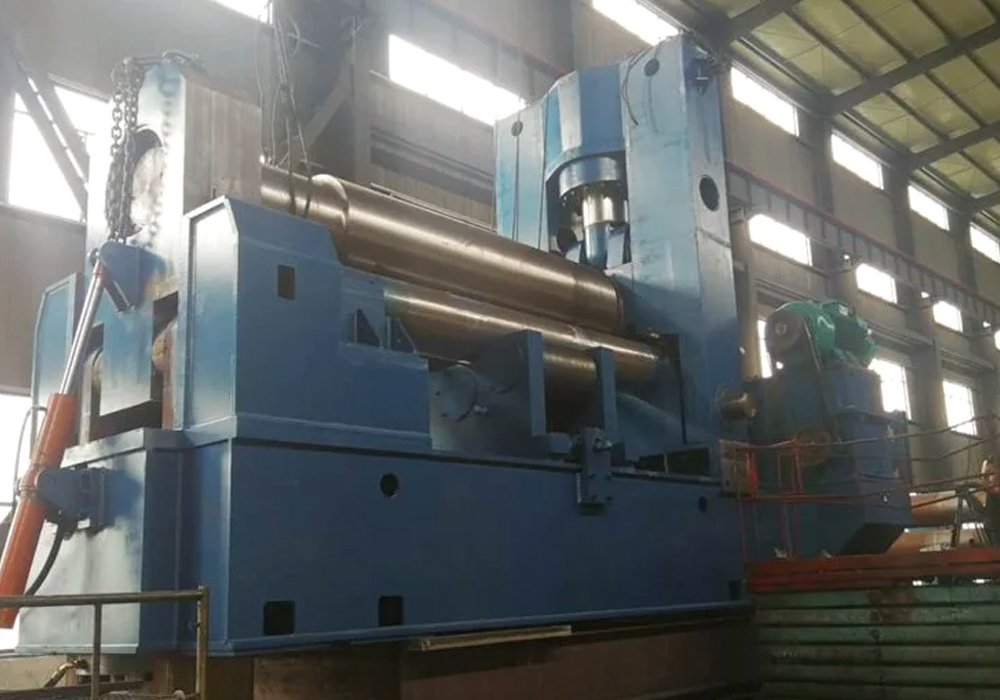 HDLW11-100X4200 pull-down 3 roller plate rolling machine
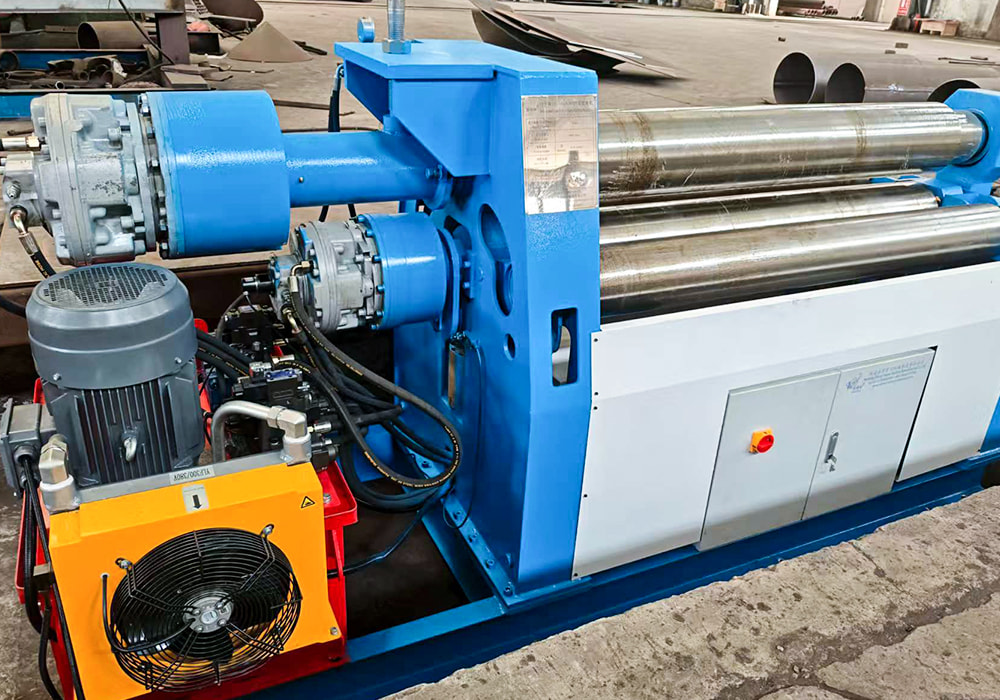 HDLW12-16x1600 CNC 4 Rolls Metal Sheet Bending Machine
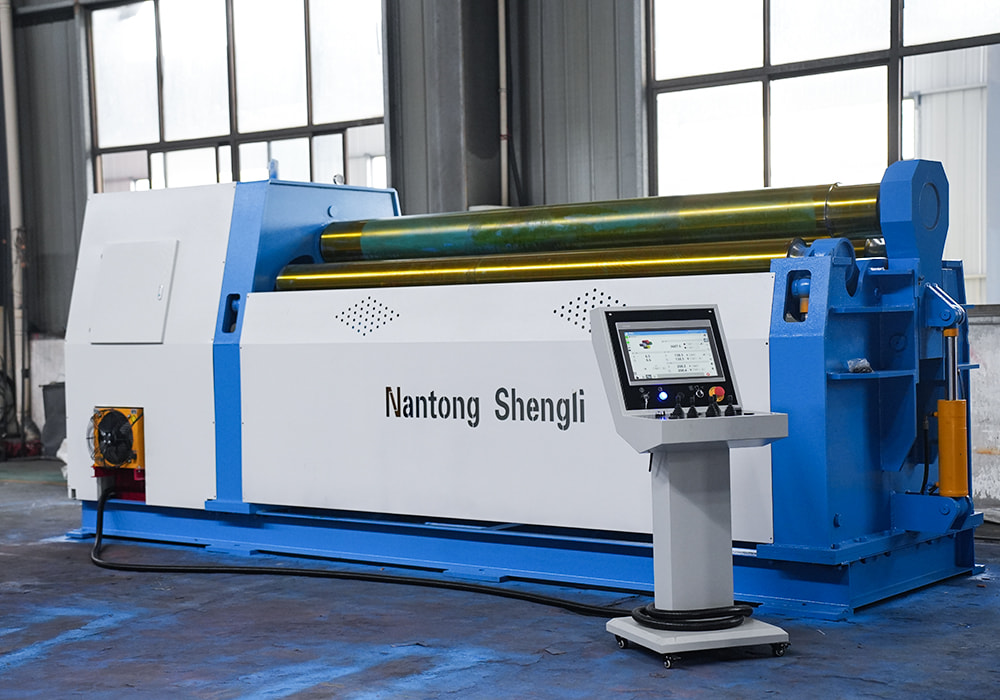 HDLW12-12×3000 4 Rolls Plate Bending Machine
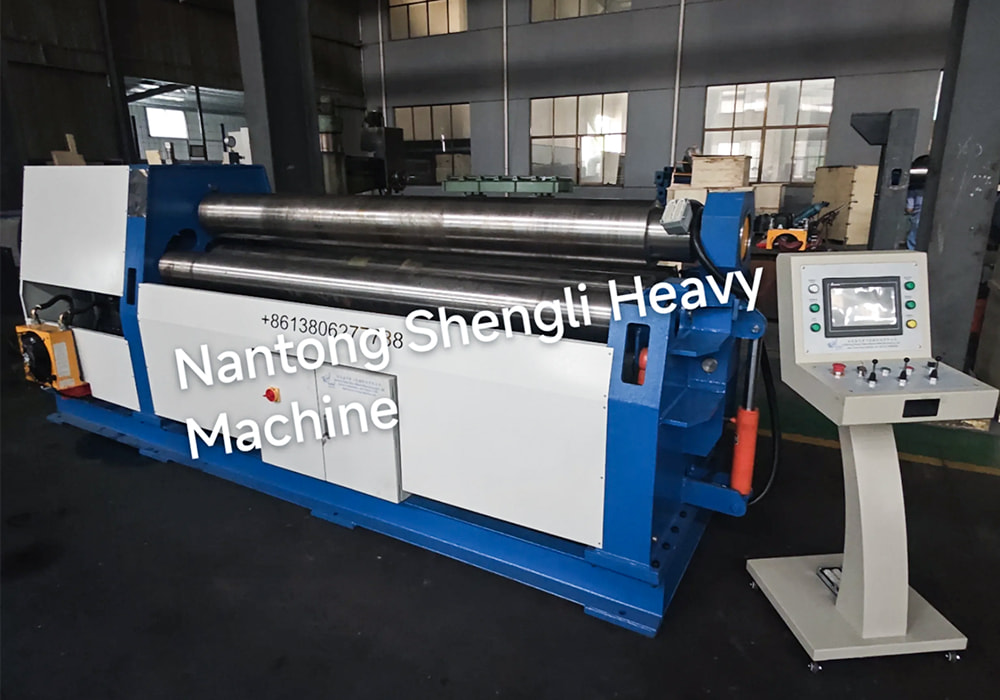 HDLW12-25×2500 Pipe Bending Rolling Machine
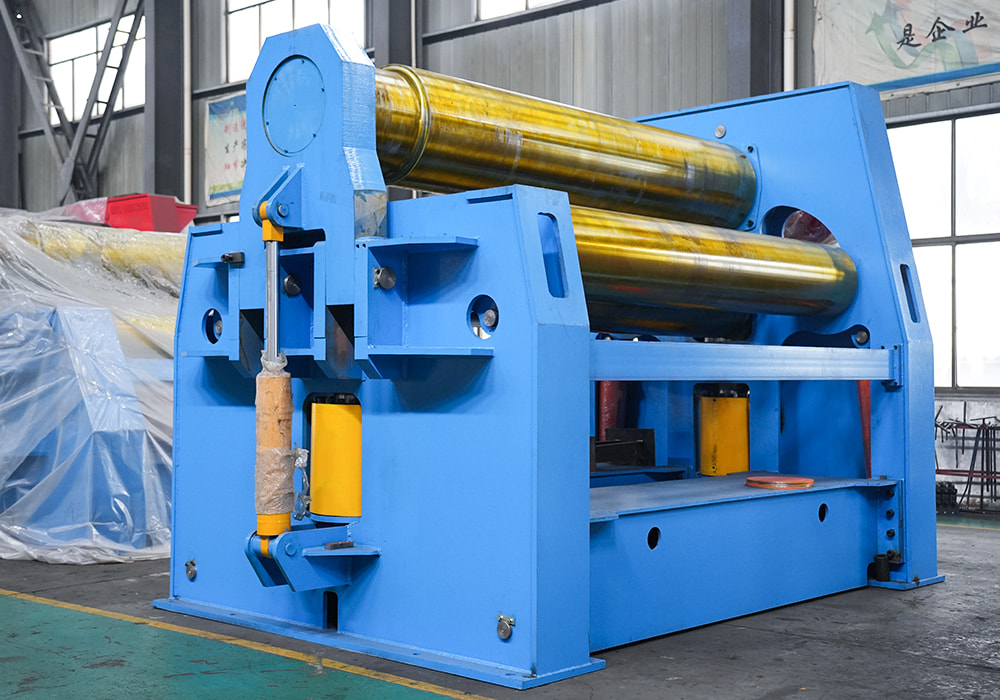 HDLW12-70×3200 CNC 4 Roll Metal Roll Bender
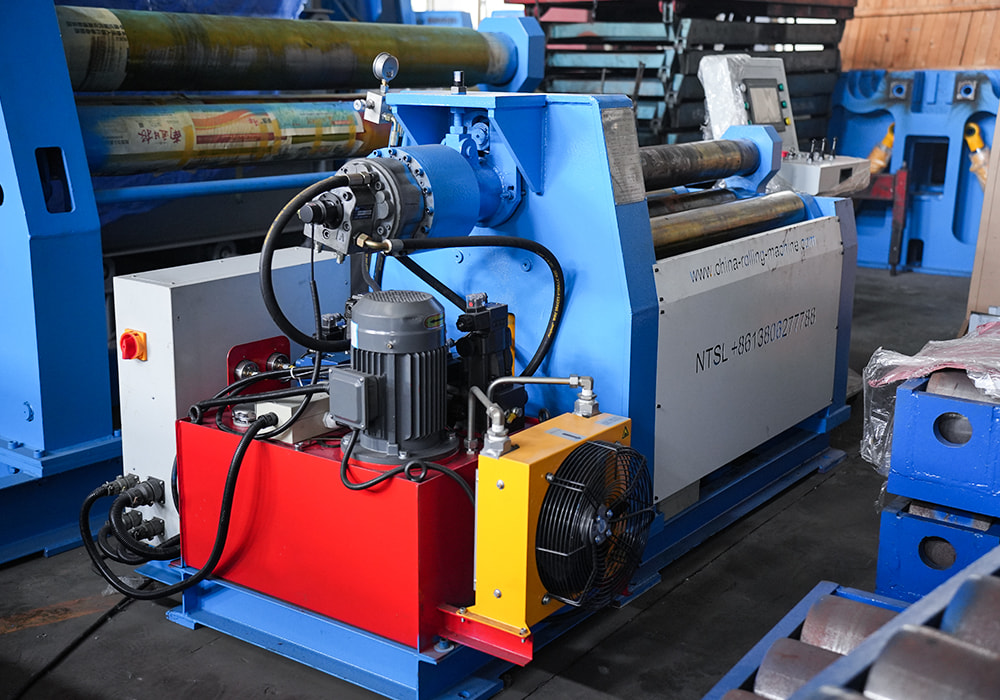 HDLW12-8×1000 4 Roll CNC Sheet Bending Machine

The company boasts strong technical capabilities, holds numerous national patents, and produces high-quality products that are widely recognized by customers both at home and abroad.

 Previous