English
 русский
 Español
Industry News
Home / News / Industry News / LSAW Pipe Mill Production Line: Key Forming, Welding and Inspection Factors
LSAW (Longitudinal Submerged Arc Welded) pipes carry crude oil, natural gas and water over thousands of kilometers, and every meter of that transport begins as a flat steel plate entering a pipe mill. When a fabricator invests in an LSAW pipe mill production line, the factors that decide whether the line produces API 5L-certified pipe or a stream of off-tolerance rejects are concentrated in three areas: forming, welding and inspection.
An LSAW pipe mill production line is a fixed sequence of forming, welding, expanding and testing stations that converts steel plate into large-diameter, longitudinally welded pipe. The line is not a single machine; it is a material flow in which each station sets the condition for the next one.
The core process steps are identical in a JCOE or RBE route, and the sequence defines the line:
A modern line is normally specified within the following envelope:
Forming converts a flat plate into a cylinder, and the forming method chosen for an LSAW pipe mill production line sets its diameter range, wall thickness limit and throughput profile.
In JCO forming, a press bends the plate in a sequence of controlled steps: first into a J shape, then a C shape, and finally an O shape. Each step applies a defined deformation, so the final geometry is the sum of many discrete bends. JCO lines handle thick walls and large diameters because the press force is applied locally, step by step.
In RBE forming, the plate is first bent continuously by a three-roll or four-roll plate bending machine, then closed into an O shape by a press. RBE lines have fewer stations and higher throughput on smaller and medium diameters, but the achievable wall thickness depends on the stiffness of the roller set.
| Factor | JCO Forming | RBE Forming |
| Forming action | Stepwise press (J-C-O) | Continuous roll bending plus O-press |
| Typical diameter | 406-1422 mm | 406-1500 mm |
| Wall thickness | Up to 60 mm | Up to about 40 mm in practice |
| Throughput | Medium, multi-step sequence | Higher on small and medium diameters |
| Dimensional control | Set per press step | Set by roller set precision |
| Equipment layout | Large press hall | More compact footprint |
Choose JCO when
Heavy-wall and large-diameter pipe above 20 mm wall thickness dominate the product mix, and multi-grade flexibility is required.
Choose RBE when
Thin- to medium-wall pipe in the 400-800 mm range is the main output, and the plant needs faster changeover and lower floor space.
 CNC 4-Roll Heavy Plate BenderFor an LSAW pipe mill producing thin-to-medium wall pipes, this CNC 4-roll bender offers the forming capability needed to maintain correct edge condition before submerged arc welding.View Product →
In an LSAW pipe mill production line, the longitudinal seam is welded in two submerged arc passes - internal first, then external - and the quality of both passes is governed by edge condition, heat input and seam tracking.
Submerged arc welding (SAW) covers the arc with a granular flux blanket, which shields the molten pool and delivers a high deposition rate. Because the arc is hidden under flux, a drift in current, voltage or travel speed becomes visible only on the radiograph. The process is forgiving; the consequences of an unstable process are not.
| Defect | Primary cause | Detection stage |
| Lack of fusion | Low heat input or seam drift | Ultrasonic testing |
| Porosity | Moisture in flux or contaminated edge | X-ray radiography |
| Slag inclusion | Flux trapped between weld passes | X-ray radiography |
| Underfill or overfill | Incorrect wire feed and travel speed | Visual and dimensional check |
CNC 4-Roll Plate Rolls for Pipe FormingBecause SAW welding hides the arc under flux, stable plate geometry is critical. This CNC 4-roll plate rolls machine ensures consistent bending, reducing the chance of weld defects discovered only on radiographs.View Product →
Inspection on an LSAW pipe mill production line runs as two qualification loops: one before mechanical expanding and one after, with a hydrostatic test as the final pressure proof. Each loop has a specific job and cannot replace the other.
Mechanical expanding is more than a sizing step. It calibrates the outside diameter, improves roundness, reduces residual stresses from forming and welding, and applies controlled circumferential strain to the weld seam. A pipe containing an internal flaw will often reveal it during expanding or in the hydrostatic test that follows, which is why the line schedules non-destructive testing both before and after expansion.
| Stage | Purpose | Timing |
| Plate ultrasonic test | Reject laminations before forming | Before edge milling |
| Weld ultrasonic test | Detect volumetric and planar flaws | After welding, before expanding |
| Weld X-ray test | Verify weld soundness by radiography | After welding, before expanding |
| Mechanical expanding | Calibrate diameter and relieve stress | After first NDT loop |
| Hydrostatic test | Prove pressure integrity | After expanding |
| UT and X-ray re-test | Re-check seam after cold work | After expanding |
| End facing and beveling | Prepare weld-ready pipe ends | Final station |
4-Roller Bending Machine for Oil Tanks and PipesAfter mechanical expanding and hydrostatic testing, pipe dimensions must be precisely controlled. This 4-roller machine helps achieve the roundness and low residual stress that LSAW pipe inspection loops require.View Product →
A capable LSAW pipe mill production line is specified by the maximum wall thickness at a given diameter, the forming method that matches the product mix, and the inspection coverage the supplier integrates as standard equipment.
The equipment decision starts with the forming route. If the product mix is dominated by heavy-wall line pipe above 20 mm wall thickness, a JCOE line with a large-capacity forming press is the conventional choice. If the mix is mostly thin- to medium-wall pipe in the 400-800 mm range, an RBE line delivers higher throughput with a lower equipment count.
Integration responsibility matters as much as individual machines. A line built by one manufacturer reduces interface disputes: the same company should engineer the forming station, the welding booms and the expanding unit, or take direct responsibility for their synchronized performance. Nantong Shengli Heavy Industry Machinery Manufacturing Co., Ltd. (Hengdeli) has built metal forming equipment since 2003 and supplies complete LSAW lines covering both JCO and RBE routes. The same workshops that produce high-load plate bending machines up to 180 mm thickness and 4000 mm width also produce the edge milling, pre-bending, forming, welding, expanding, chamfering and straightening stations for these lines.
Before closing the contract, ask how the manufacturer assures quality on every station and examine its documented quality assurance approach. A written procedure, not a brochure, is what supports your qualification audits and protects the line's output over its full service life.
JCO forming uses a press to bend the plate incrementally into J, C and O shapes, which suits thick-wall, large-diameter pipe. RBE forming uses a plate rolling machine to bend the plate continuously and then an O-press to close it, which is faster for thin- to medium-wall pipes in smaller diameters.
Mechanical expanding calibrates the outside diameter to tolerance, improves roundness and reduces residual stress left by forming and welding. It also strains the weld seam in tension, which exposes internal defects that may not be visible in pre-expansion radiography.
A complete line combines ultrasonic testing, X-ray or radiographic testing, hydrostatic pressure testing and magnetic particle inspection of pipe ends. Testing is scheduled before and after mechanical expanding because the expanding step changes the stress state of the weld.
With JCO forming, common production ranges go from about 6 mm to 60 mm wall thickness. RBE lines are normally applied up to about 40 mm, and the exact limit is set by press force and roller set configuration in the line specification.
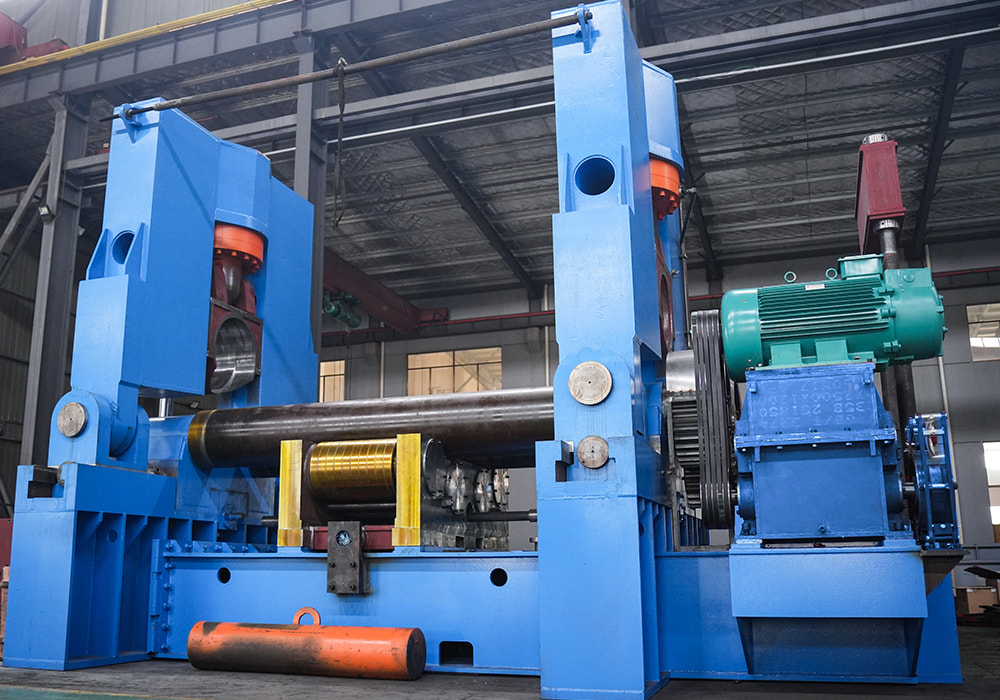 HDLW11S-120×3500 Upper Roller Universal 3-roller Plate Rolling Machine
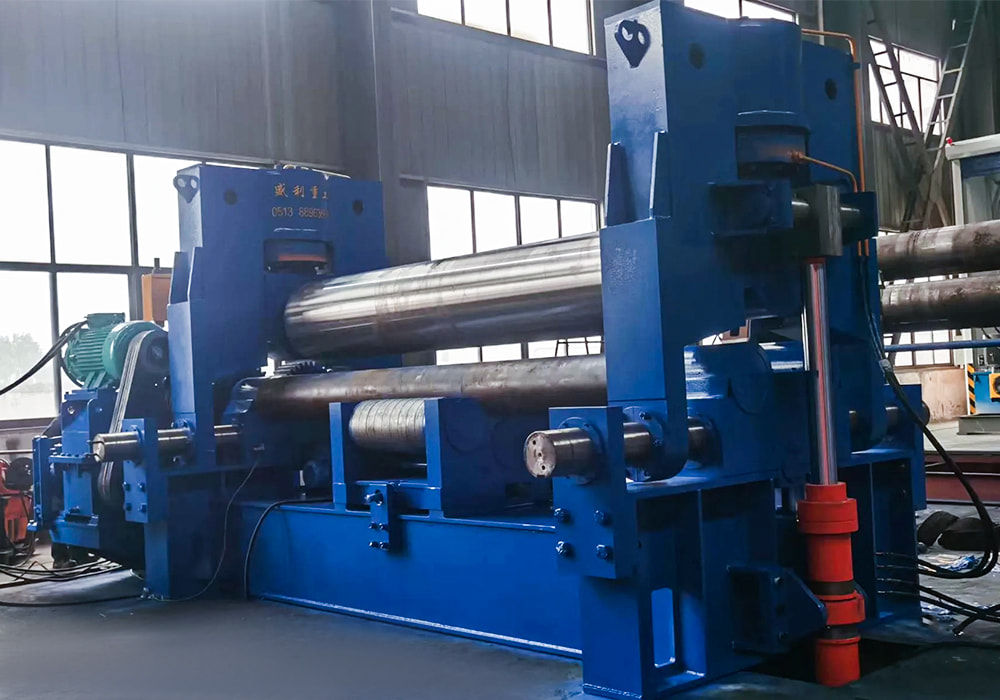 HDLW11S-50X3000 Upper Roller Universal 3-roller Plate Rolling Machine
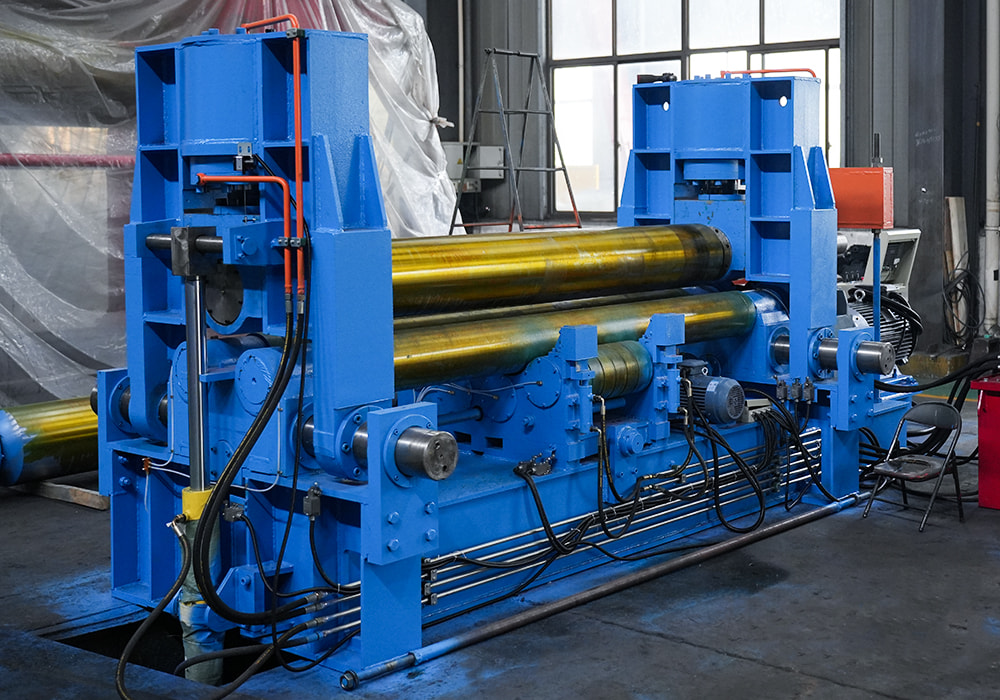 HDLW11S-30×3000 Upper Roller Universal 3-roller Plate Rolling Machine
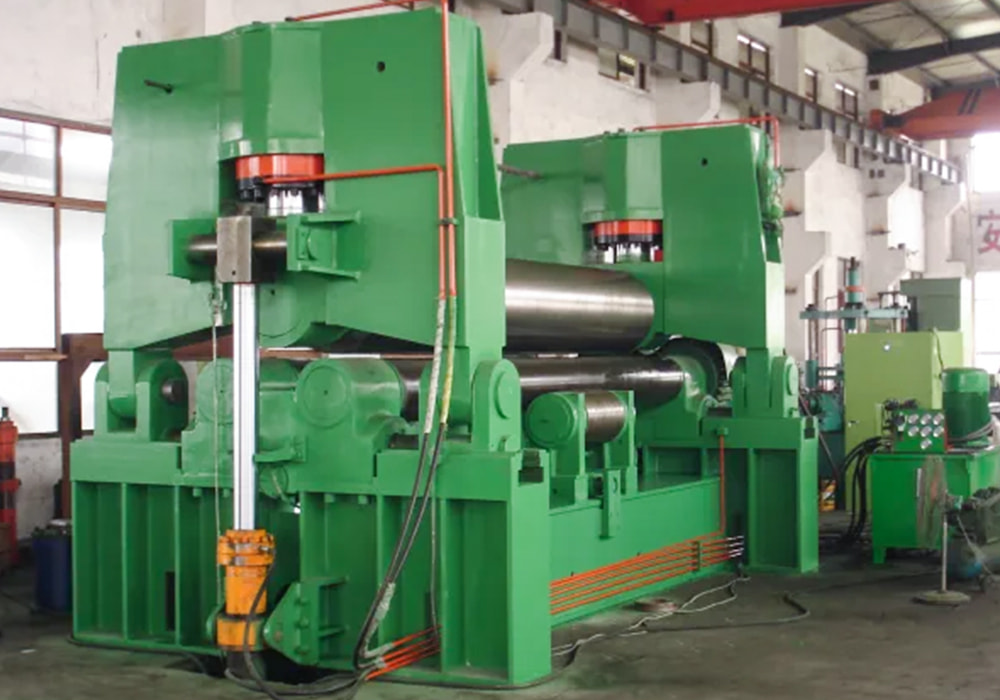 HDLW11X-100×3100 oblique 3-roller plate rolling machine
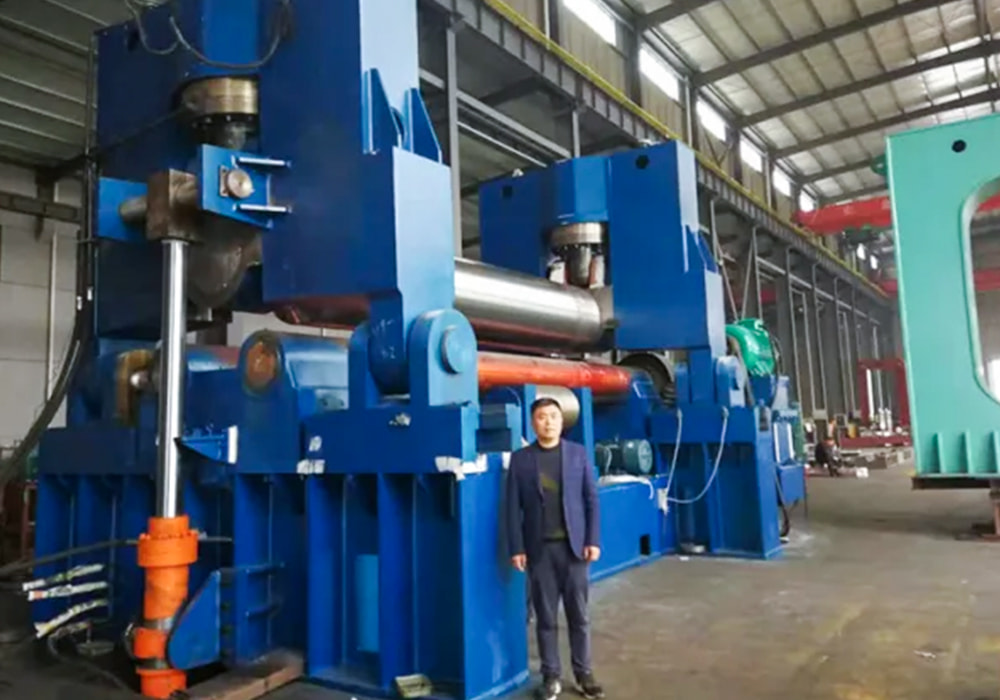 HDLW11-150X3200 hydraulic symmetrical 3-roll plate rolling machine
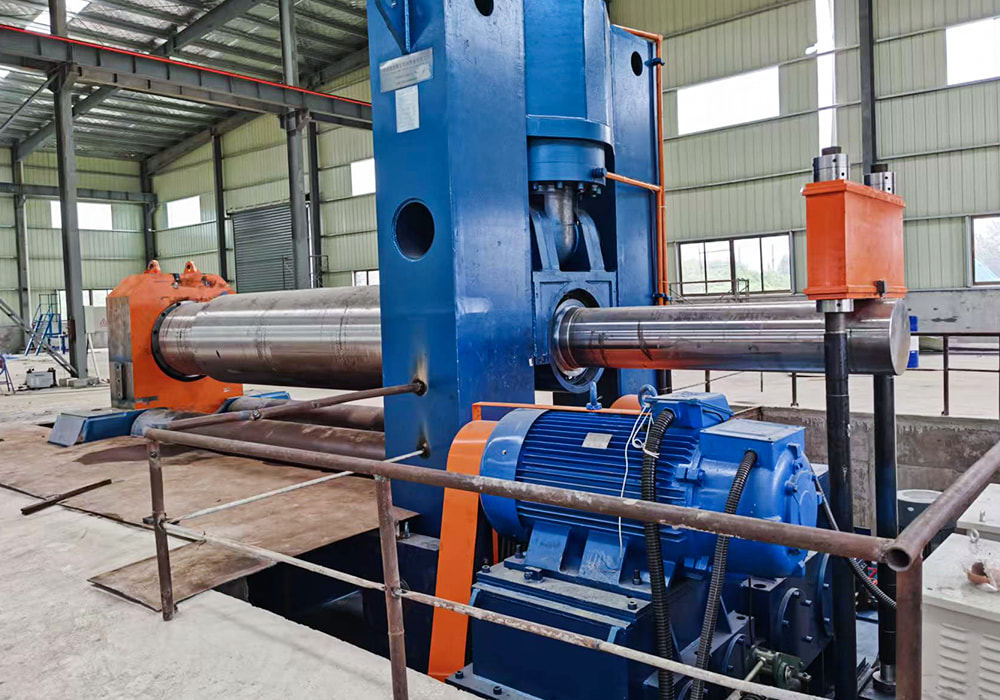 HDLW11-120X3500 Symmetrical 3 Roller Plate Rolling Machine
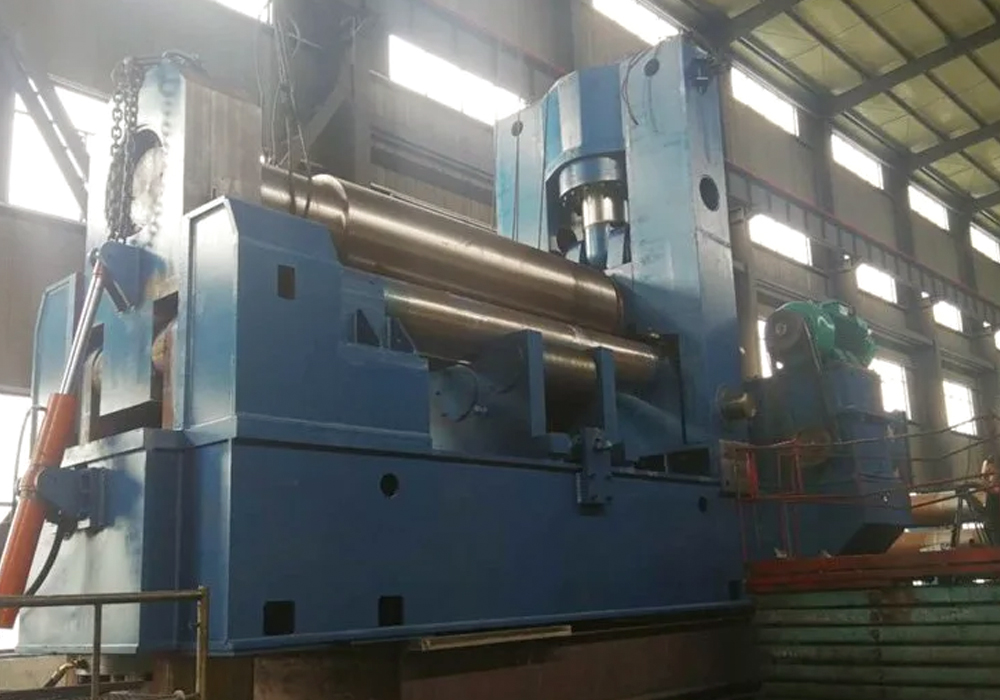 HDLW11-100X4200 pull-down 3 roller plate rolling machine
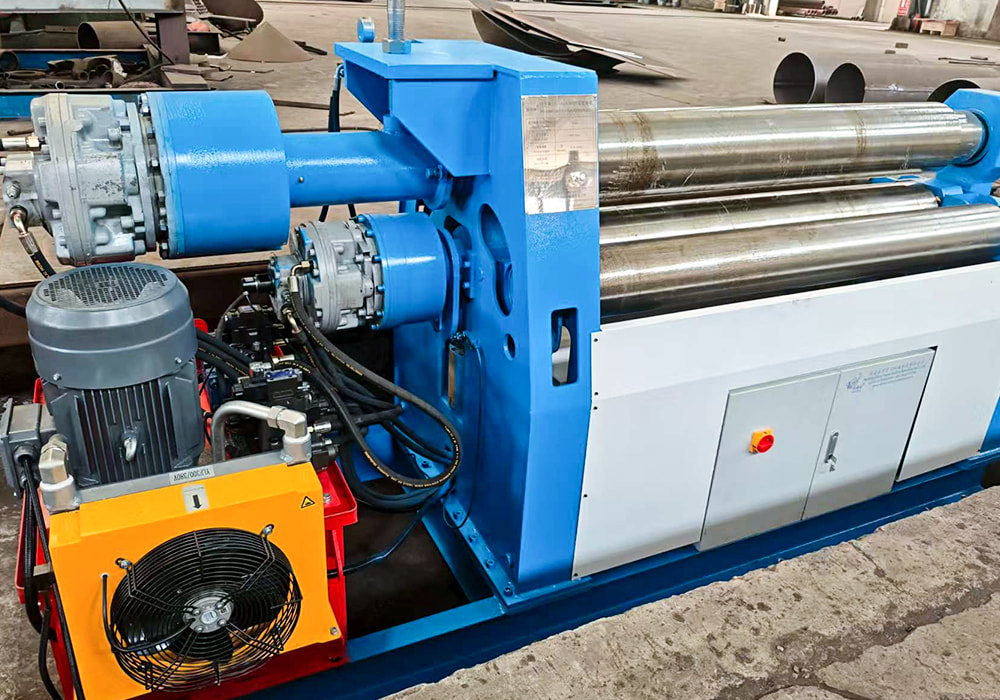 HDLW12-16x1600 CNC 4 Rolls Metal Sheet Bending Machine
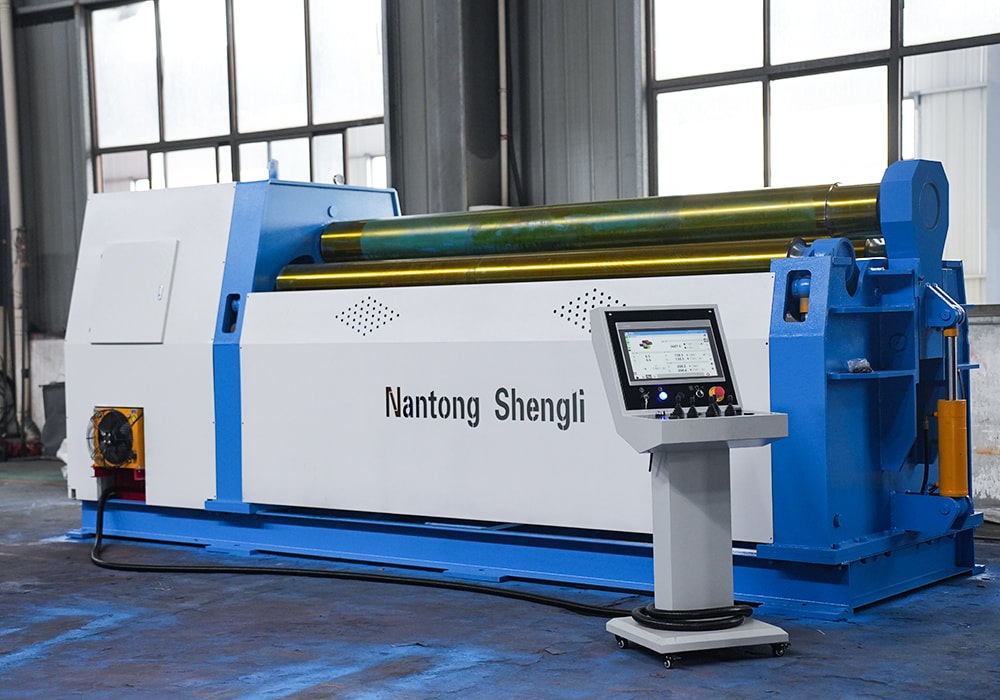 HDLW12-12×3000 4 Rolls Plate Bending Machine
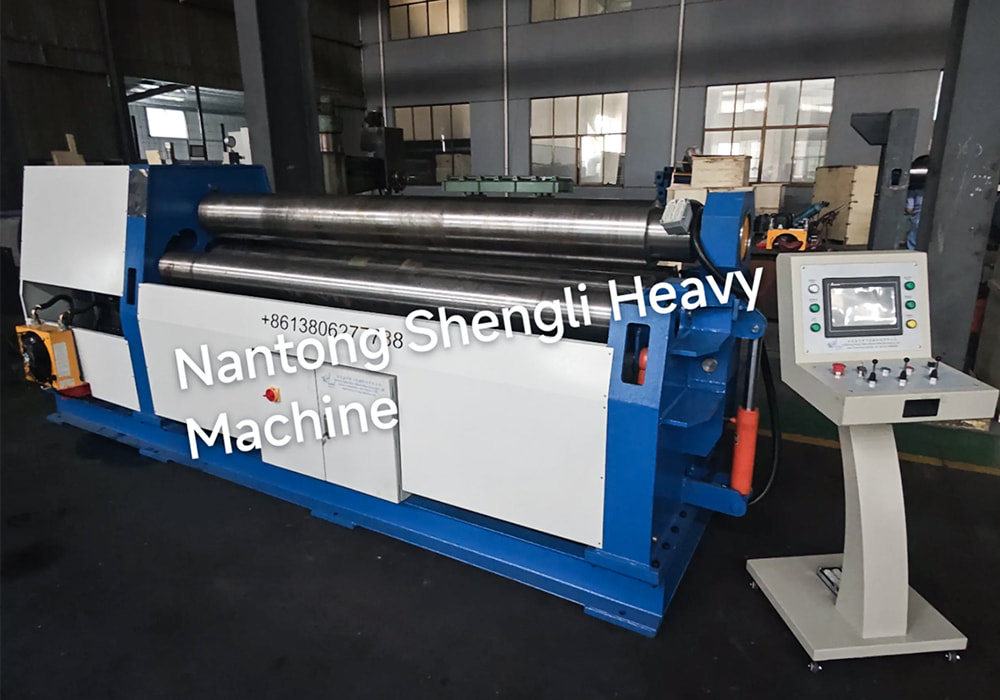 HDLW12-25×2500 Pipe Bending Rolling Machine
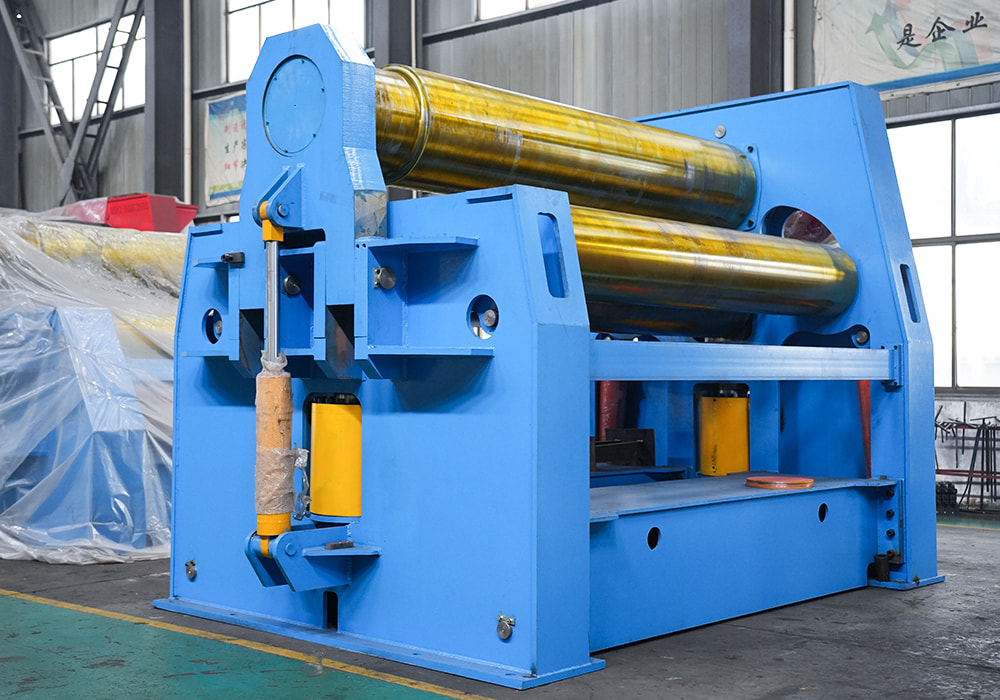 HDLW12-70×3200 CNC 4 Roll Metal Roll Bender
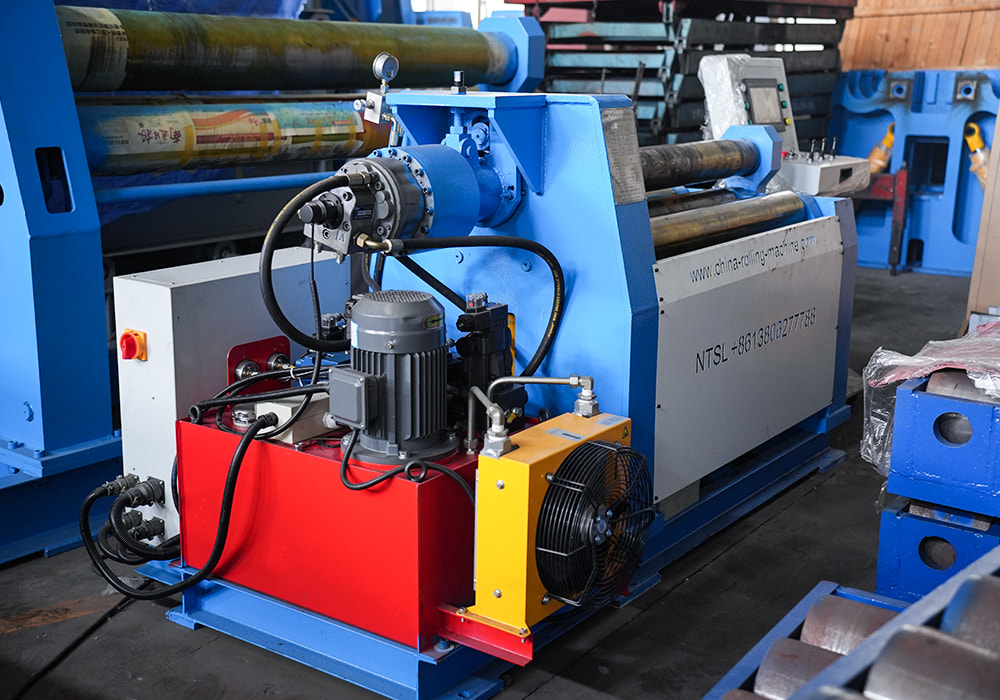 HDLW12-8×1000 4 Roll CNC Sheet Bending Machine

The company boasts strong technical capabilities, holds numerous national patents, and produces high-quality products that are widely recognized by customers both at home and abroad.

 Previous