English
 русский
 Español
Industry News
Home / News / Industry News / Wind Tower Plate Rolling: Key Factors Affecting Section Roundness and Quality Control
A single 80-meter wind tower section can vary in diameter by more than 10 millimeters at the weld seam if the plate rolling process does not control for roll deflection, material springback, and machine alignment. Section roundness—the geometric tolerance that ensures a rolled cylinder meets its specified circular cross-section—directly determines whether tower sections fit together during field assembly and whether the finished structure withstands decades of dynamic wind loading. For fabricators operating  China plate rolling machine & metal forming machine manufacturerExplore Our Featured ProductsView Product → or three-roll systems, understanding the mechanics behind roundness deviation is the difference between scrapped sections and consistent production.
When a steel plate passes between the working rolls of a plate rolling machine, the rolls themselves bend under the applied force. This is not a theoretical concern in small-scale fabrication; on a 3-meter-wide wind tower section rolled from 30 mm to 50 mm thick steel, the deflection at the center of the top roll can reach 0.8 mm to 1.5 mm depending on roll diameter and wall thickness. That deflection translates directly into non-uniform contact pressure along the roll face.
The consequence is a cylinder that is tighter at the ends and looser in the middle, or vice versa depending on whether the machine is an initial-pinch or three-roll design. Operators attempting to compensate by increasing pinch force at the roll ends only shift the deformation pattern. The result is an oval cross-section that exceeds the 3 mm to 5 mm roundness tolerance typically specified for wind tower flange fit-up. Quantitative data from field measurements shows that a 0.5 mm increase in roll deflection at the midpoint of a 3000 mm-wide plate correlates with a 2.8 mm increase in out-of-roundness at the weld gap. Addressing this requires machines with oversized rolls or supplementary support rolls.
Fabricators can mitigate deflection by selecting a rolling machine rated for at least 30% more than the required plate thickness and width. The three-roll plate rolling machine designs with larger roll diameters distribute the bending load more evenly across the roll face, reducing the deflection gradient.
Steel plates do not stay exactly where the rolls place them. After the plate exits the roll gap, elastic recovery causes the radius to increase by an amount called springback. For S355 structural steel in the 30 mm to 60 mm thickness range commonly used in wind towers, springback accounts for 3% to 8% of the bending radius. A plate rolled to a theoretical radius of 2000 mm may spring back to an actual radius of 2060 mm to 2160 mm. Over the length of a 12-meter tower section, that added arc length shifts the closing gap enough to create a flat spot at the weld joint.
The problem intensifies when material properties vary between steel plates. Even plates from the same production batch can differ by 20 MPa to 40 MPa in yield strength. That difference changes the springback behavior significantly. Consider two plates with yield strengths of 345 MPa and 375 MPa rolled under identical conditions. The 375 MPa plate will spring back approximately 6% more than the 345 MPa plate. If the operator overbends based on a single plate sample, the subsequent sections may show inconsistent roundness.
One practical solution is to take a springback measurement from the first rolled section of each plate lot and adjust the pinch setting accordingly. This adaptive approach reduces roundness variability across a multi-section tower run.
The geometric relationship between the rolls—their parallel alignment, gap uniformity, and pinch force distribution—determines whether a cylinder rolls round or develops a conical shape. On a hydraulic four-roll machine, the bottom roll and side roll positions must be parallel within 0.1 mm per meter of roll length. A deviation of 0.3 mm over a 3-meter roll face produces a cylinder that is measurably smaller in diameter on one end, causing the tower section to lean during assembly.
Roll gap adjustment is equally critical. If the gap between the top and bottom rolls is set too wide at the center, the plate receives less plastic deformation there, resulting in a slightly flat section at mid-width. Operators relying on manual gap setting without a CNC-controlled positioning system risk repeating this error across multiple sections. Data from CNC-controlled wind tower rolling machines shows that automated gap compensation reduces roundness deviation by up to 40% compared to manual operation.
Roundness deviation: 4.2 mm to 6.8 mm
Operator adjustment time per section: 12 minutes
Scrap rate: 1 in 8 sections
Roundness deviation: 2.1 mm to 3.4 mm
Operator adjustment time per section: 3 minutes
Scrap rate: 1 in 25 sections
Pinch force also plays a direct role. Too little pinch and the plate slips before reaching full curvature; too much and the plate may thin or buckle at the leading edge. For a 50 mm thick, 3000 mm wide plate, the required pinch force typically ranges from 800 kN to 1200 kN per roll end. Maintaining that force within a 5% tolerance is essential for consistent roundness from the first to the last pass. The quality control process described in the product quality assurance framework should include daily calibration checks on press forces and roll parallelism.
The sequence of passes determines whether the plate transitions smoothly into a perfect arc or develops localized flat zones. A common mistake in wind tower plate rolling is applying too much curvature in a single pass. Each pass should reduce the radius incrementally by no more than 15% to 20% of the target curvature. On a 2000 mm target radius, that means no pass should force the plate to a radius below 1600 mm in one step.
Pre-bending the leading and trailing edges of the plate is equally important. Without pre-bending, the flat entry and exit zones leave two straight sections on the cylinder, resulting in an oval shape at the weld joint. A pre-bend length of 1.5 to 2 times the plate thickness is standard practice. For a 40 mm thick plate, that means pre-bending the first 60 mm to 80 mm of the leading edge to match the target curvature before the main rolling passes begin. Machines built for wind tower production, such as the China plate rolling machine & metal forming machine manufacturerExplore Our Featured ProductsView Product →, incorporate dedicated pre-bending functions that automate this step.
Based on the factors discussed, here is a structured summary of the variables that most directly impact roundness in wind tower plate rolling. Fabricators should monitor each factor during production to maintain tolerances below 5 mm.
| Factor | Typical Impact on Roundness | Control Method |
| Roll deflection | +2.0 mm to +4.5 mm deviation | Select oversized rolls |
| Springback variation | +1.5 mm to +3.0 mm deviation | Measure each plate lot |
| Roll gap misalignment | +2.5 mm to +5.0 mm deviation | CNC compensation |
| Insufficient pre-bending | +3.0 mm to +6.0 mm deviation | Pre-bend 1.5x thickness |
| Excessive pass depth | +1.0 mm to +2.5 mm deviation | Limit to 20% per pass |
Roundness control is only as effective as the measurement system feeding data back to the operator. Using a single-point caliper measurement at the weld gap is not sufficient. A complete roundness inspection should take measurements at three longitudinal positions along the cylinder—near the top, mid-height, and near the bottom—with at least four radial readings per position. Dimensional tolerance standards for wind tower sections typically require roundness within 3 mm to 5 mm across all positions.
When deviations exceed tolerance, the operator must decide whether to over-roll the section in a corrective pass. This pass must apply slightly more curvature than the target, followed by a springback evaluation, repeated until the cylinder falls within spec. Machine builders like Hengdeli recommend that fabrication facilities maintain a log of springback values for each steel grade and thickness combination, building a reference database that reduces guesswork on subsequent tower contracts.
Industry standards for wind tower sections generally require roundness within 3 mm to 5 mm of the specified diameter, measured at any point along the cylinder circumference. Specific tolerance depends on the tower design and flange connection requirements.
Yes. Larger roll diameters reduce deflection under load, which directly improves roundness consistency. A top roll diameter of at least 600 mm is recommended for 3-meter-wide plates in the 30 mm to 50 mm thickness range.
For a standard 40 mm thick, 3000 mm wide section rolled to a 2000 mm radius, 5 to 7 rolling passes are typical, including the initial pre-bending pass. This gradual reduction avoids localized flat spots and keeps roundness within tolerance.
Four-roll machines generally provide superior roundness consistency because the side roll controls curvature independently of the pinch force, reducing the need for operator adjustments during the pass sequence. They also offer more uniform pre-bending of the leading edge.
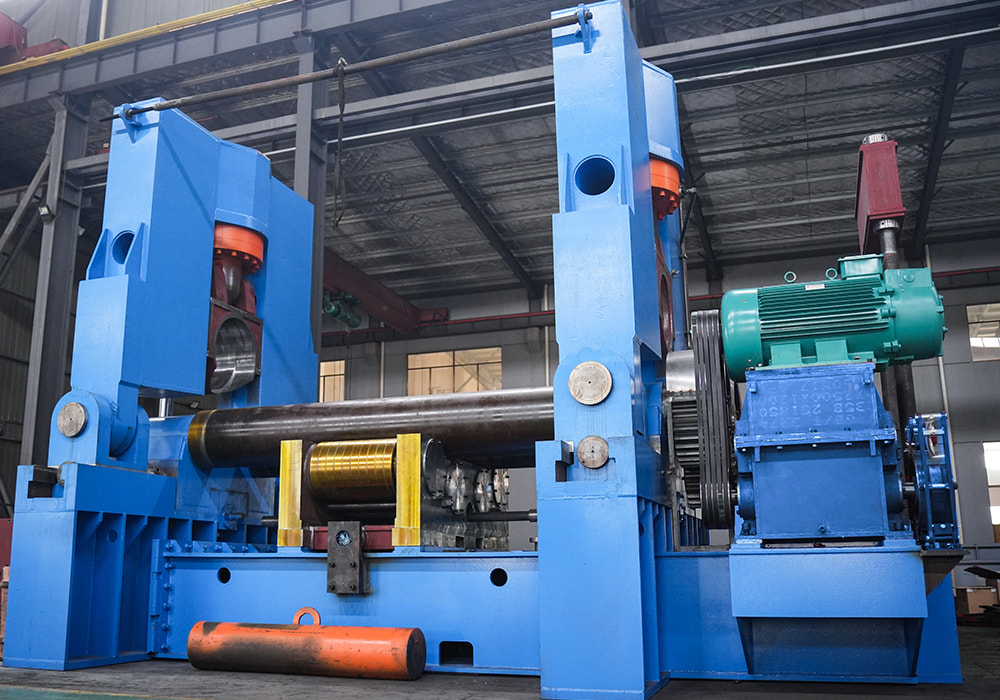 HDLW11S-120×3500 Upper Roller Universal 3-roller Plate Rolling Machine
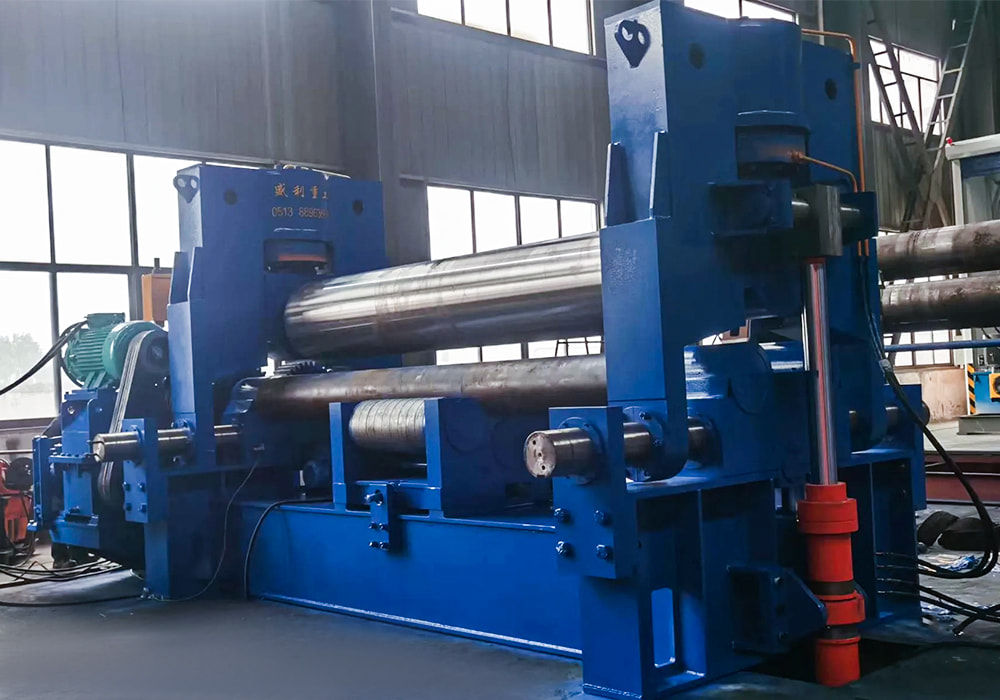 HDLW11S-50X3000 Upper Roller Universal 3-roller Plate Rolling Machine
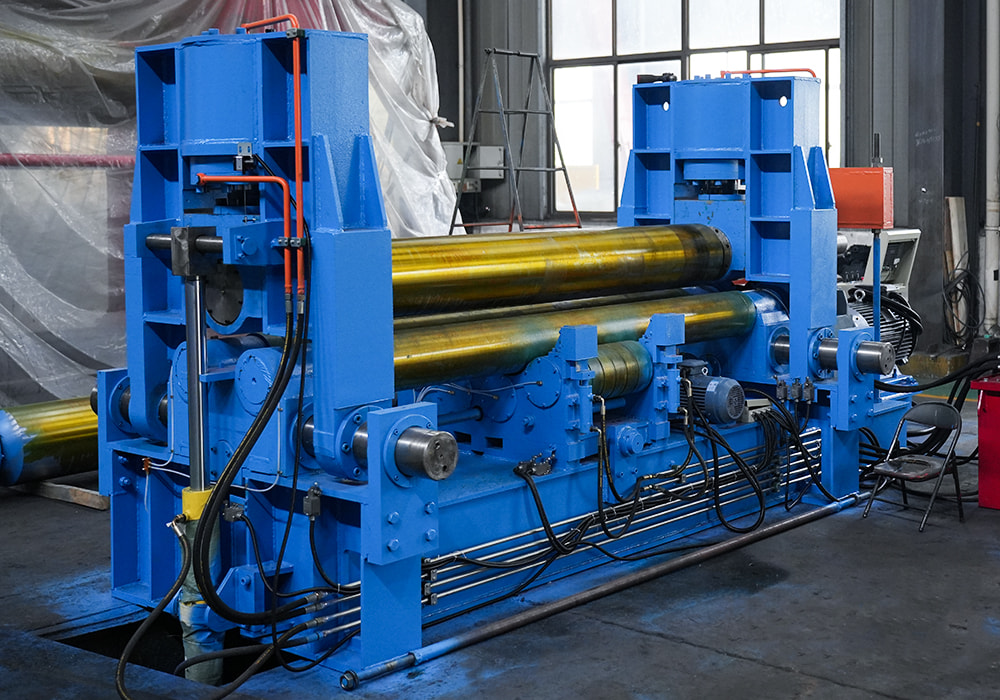 HDLW11S-30×3000 Upper Roller Universal 3-roller Plate Rolling Machine
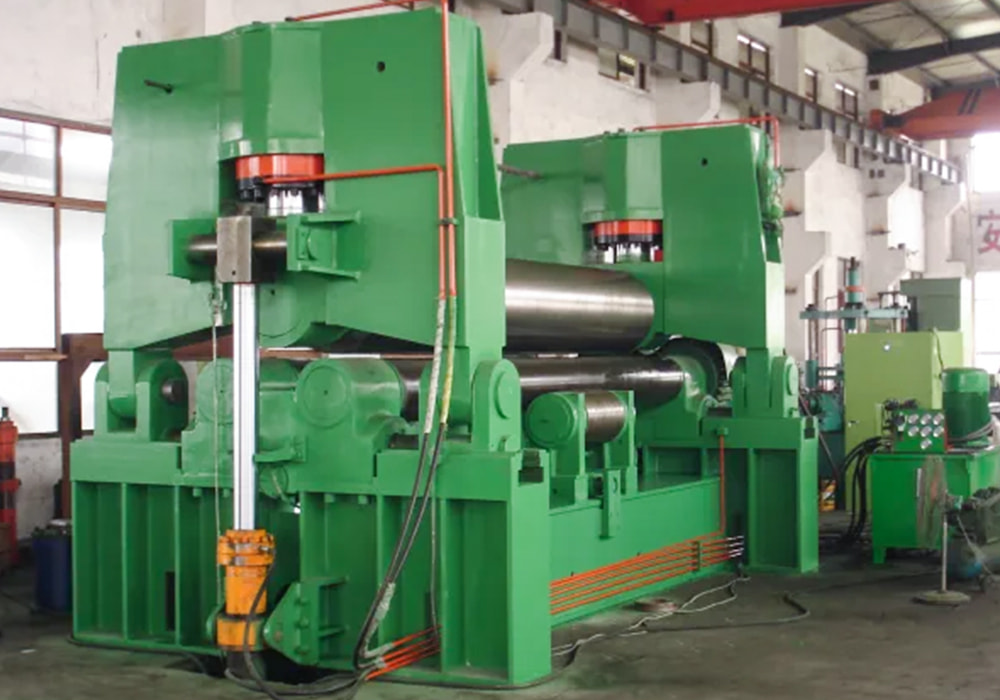 HDLW11X-100×3100 oblique 3-roller plate rolling machine
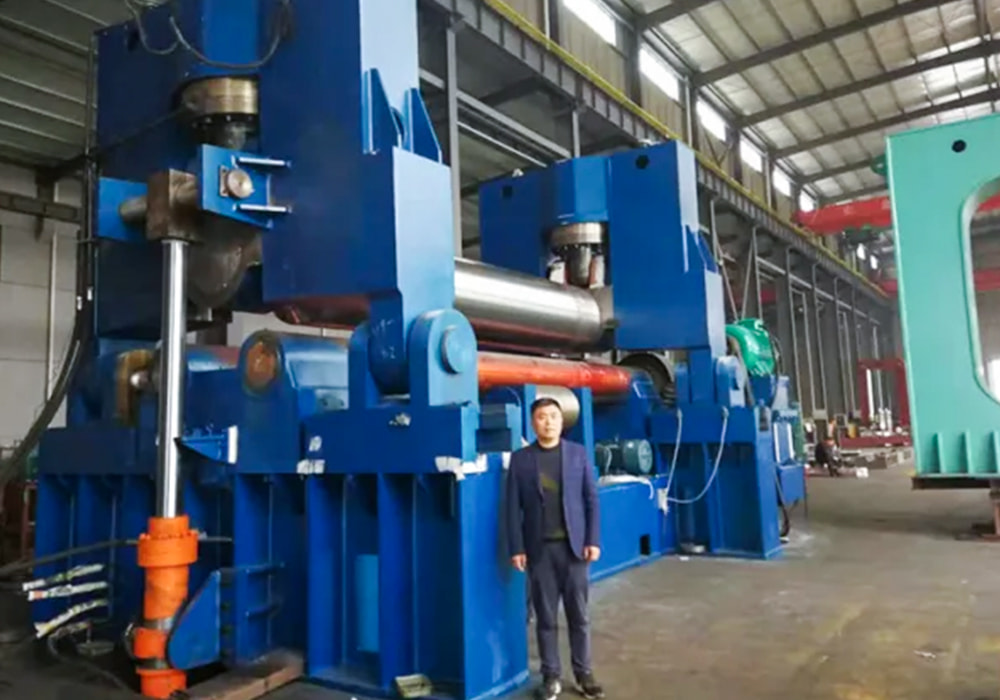 HDLW11-150X3200 hydraulic symmetrical 3-roll plate rolling machine
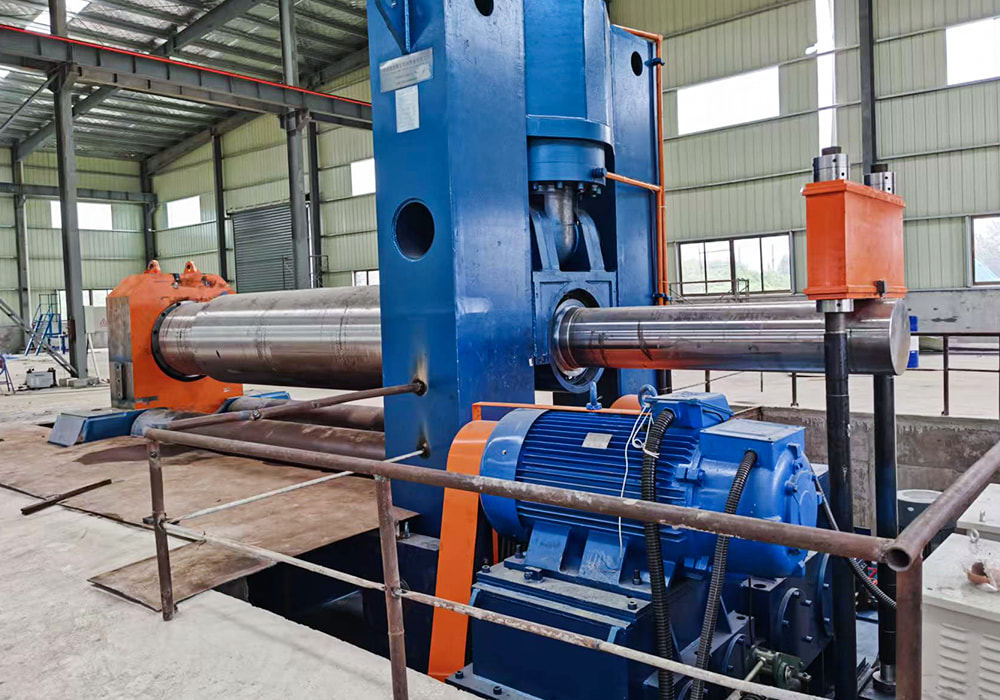 HDLW11-120X3500 Symmetrical 3 Roller Plate Rolling Machine
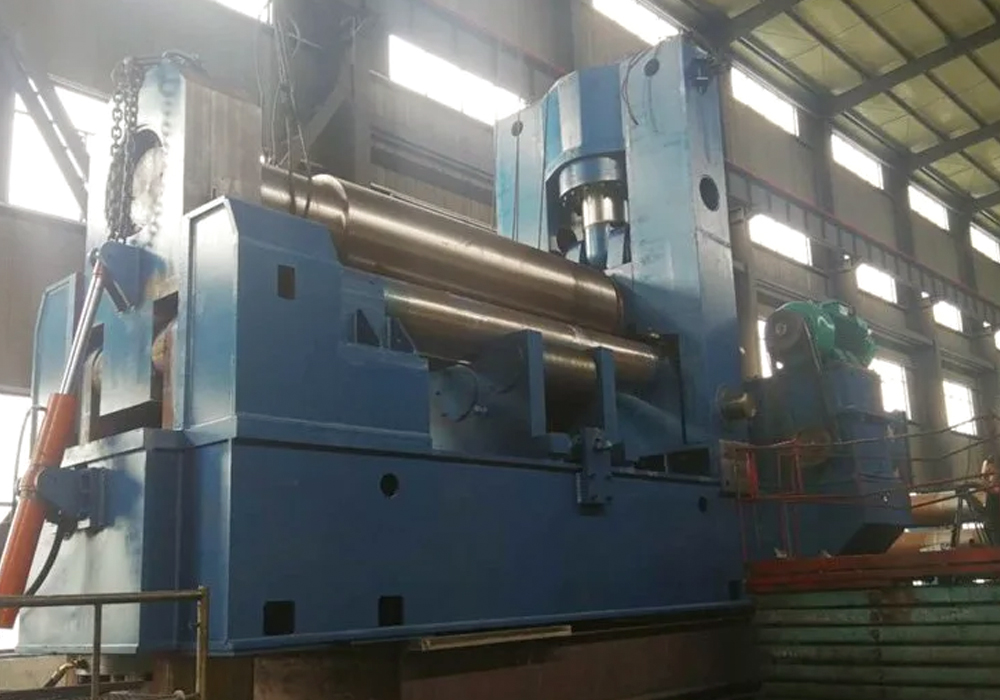 HDLW11-100X4200 pull-down 3 roller plate rolling machine
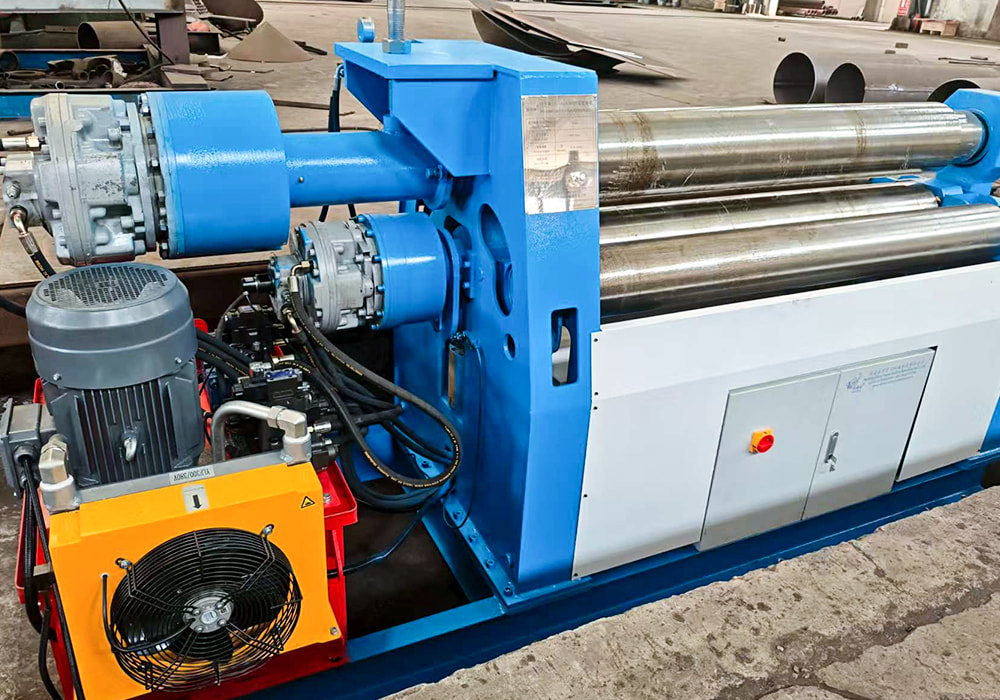 HDLW12-16x1600 CNC 4 Rolls Metal Sheet Bending Machine
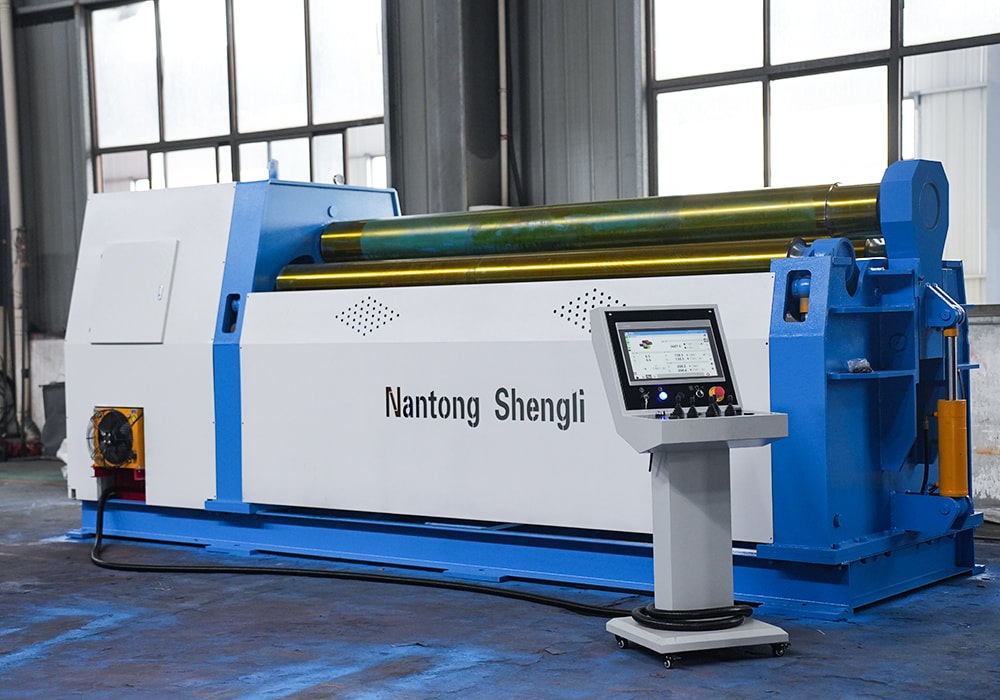 HDLW12-12×3000 4 Rolls Plate Bending Machine
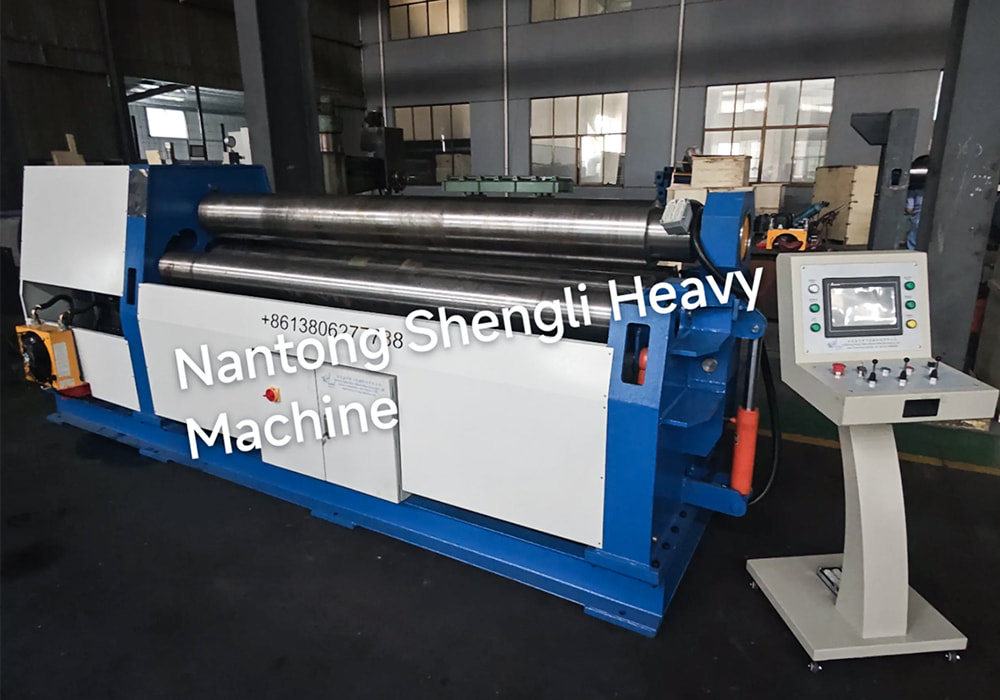 HDLW12-25×2500 Pipe Bending Rolling Machine
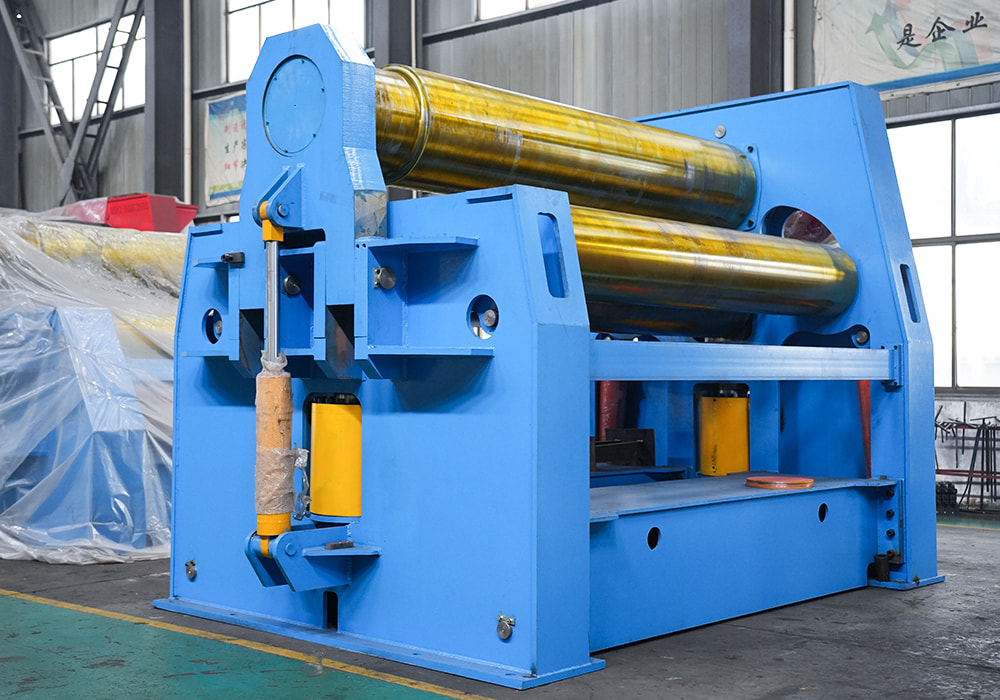 HDLW12-70×3200 CNC 4 Roll Metal Roll Bender
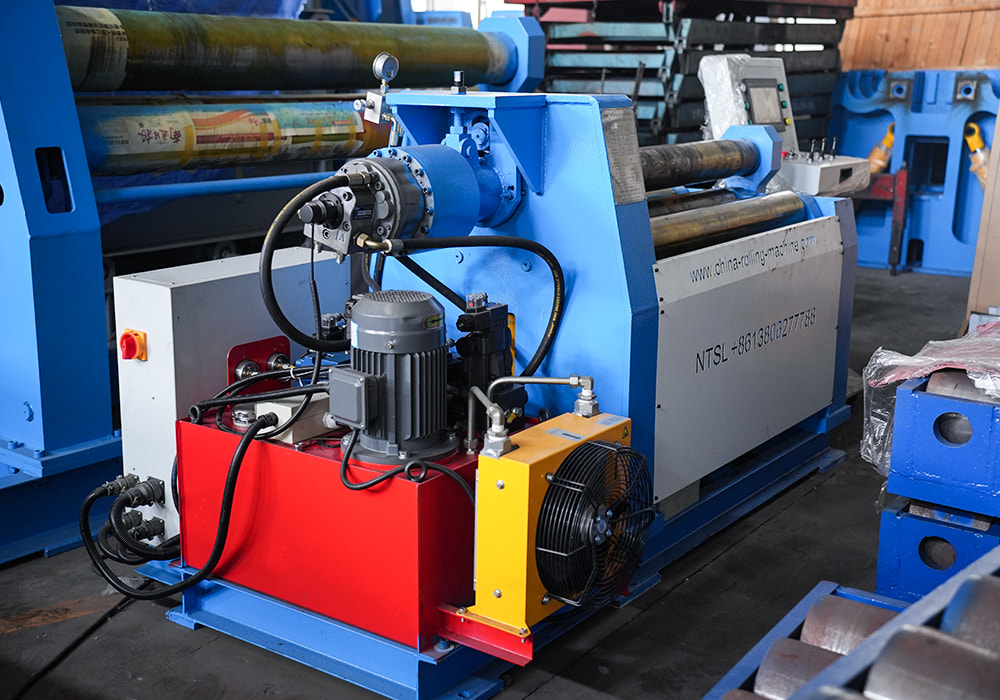 HDLW12-8×1000 4 Roll CNC Sheet Bending Machine

The company boasts strong technical capabilities, holds numerous national patents, and produces high-quality products that are widely recognized by customers both at home and abroad.

 Previous