English
 русский
 Español
Industry News
Home / News / Industry News / LSAW Pipe Production Line: Key Equipment Configuration and Process Control
When a pipe producer starts planning an LSAW pipe production line, the first question is never about a single machine. It is about how the equipment configuration will hold roundness, weld integrity, and dimensional tolerance across every pipe length in the program. The forming route, the station list, and the process control parameters set the line's real capacity before the first plate is loaded.
This article maps the equipment modules of JCOE and RBE lines, the process control points that decide weld and shape quality, and the practical checks to run before sourcing a complete line.
All LSAW pipes share one production principle: a flat steel plate is formed into a cylinder and then welded with one longitudinal submerged arc weld. The forming route determines the shape accuracy, production rate, and investment level of the whole line.
LSAW stands for longitudinal submerged arc welding. JCOE is a forming route where a press bends the plate step by step into a J profile, then a C profile, then an O profile, followed by tack welding, internal and external welding, and mechanical expansion. RBE is a roll bending route where a plate rolling machine curves the plate continuously into an O shape before the same welding sequence.
JCOE forming runs under CNC control, so pipe geometry repeats from plate to plate and shift to shift. RBE relies on the top roll position of the bending machine and is more sensitive to plate thickness variation and operator judgment. For API 5L line pipe in the common 406 mm to 1422 mm diameter range, JCOE is the dominant route for high-volume programs.
A complete JCOE line consists of nine equipment groups. Each group has one clear function, and each one must be specified against the same product matrix: outside diameter, wall thickness, steel grade, and target production rate.
| Stage | Equipment | Function | Process target |
| 1 | Edge milling machine | Mills plate edges to the bevel geometry required for welding | Bevel angle, root face width, edge straightness |
| 2 | Pre-bending press | Bends both plate edges to the pipe radius before forming | Edge pre-bend radius relative to finished OD |
| 3 | JCO forming press | Step-presses the plate into J, C, and O profiles | Step pitch, springback compensation, seam gap |
| 4 | Tack welding machine | Closes the O seam and runs a short tack weld | Seam gap, tack size, edge alignment |
| 5 | Internal welding machine | Applies the root SAW pass from inside the pipe | Penetration, current and voltage window, travel speed |
| 6 | External welding machine | Applies fill and cap SAW passes from outside | Pass sequence, heat input, reinforcement height |
| 7 | Mechanical expanding mill | Expands the welded pipe to final diameter and roundness | Expansion ratio, OD tolerance, residual stress relief |
| 8 | Chamfering machine | Machines pipe ends to the specified weld bevel | Face squareness, bevel angle, surface finish |
| 9 | Straightener and finishing press | Corrects residual ovality after welding and expansion | Straightness, end roundness |
Five process control parameters determine whether an LSAW pipe production line delivers API 5L quality: edge geometry, pre-bend angle, forming springback, seam gap, and expansion ratio. Every one of them is measurable at its station and controllable through line settings.
The production sequence is fixed, and each step feeds the next. Weakening one control point pushes the defect downstream, where it costs more to correct.
Select the forming route before evaluating suppliers. The route sets the equipment list, the precision level, and the investment range; the supplier then implements that route with its own machine designs.
Hengdeli's LSAW pipe mill program covers both routes. The JCOE line integrates an edge milling machine, pre-bending press, forming machine, tack welding machine, internal and external welding stations, an expanding mill, a chamfering machine, and a round straightener. The RBE line is built around the HDLW11G-25x6000 six-meter professional plate rolling machine, which forms the cylinder in one continuous bending operation. Because the same company builds the forming, bending, and finishing machines, the line can be tuned to the pipe program instead of being assembled from mismatched single units.
Before placing an order, verify four things: the supplier's integration experience across all nine modules, forming capacity matched to your product matrix, a documented quality system, and a delivery record that includes export customers.
Hengdeli, the brand of Nantong Shengli Heavy Industry Machinery Manufacturing Co., Ltd., has supplied metal forming equipment for more than twenty years. Its plate rolling machine range alone covers over one hundred specifications up to 180 mm thickness and 4000 mm width, and the company delivers the JCOE and RBE line equipment discussed here. Buyers can review the documented quality control approach and the track record of repeat purchases from existing customers before making a final decision.
The four questions below cover the decisions that come up most often when configuring an LSAW pipe production line.
A JCOE line forms plate in discrete press steps and normally includes mechanical expansion, which gives high dimensional repeatability for API 5L line pipe. An RBE line bends the plate with a rolling machine and can be a lower-investment alternative when the program mixes sizes or needs very thick walls.
The mechanical expanding mill has the final word on OD tolerance and roundness, but the pre-bending press and the JCO forming press set the starting ovality. If the pre-bend radius is wrong, no practical expansion amount can fix the seam zone.
The standard target is roughly 0.8 to 1.5 percent of nominal diameter. The exact ratio depends on steel grade, wall thickness, and the weld shrinkage measured during production trials.
Most modern JCOE lines are qualified for API 5L X42 to X80, and some reach X100 for high-pressure gas transmission. The forming press and welding stations must be specified for the yield strength of the highest grade you plan to run.
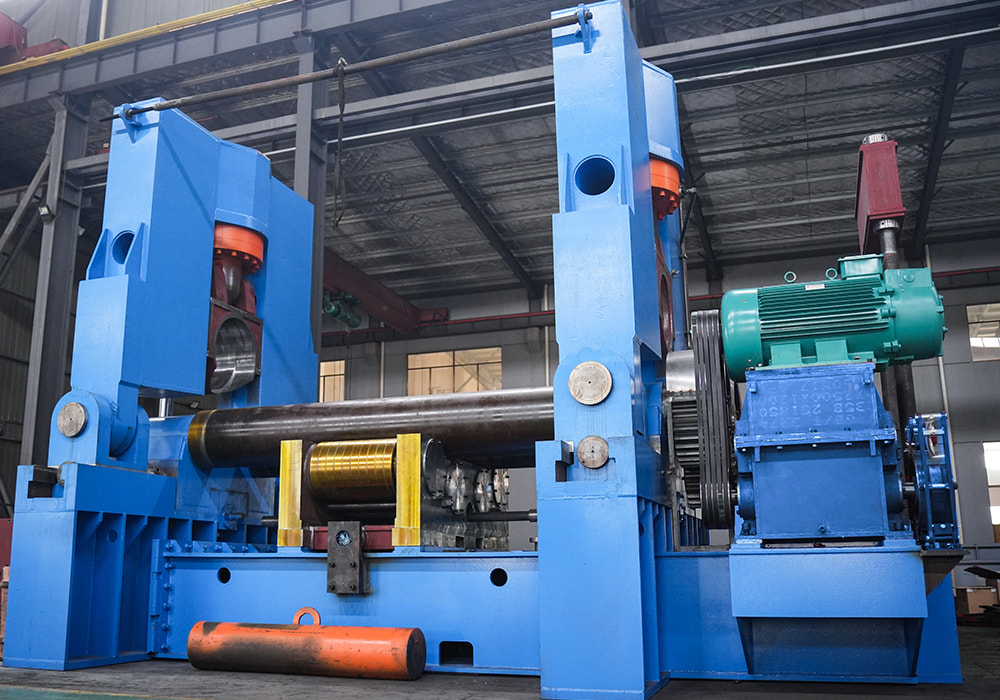 HDLW11S-120×3500 Upper Roller Universal 3-roller Plate Rolling Machine
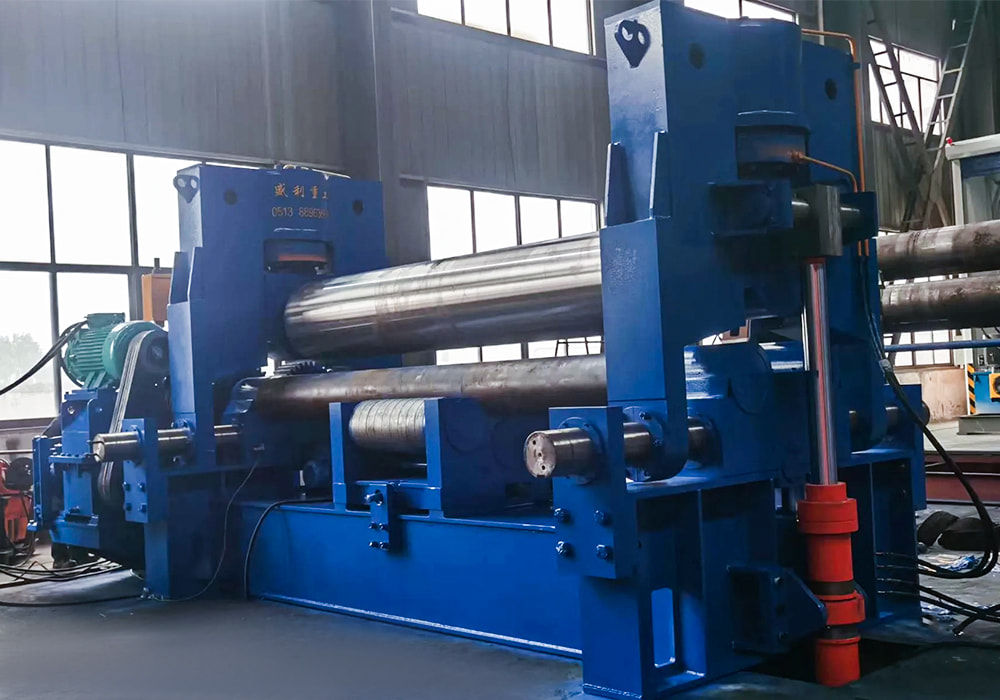 HDLW11S-50X3000 Upper Roller Universal 3-roller Plate Rolling Machine
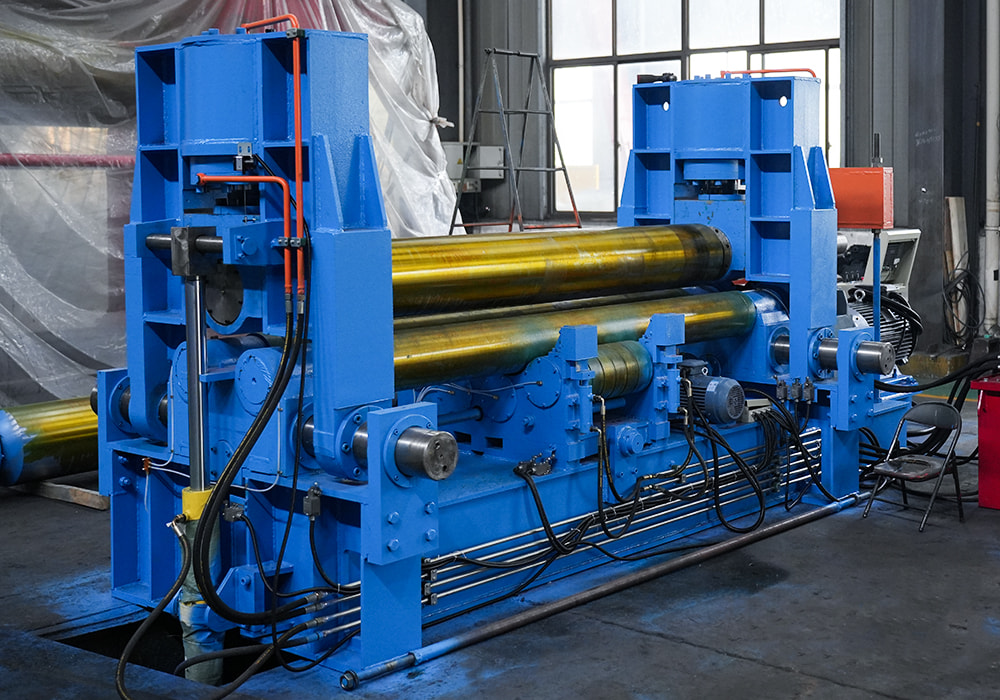 HDLW11S-30×3000 Upper Roller Universal 3-roller Plate Rolling Machine
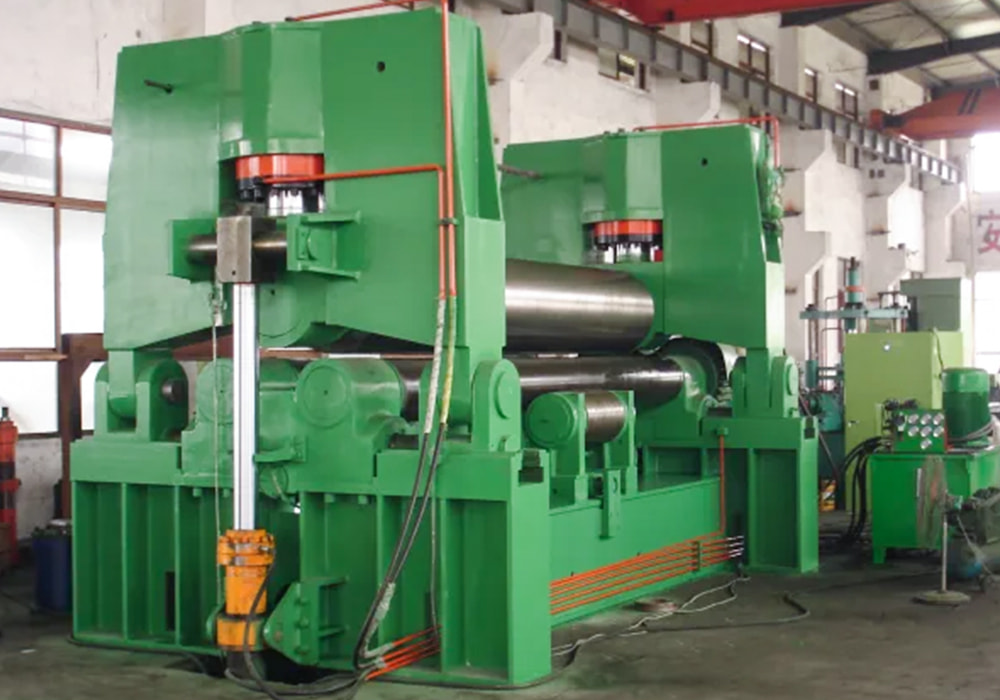 HDLW11X-100×3100 oblique 3-roller plate rolling machine
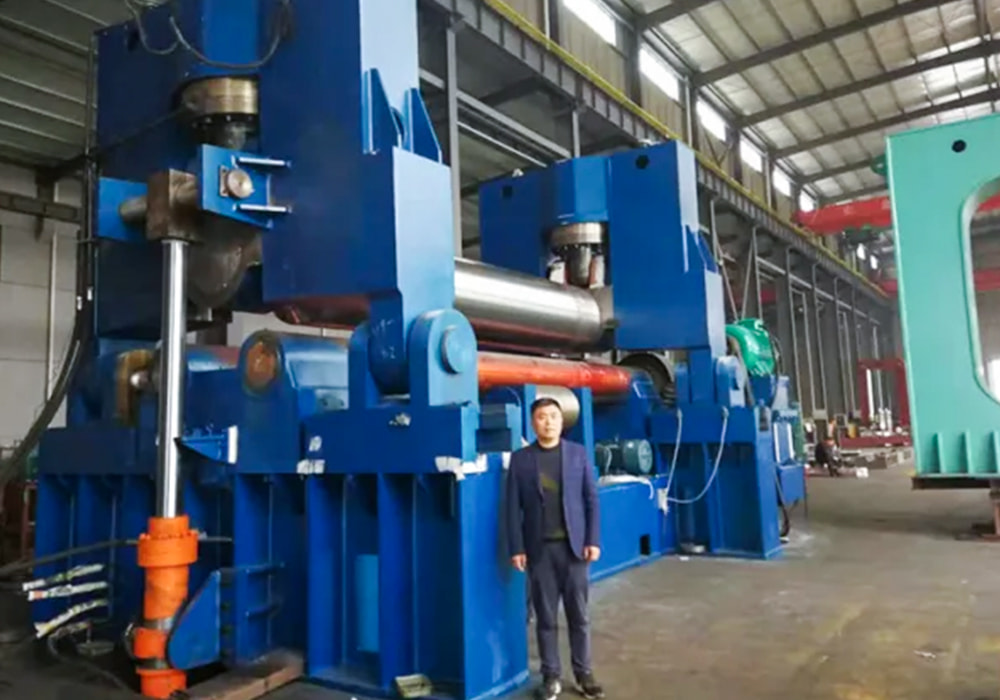 HDLW11-150X3200 hydraulic symmetrical 3-roll plate rolling machine
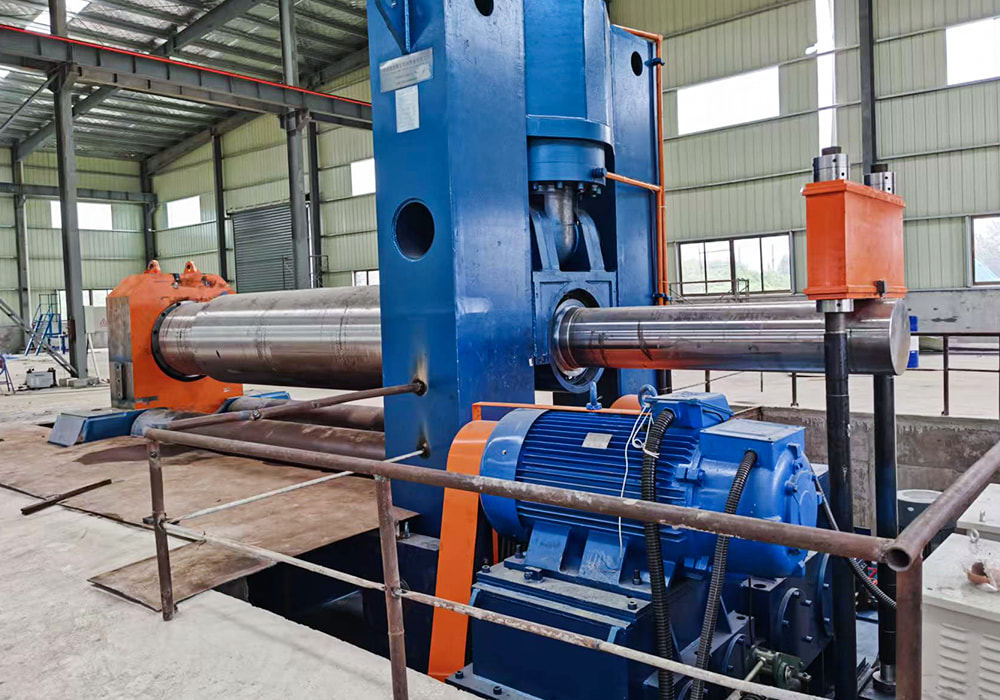 HDLW11-120X3500 Symmetrical 3 Roller Plate Rolling Machine
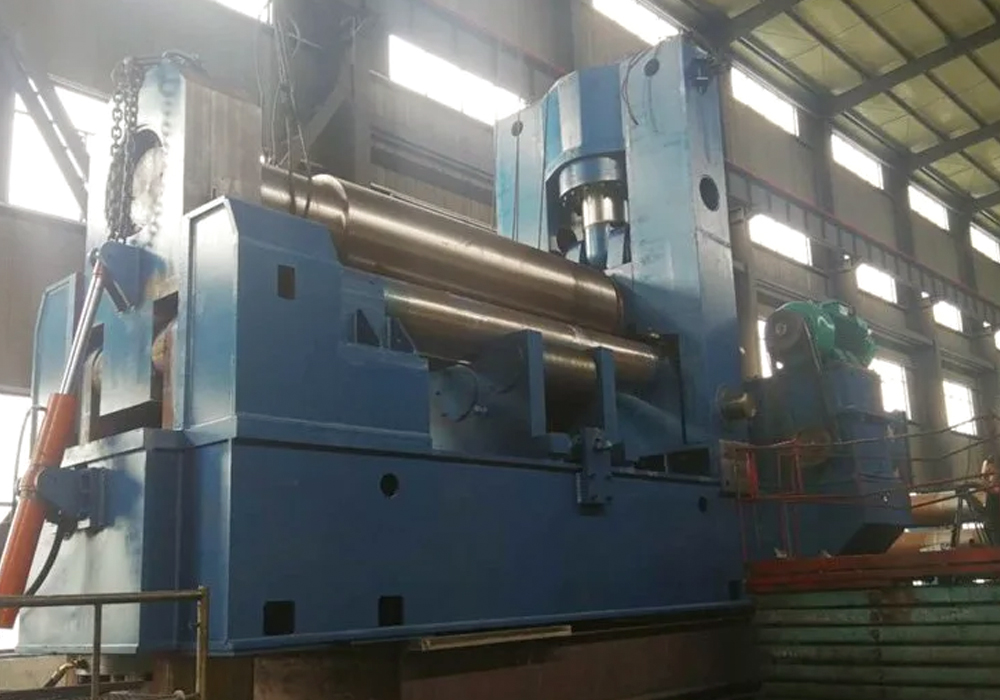 HDLW11-100X4200 pull-down 3 roller plate rolling machine
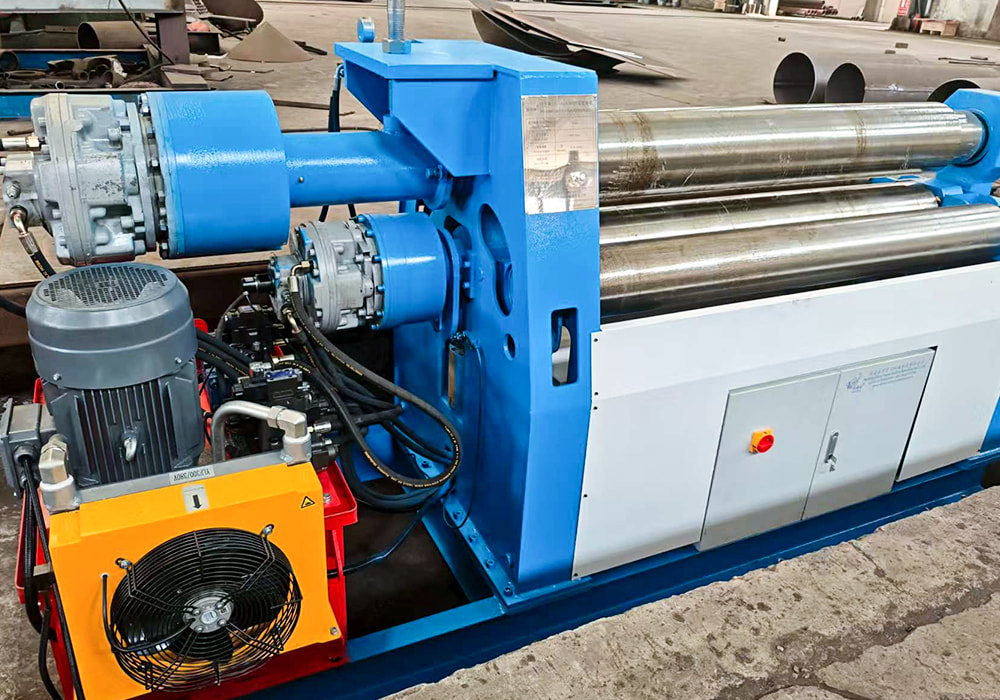 HDLW12-16x1600 CNC 4 Rolls Metal Sheet Bending Machine
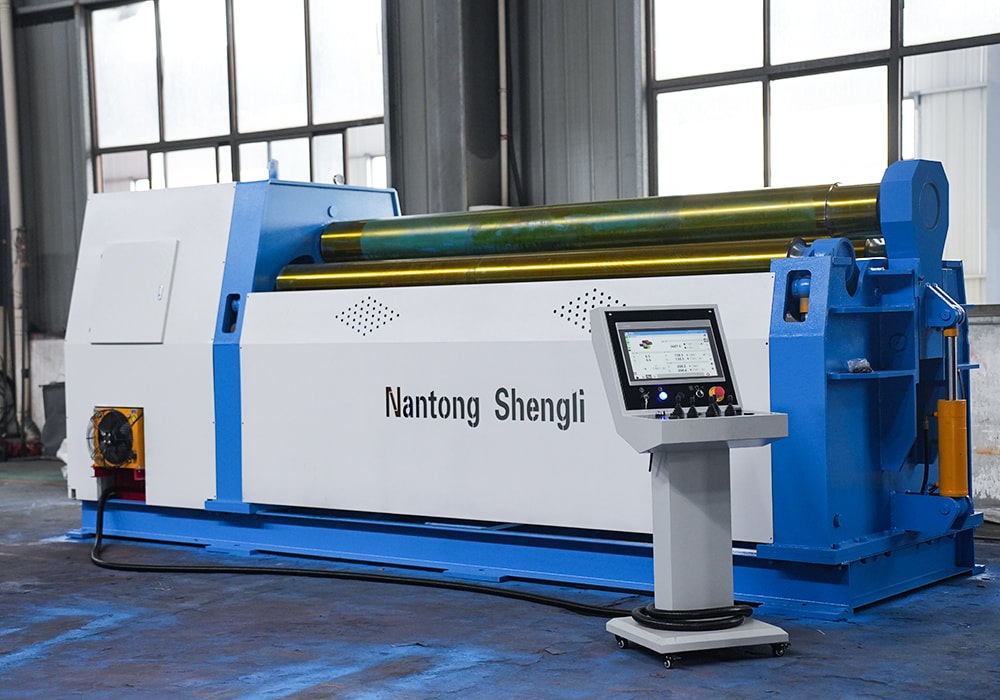 HDLW12-12×3000 4 Rolls Plate Bending Machine
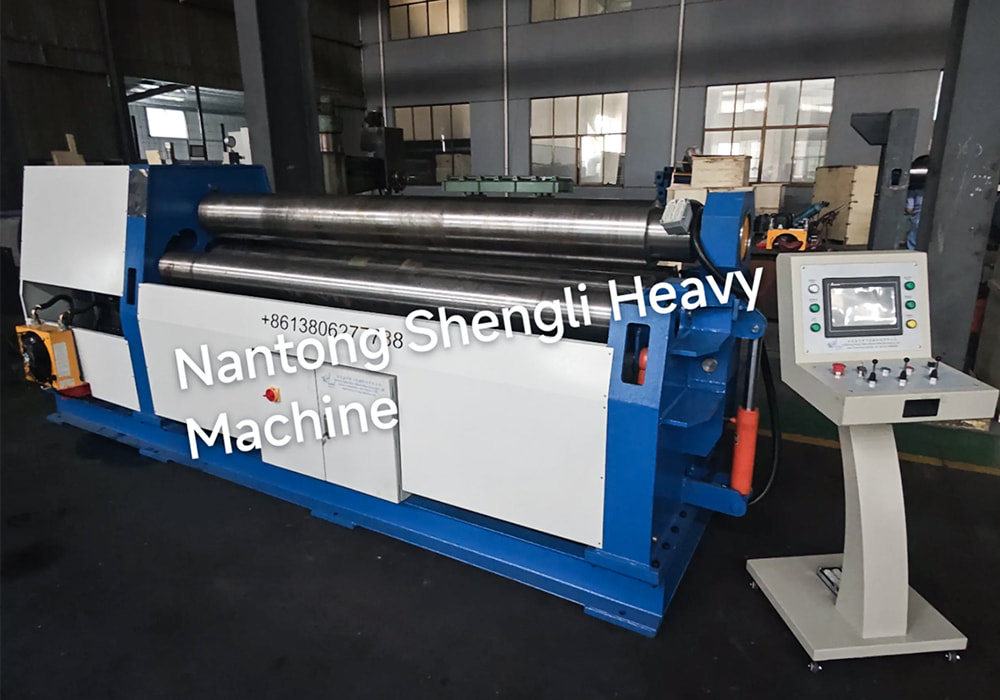 HDLW12-25×2500 Pipe Bending Rolling Machine
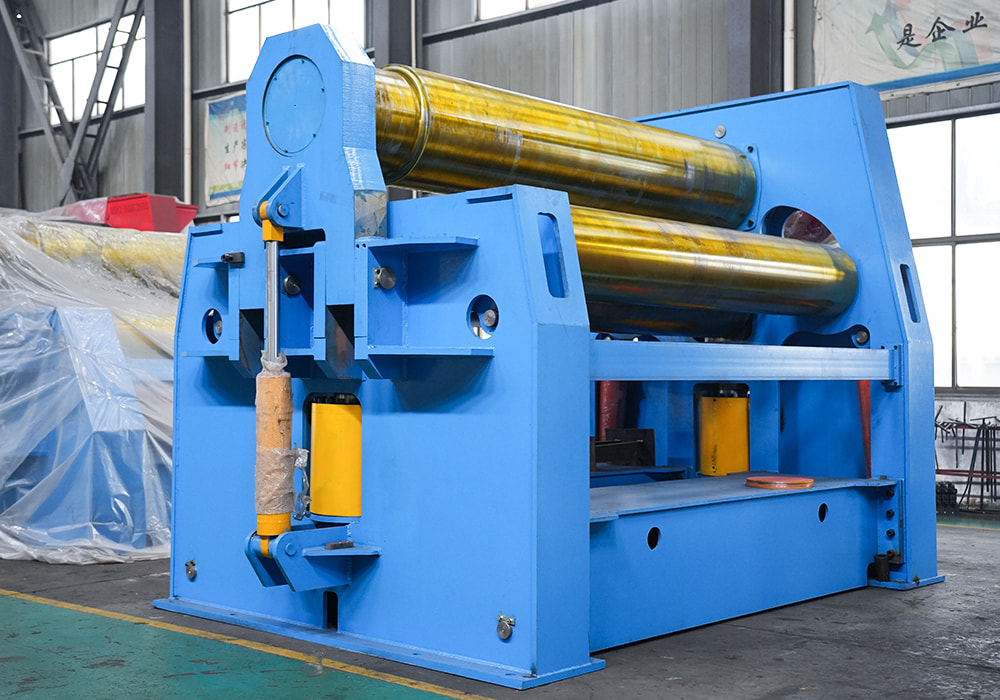 HDLW12-70×3200 CNC 4 Roll Metal Roll Bender
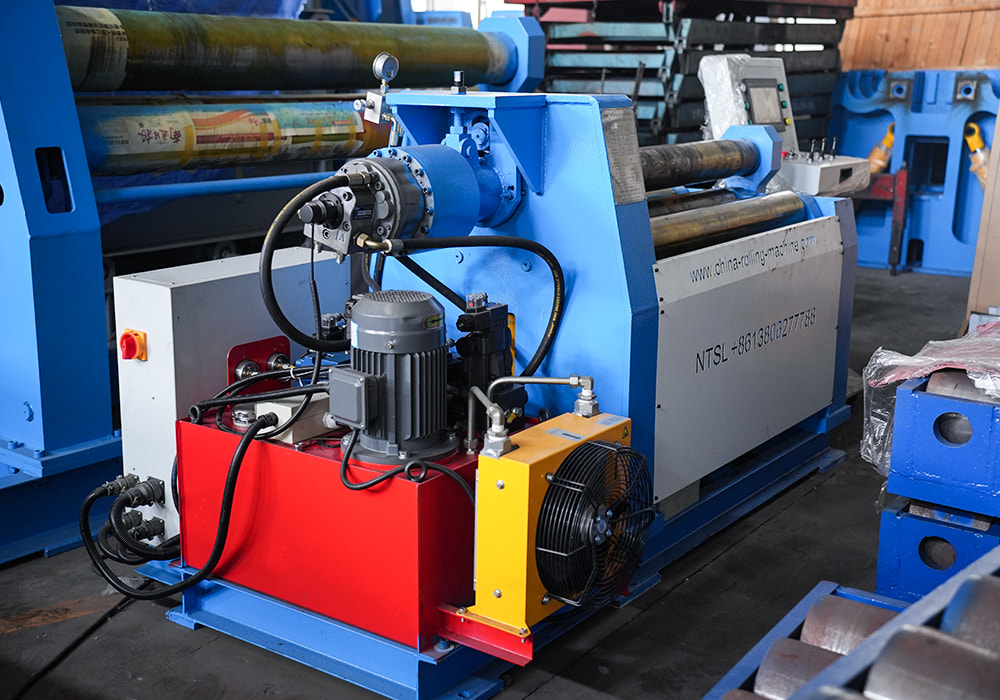 HDLW12-8×1000 4 Roll CNC Sheet Bending Machine

The company boasts strong technical capabilities, holds numerous national patents, and produces high-quality products that are widely recognized by customers both at home and abroad.

 Previous