English
 русский
 Español
Industry News
Home / News / Industry News / How to Maintain a 4-Roller Plate Rolling Machine: Daily Checks to Annual Overhaul
At a pressure-vessel shop in the American Midwest, a slow drip under the bottom cylinder of a 4-roller plate rolling machine went unnoticed for three weeks. The hydraulic pump ran hot, the operator kept topping up the reservoir, and the machine kept bending plate. On day 23, a scored top roller and a failed rod seal closed the line for 12 days and added $4,800 to the maintenance budget. Every one of those failures was visible in a 10-minute daily check.
A 4-roller plate rolling machine must be maintained around its hydraulic pre-bending system, because the fourth roll adds cylinders, valves, seals, and sensors that a 3-roll machine does not have.
On a four-roll machine, the bottom roll rises to clamp the plate, one side roll forms the bend, and the opposite side roll holds the trailing edge. That layout delivers accurate pre-bending in one pass without turning the plate, but it shifts the maintenance burden decisively toward the hydraulic circuit. Gearbox and bearing care still matter; oil cleanliness, seal condition, and proportional-valve response determine how long the machine holds its pre-bending accuracy.
Four-roll plate rolling machine maintenance is the scheduled inspection, lubrication, and calibration of the drive, roller set, hydraulic circuit, and control system of a four-roll bending machine, performed to keep pre-bending accuracy and plate surface finish inside specification.
A fixed daily inspection catches most developing failures in under ten minutes, which makes it the single most effective maintenance habit on any 4-roll machine.
Run the same sequence at the start of every shift, in the same order, so nothing gets skipped:
The hydraulic circuit causes most unscheduled downtime on 4-roll machines, and oil contamination is the reason the circuit fails.
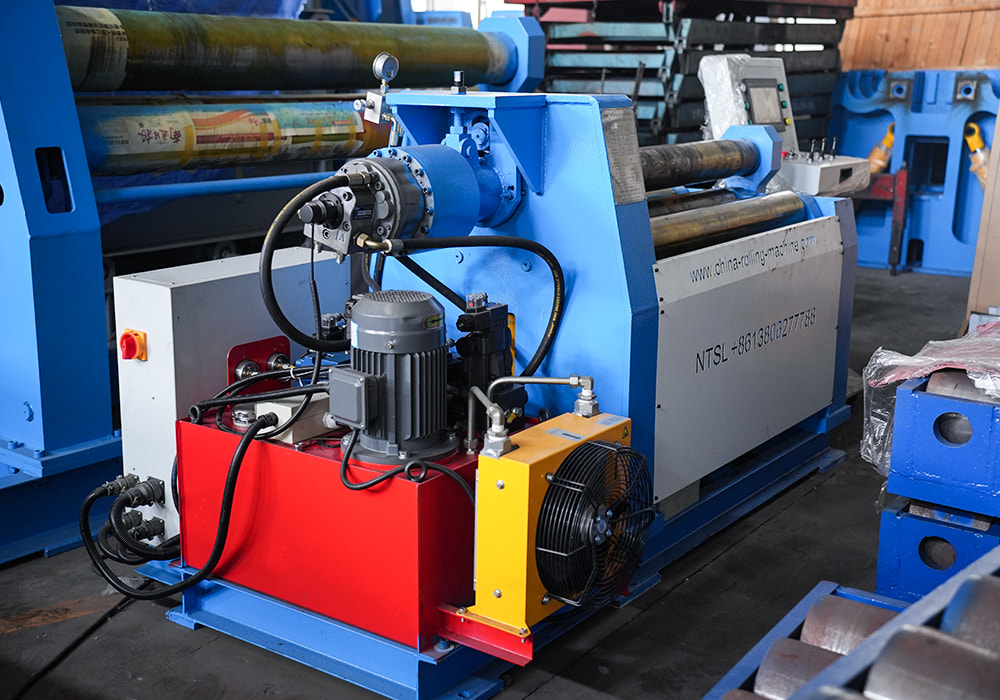
On a machine such as the HDLW12-40x3200 CNC 4-roll plate rolling machine, the hydraulic system positions the bottom roll, the side rolls, and the pre-bending hold. When particles enter the circuit, they erode proportional valve spools, score cylinder bores, and block small orifices. The first symptoms are slow roll response and drifting pre-bending force; the final symptom is a machine that cannot repeat the same radius from one shell to the next.
 https://www.hdlplaterolls.comNantong Shengli Heavy Machine Manufacturing Co., Ltd.View Product →
Sample the hydraulic oil every 500 operating hours and send it for a particle count and water check. Use ISO VG 46 oil in moderate climates and ISO VG 68 when ambient temperature stays above 30 degrees Celsius. Change the oil at 2,000 hours or 12 months, whichever comes first, and replace the return and pressure filters at the same service.
Water is the second most destructive contaminant. If a sample looks hazy, trace the water source before changing the oil, or the leak will simply return. Keep water content below 0.05 percent and keep the filler cap sealed after every service.
Roller surface wear on a 4-roll plate rolling machine is a readable record of process faults, because each wear pattern points to a specific cause.
The rollers on the HDLW12-25x2500 pipe bending rolling machine and its larger siblings are induction-hardened and ground, but day-to-day production still leaves marks. Learn to read them:
https://www.hdlplaterolls.comNantong Shengli Heavy Machine Manufacturing Co., Ltd.View Product →
| Symptom | Likely cause | Corrective action |
| Fine axial score lines | Mill scale or debris trapped against the roll | Clean rolls, fit a wiper, improve the blow-off |
| Localized pitting | Hard inclusions in the incoming plate | Inspect plate surfaces and edges before rolling |
| Edge flattening | Repeated pre-bending at maximum capacity | Adjust the feed sequence and spread the bend over more passes |
| Glazed, mirror-like surface | Wrong grease or insufficient lubrication | Re-lubricate and verify the grease grade |
| Knocking with vibration | Bearing clearance loss or spindle wear | Measure bearing clearance and replace the bearing |
Lubrication on a 4-roll machine is a scheduled act, and skipping one grease point in the sequence is enough to cut a journal bearing's life in half.
Perform the drive service routine in order at every scheduled interval:
Alignment is the hidden dimension of 4-roll maintenance, and a 0.1 mm parallelism error between the top roll and the bottom roll can shift the pre-bending radius from one end of the shell to the other.
Check roll parallelism with a dial indicator on both ends of the top and bottom rolls every quarter. Verify that side-roll travel is symmetrical, and compare the CNC position readout against a physical measurement. Drift usually comes from loosening bearing shims, foundation settlement, or an encoder that has lost its reference.
On heavy-plate lines, the HDLW12-70x3200 CNC 4-roll metal roll bender adds one requirement: confirm the top-roll slope under full tonnage, because frame deflection changes the pre-bending force across the full plate width.
https://www.hdlplaterolls.comNantong Shengli Heavy Machine Manufacturing Co., Ltd.View Product →
Machines that receive documented alignment checks are the machines that still run for a decade in the same shop. That pattern shows up consistently in the repeat-purchase records of existing Hengdeli customers.
A practical plan for a 4-roller plate rolling machine combines operator checks, a monthly hydraulic review, oil analysis, and a documented annual overhaul.
Base the intervals on operating hours rather than calendar dates: a two-shift machine wears roughly three times faster than the same model running one shift. The table below is a workable starting point.
| Frequency | Work scope | Responsible | Evidence to record |
| Every shift | Oil level, temperature, noise, leak check | Operator | Daily log sheet |
| Weekly | Filter indicator, grease points, seal condition | Maintenance mechanic | Checklist |
| Monthly | Oil sample, pressure check, housing bolt torque | Maintenance engineer | Oil analysis report |
| Quarterly | Roller surface measurement, roll alignment check | Service team | Wear and parallelism record |
| Annually | Bearing inspection, gearbox oil change, encoder calibration | Factory service | Overhaul report |
Keep the records where operators can see them. A consistent daily log is the fastest way to support a warranty claim and the basis for ordering the correct spare parts.
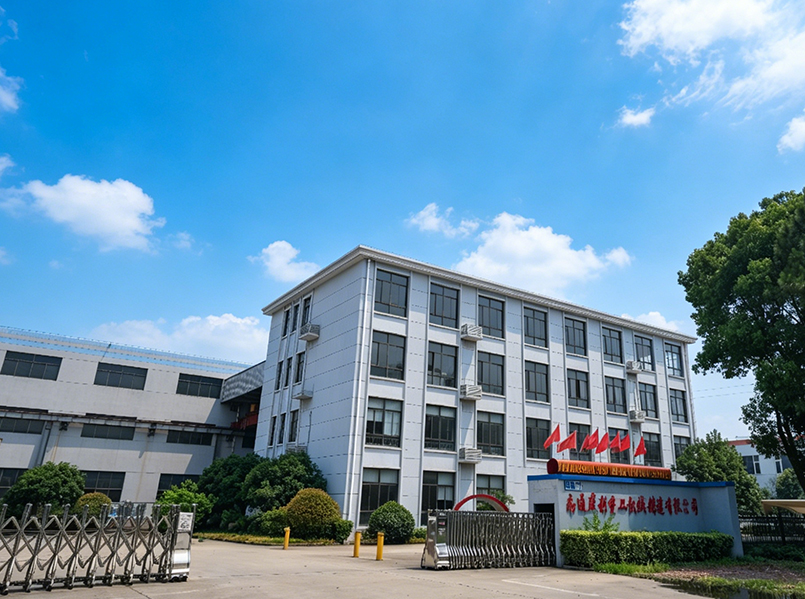
Hengdeli, the steel forming equipment brand of Nantong Shengli Heavy Industry Machinery Manufacturing Co., Ltd., verifies hydraulic pressure, roller surface quality, and trial rolling before every machine is delivered, as described in its quality assurance process. The same attention to service life is built into the corporate culture behind its machine design.
Change the hydraulic oil every 2,000 operating hours or every 12 months, whichever comes first, and replace the return and pressure filters at the same time. In dusty environments or near welding areas, shorten the interval to 1,500 hours and sample the oil every 500 hours.
Hydraulic oil should stabilize between 30 and 55 degrees Celsius under load; a consistent reading above 60 degrees Celsius means a cooling or contamination problem. Bearing housings should stay below 65 degrees Celsius, and any housing that runs 10 degrees hotter than its neighbor needs inspection.
Re-grind when a wear groove reaches 0.2 mm depth, when score lines transfer to the plate surface, or when the rolled plate finish no longer meets your customer's requirement. Grinding removes the damaged layer, and re-chroming restores hardness and finish.
No. Hydraulic proportional valves drift, encoders lose reference, and foundation movement changes roll parallelism. Annual calibration with a dial indicator and a physical radius test restores pre-bending accuracy; a machine that is never recalibrated will quietly produce shells with inconsistent radii.
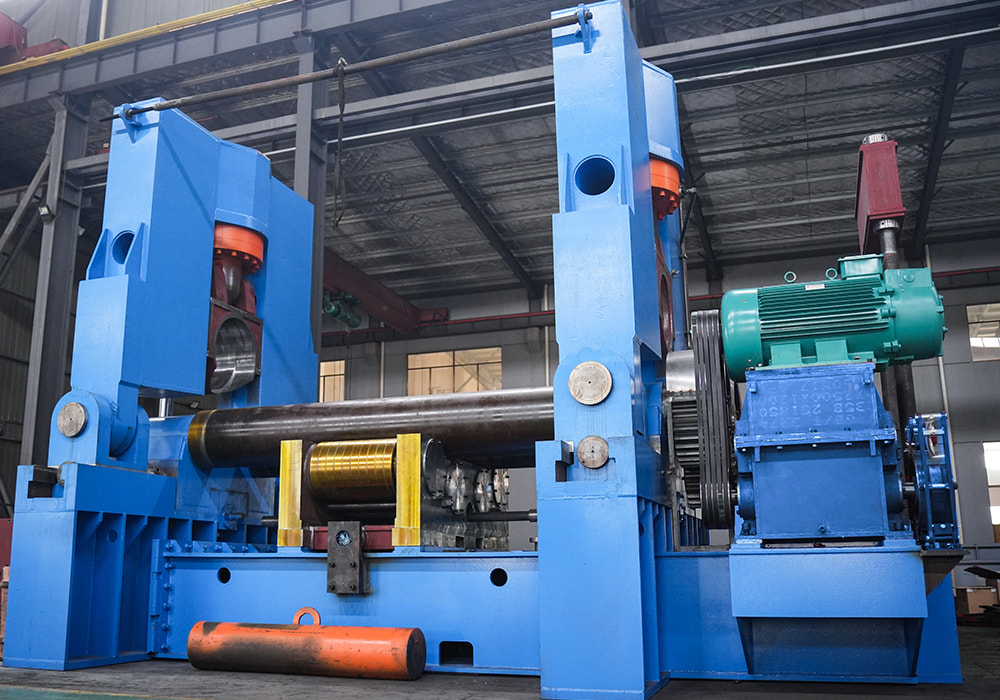 HDLW11S-120×3500 Upper Roller Universal 3-roller Plate Rolling Machine
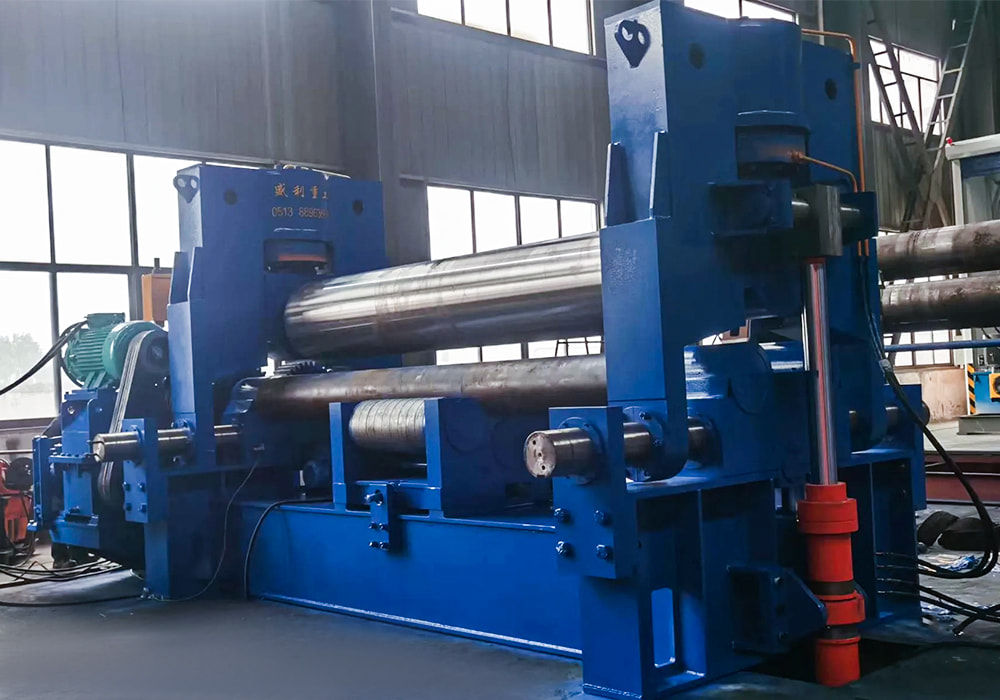 HDLW11S-50X3000 Upper Roller Universal 3-roller Plate Rolling Machine
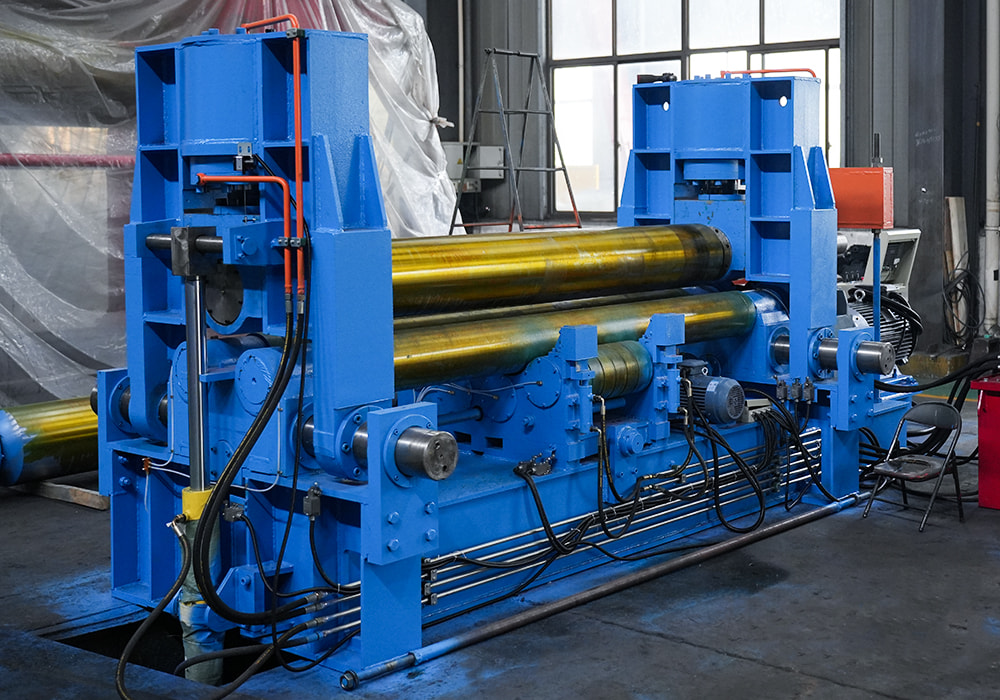 HDLW11S-30×3000 Upper Roller Universal 3-roller Plate Rolling Machine
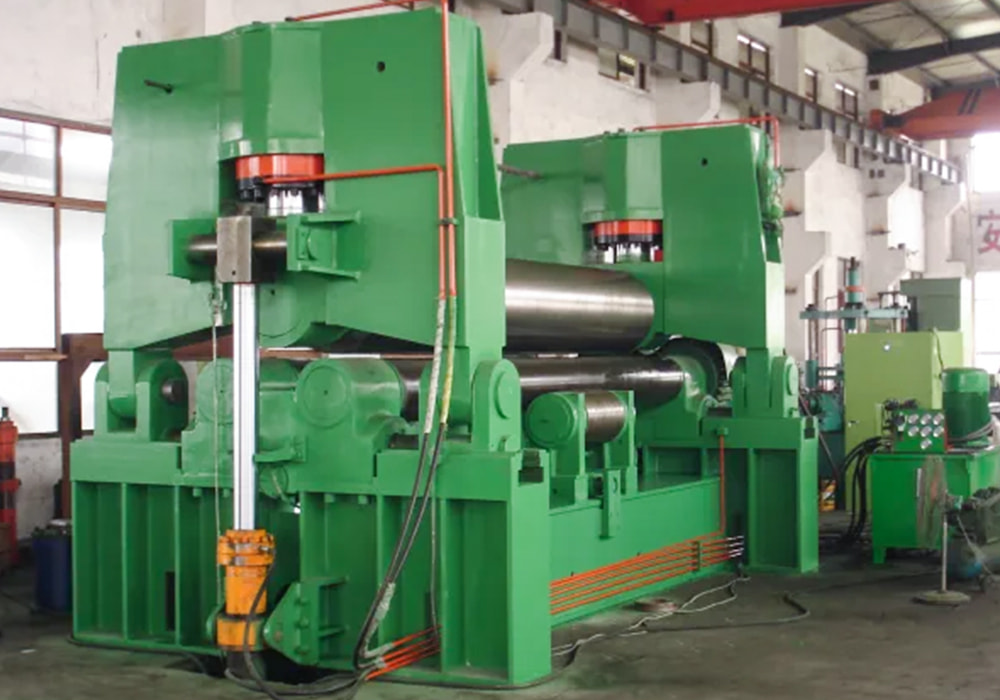 HDLW11X-100×3100 oblique 3-roller plate rolling machine
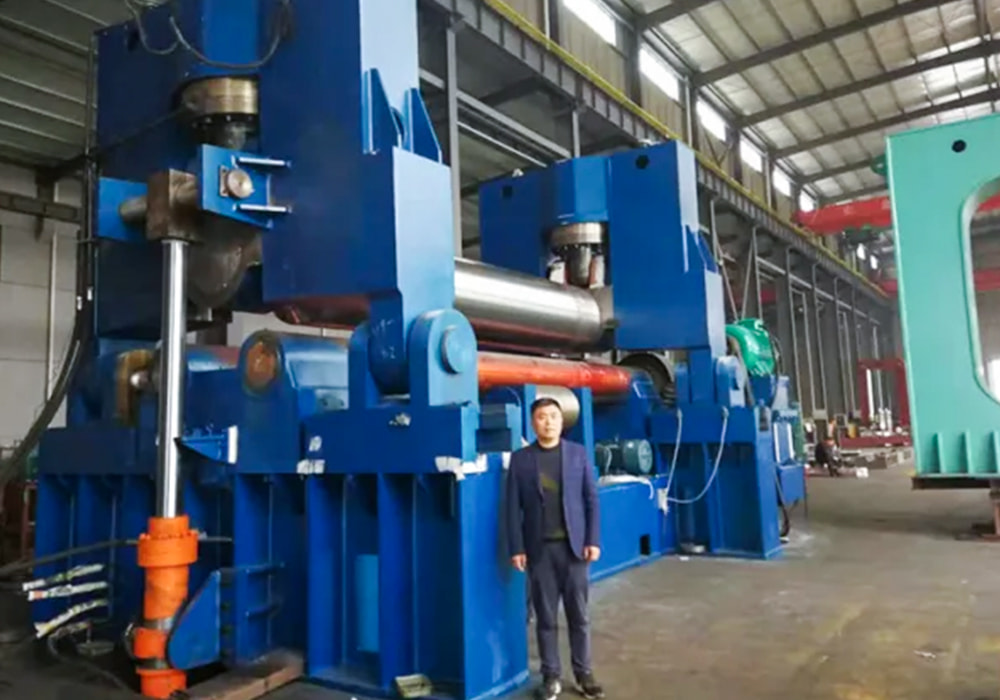 HDLW11-150X3200 hydraulic symmetrical 3-roll plate rolling machine
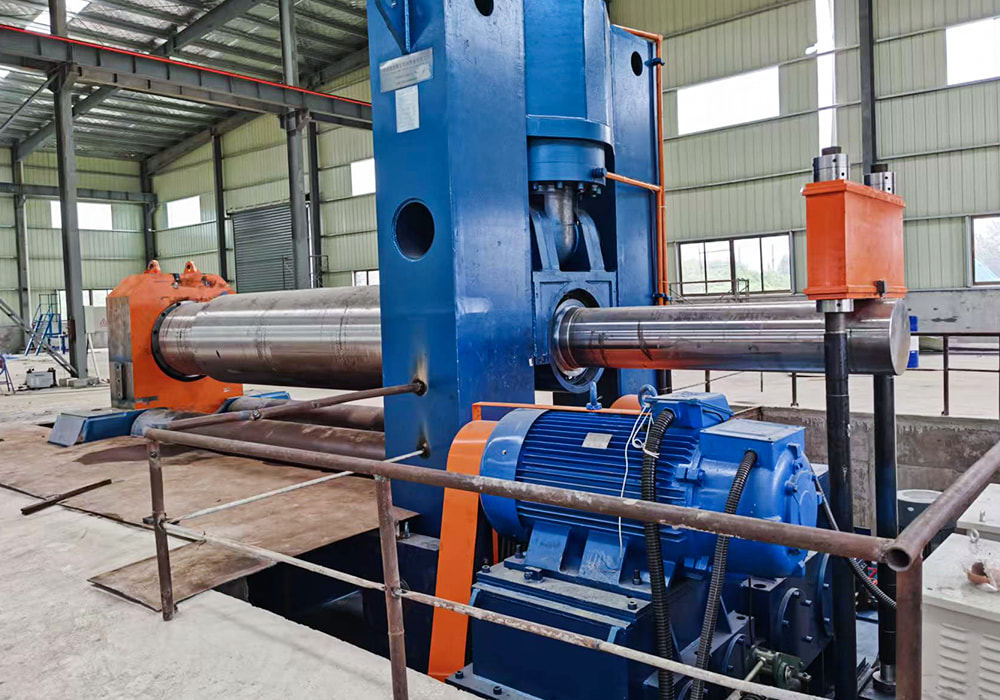 HDLW11-120X3500 Symmetrical 3 Roller Plate Rolling Machine
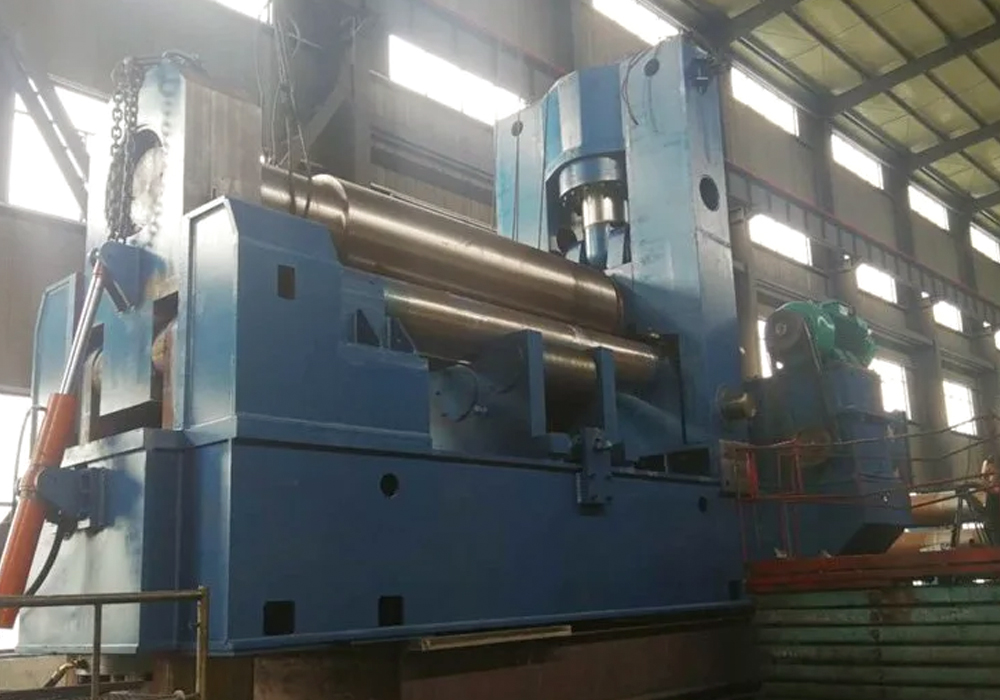 HDLW11-100X4200 pull-down 3 roller plate rolling machine
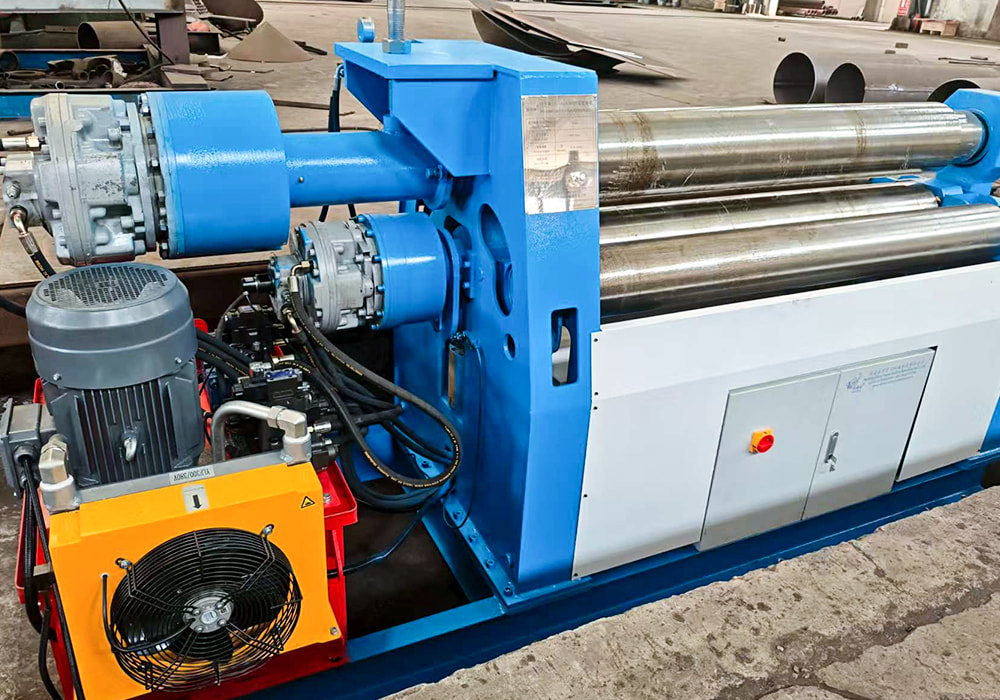 HDLW12-16x1600 CNC 4 Rolls Metal Sheet Bending Machine
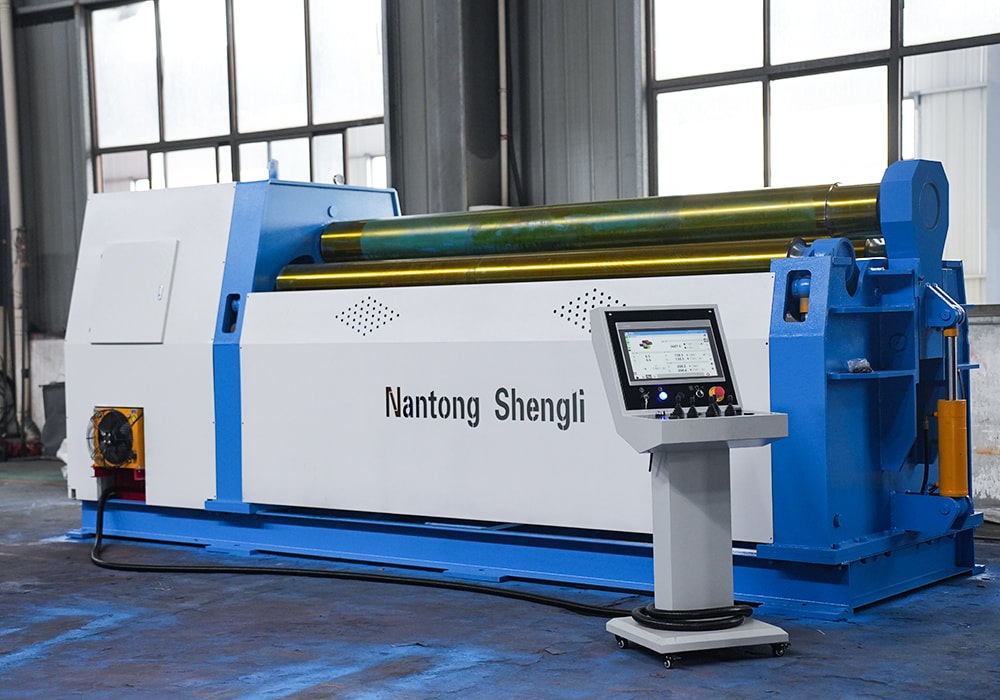 HDLW12-12×3000 4 Rolls Plate Bending Machine
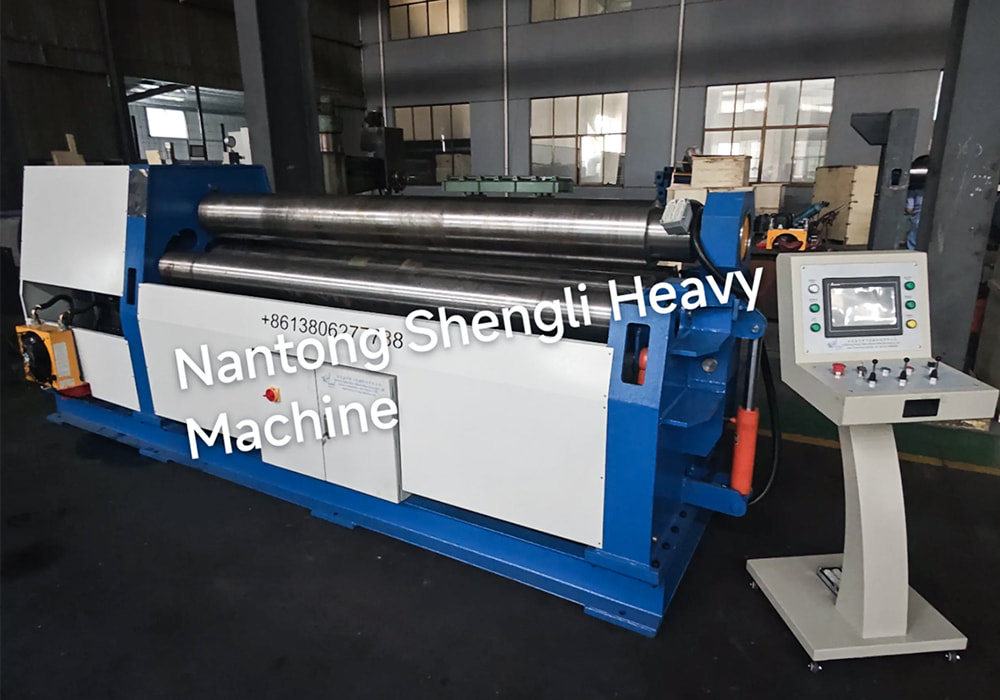 HDLW12-25×2500 Pipe Bending Rolling Machine
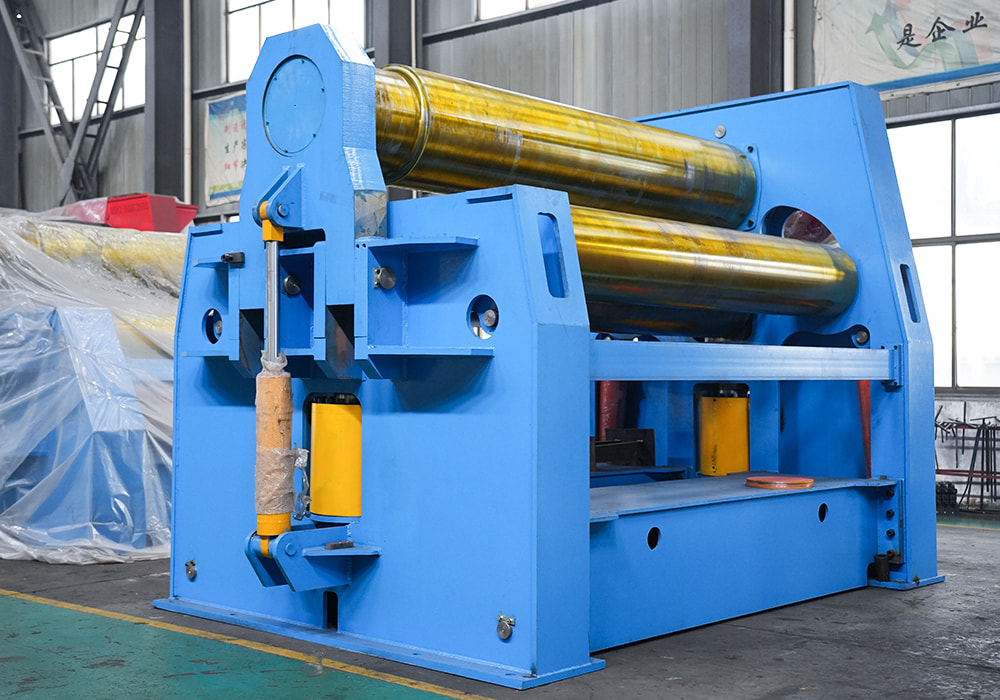 HDLW12-70×3200 CNC 4 Roll Metal Roll Bender
 HDLW12-8×1000 4 Roll CNC Sheet Bending Machine

The company boasts strong technical capabilities, holds numerous national patents, and produces high-quality products that are widely recognized by customers both at home and abroad.

 Previous