English
 русский
 Español
HDLW12-40×3200 CNC 4 Roll Plate Rolls Manufacturer
Home / Products / Plate Rolling Machine / 4-Roller Plate Rolling Machine / HDLW12-40×3200 CNC 4 Roll Plate Rolls
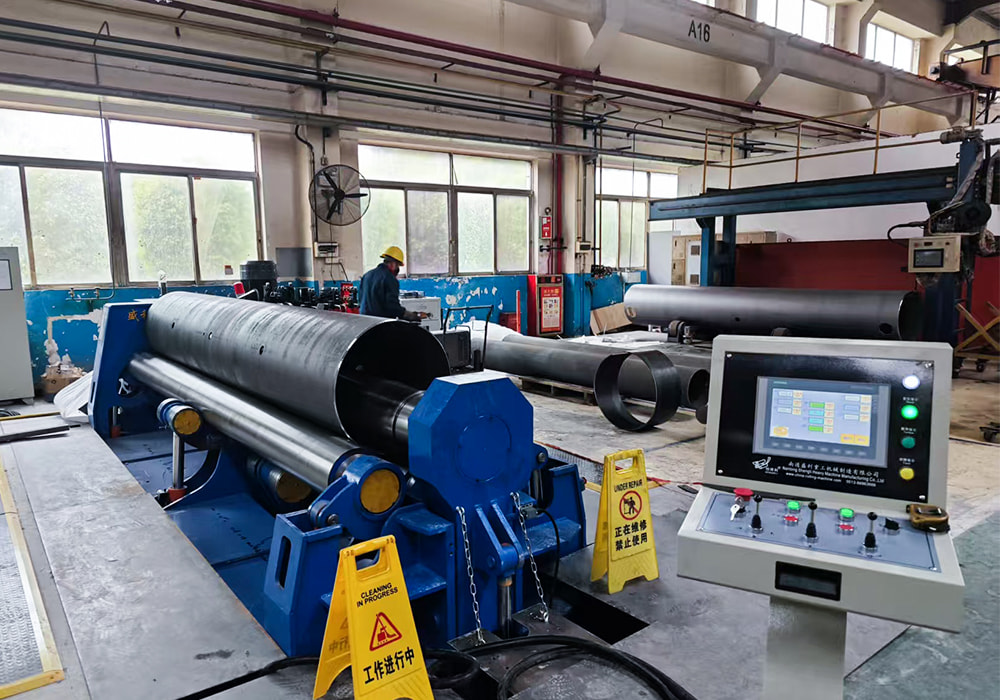
Overview of HDLW12-10×2000 CNC 4 Roll Plate Rolls
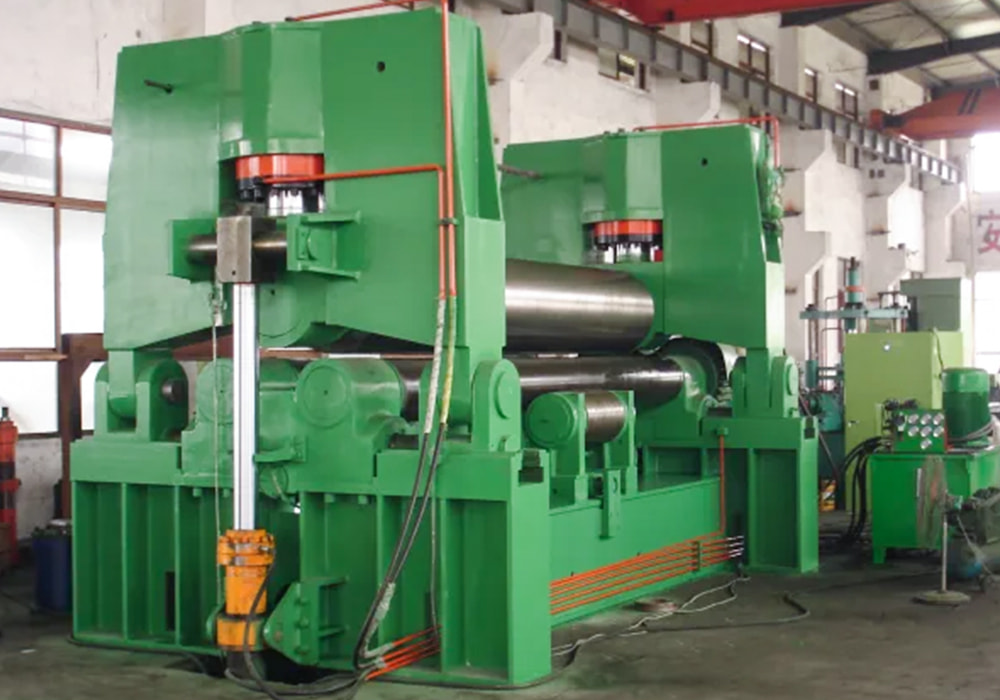
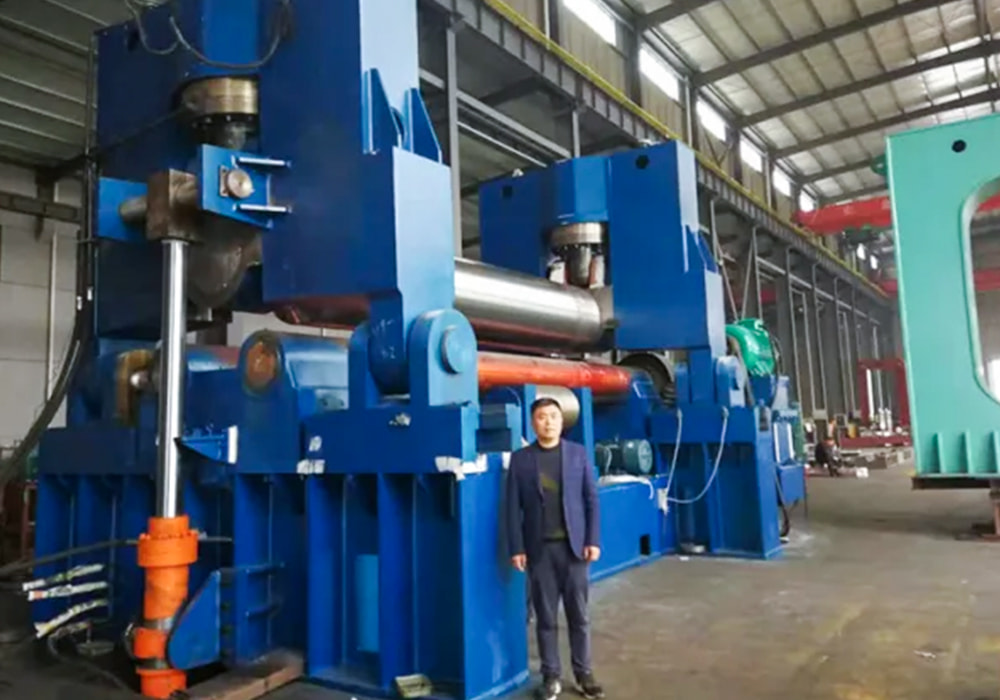
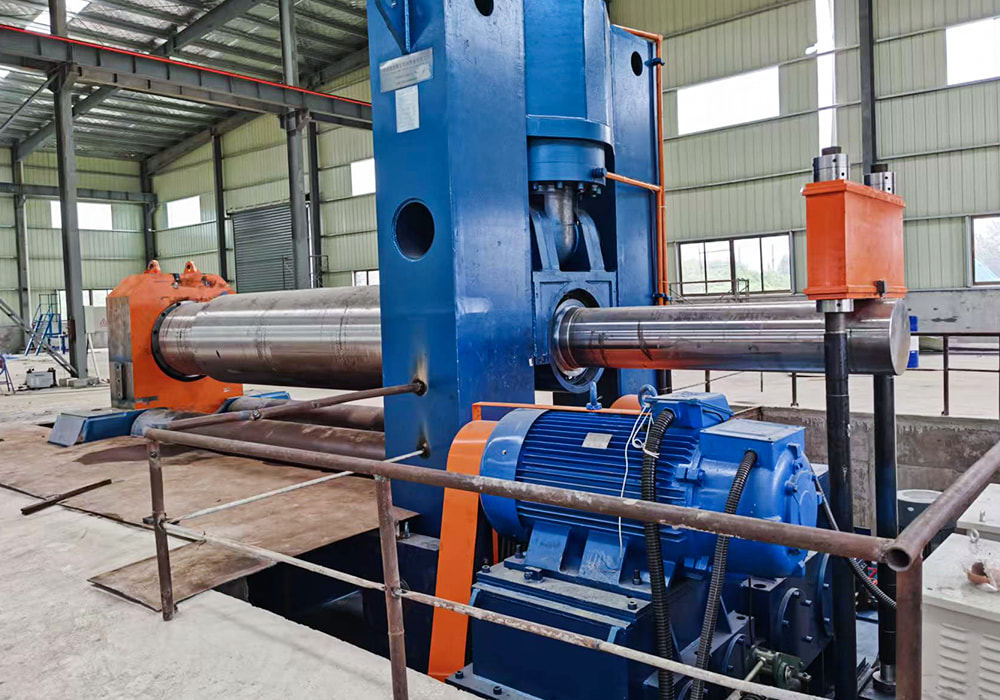
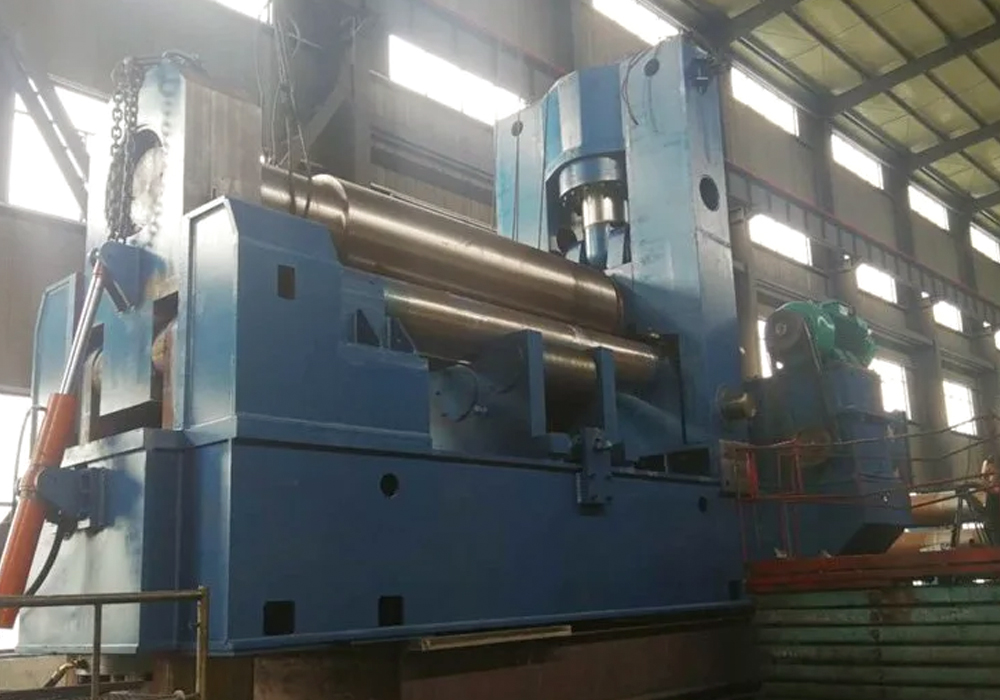
The HDLW12-10×2000 CNC 4 Roll Plate Rolls is designed for cold bending metal plates up to 10mm in thickness and 2000mm in width into cylindrical, curved, or conical shapes. The HDLW12-10×2000 adopts a four-roll configuration consisting of one upper roll, one lower roll, and two side rolls. The upper roll serves as the main drive roll, the lower roll performs clamping and feeding functions, and the two side rolls execute pre-bending and bending operations. Equipped with a CNC control system, this CNC 4 Roll Plate Rolls allows digital setting and storage of bending parameters, suitable for automated forming of light-to-medium gauge plates.
Key Advantages of HDLW12-10×2000 CNC 4 Roll Plate Rolls
- Four-roll configuration: The HDLW12-10×2000 CNC 4 Roll Plate Rolls eliminates flat ends on plates after pre-bending, reducing material waste.
- CNC control: This CNC 4 Roll Plate Rolls features a programmable control system supporting storage and recall of multiple parameter sets.
- Independent side roll adjustment: Each side roll on the HDLW12-10×2000 can be controlled separately, enabling conical cylinder rolling.
- One-touch bending: After entering the target diameter or curvature radius, the system automatically calculates roll feed strokes.
- Rounding mode: Allows switching to a rounding program after bending for multi-pass roundness correction.
Product Specifications of HDLW12-10×2000 CNC 4 Roll Plate Rolls
The HDLW12-10×2000 CNC 4 Roll Plate Rolls features induction-hardened roll surfaces with a surface hardness of HRC45–50. The control method employs a CNC system with a touchscreen human-machine interface. A USB port is provided for program import/export and parameter backup on this CNC 4 Roll Plate Rolls. Safety devices include emergency stop pull-cord switches or photoelectric protection on both sides.
Application Scenarios of HDLW12-10×2000 CNC 4 Roll Plate Rolls
The HDLW12-10×2000 CNC 4 Roll Plate Rolls is widely used in the following applications: thin-wall ventilation ducts and spiral air pipe rolling, light-duty pressure vessels and water tank shells, automotive exhaust pipes and muffler cylinders, solar water heater inner tank rolling, food and beverage equipment cylindrical components, and advertising light box poles and sign frame curved edges.
Common Issues and Solutions for HDLW12-10×2000 CNC 4 Roll Plate Rolls
Issue 1: Wavy deformation when rolling thin plates
Possible causes: Excessive side roll feed speed; uneven plate thickness or residual stress.
Solution: Reduce rolling speed and decrease feed per pass on the HDLW12-10×2000 CNC 4 Roll Plate Rolls; perform leveling or stress-relief annealing on plates before rolling.
Issue 2: Side roll interference or poor contact during conical cylinder rolling
Possible causes: Side roll strokes not set according to the cone taper ratio; inaccurate plate blank shape for conical development.
Solution: Calculate differential feed amounts for both side rolls based on large and small end diameters of the cone, and set strokes accordingly on the HDLW12-10×2000; check plate blank accuracy and correct dimensions if necessary.
Issue 3: Position feedback error on CNC system
Possible causes: Loose connection of displacement sensor; signal interference on encoder.
Solution: Check sensor cable connectors and fastening on this CNC 4 Roll Plate Rolls; ensure signal cables are routed away from power cables, and add shielding or ferrite cores if needed.
Operational Precautions for HDLW12-10×2000 CNC 4 Roll Plate Rolls
- On the HDLW12-10×2000 CNC 4 Roll Plate Rolls, plate ends must be pre-bent before cylinder rolling.
- Supply voltage fluctuation should not exceed ±10% of rated voltage; voltage stabilization and filtering devices are recommended for the control section.
- When rolling plates near the maximum thickness limit on this CNC 4 Roll Plate Rolls, use multiple incremental passes to avoid single-pass overload.
- The CNC control cabinet should be placed in a dry, dust-free environment; check cooling fans and filters regularly.
- Operators must receive training on CNC plate roll operation, including program editing, parameter modification, and manual override procedures.
|
Model: |
HDLW12 |
|
Max.Width: |
2000 mm |
|
Without Prebending: |
10 mm |
|
With Prebending: |
8 mm |
|
Power: |
12 kW |
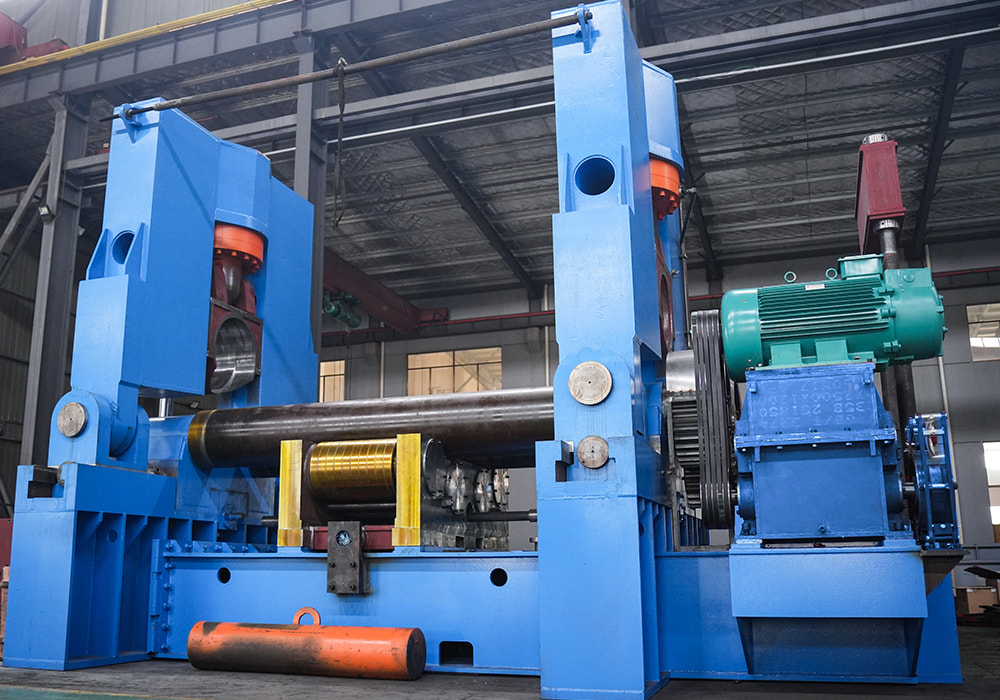
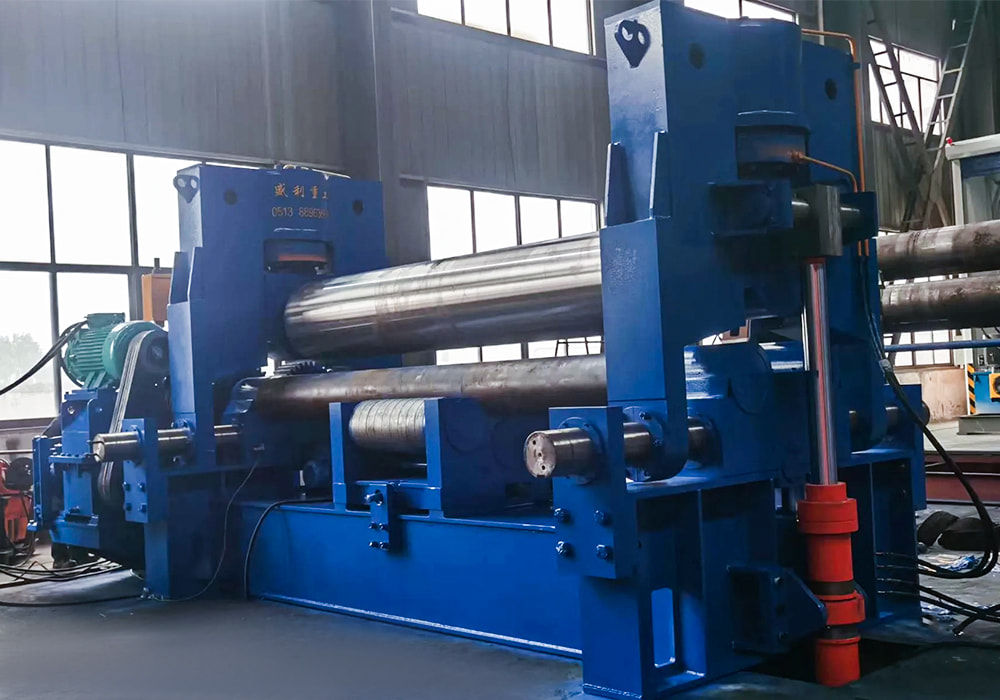
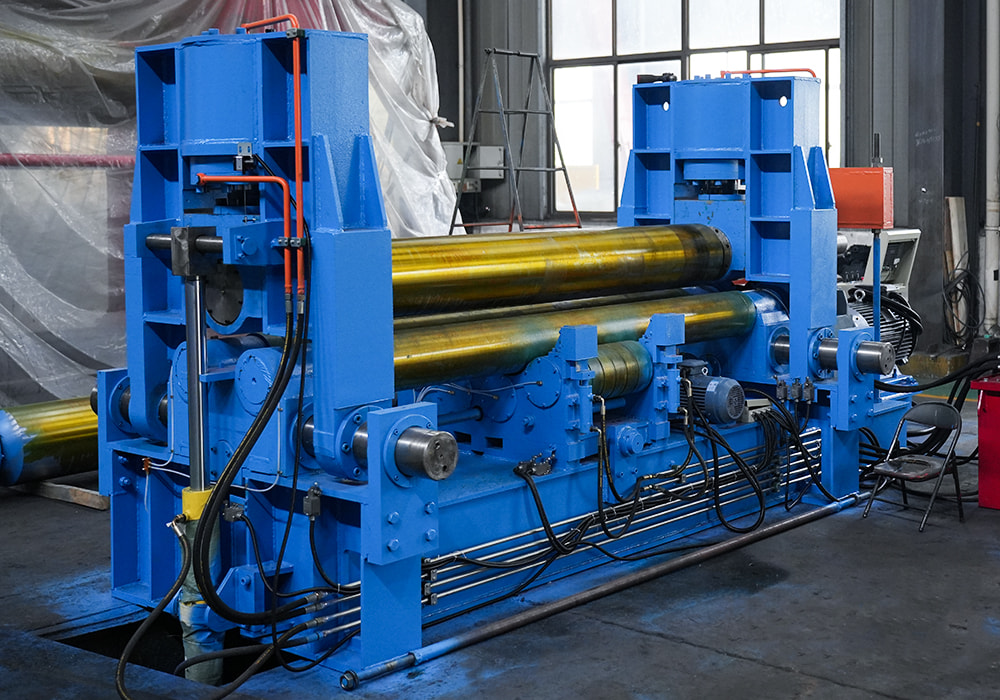

The company boasts strong technical capabilities, holds numerous national patents, and produces high-quality products that are widely recognized by customers both at home and abroad.